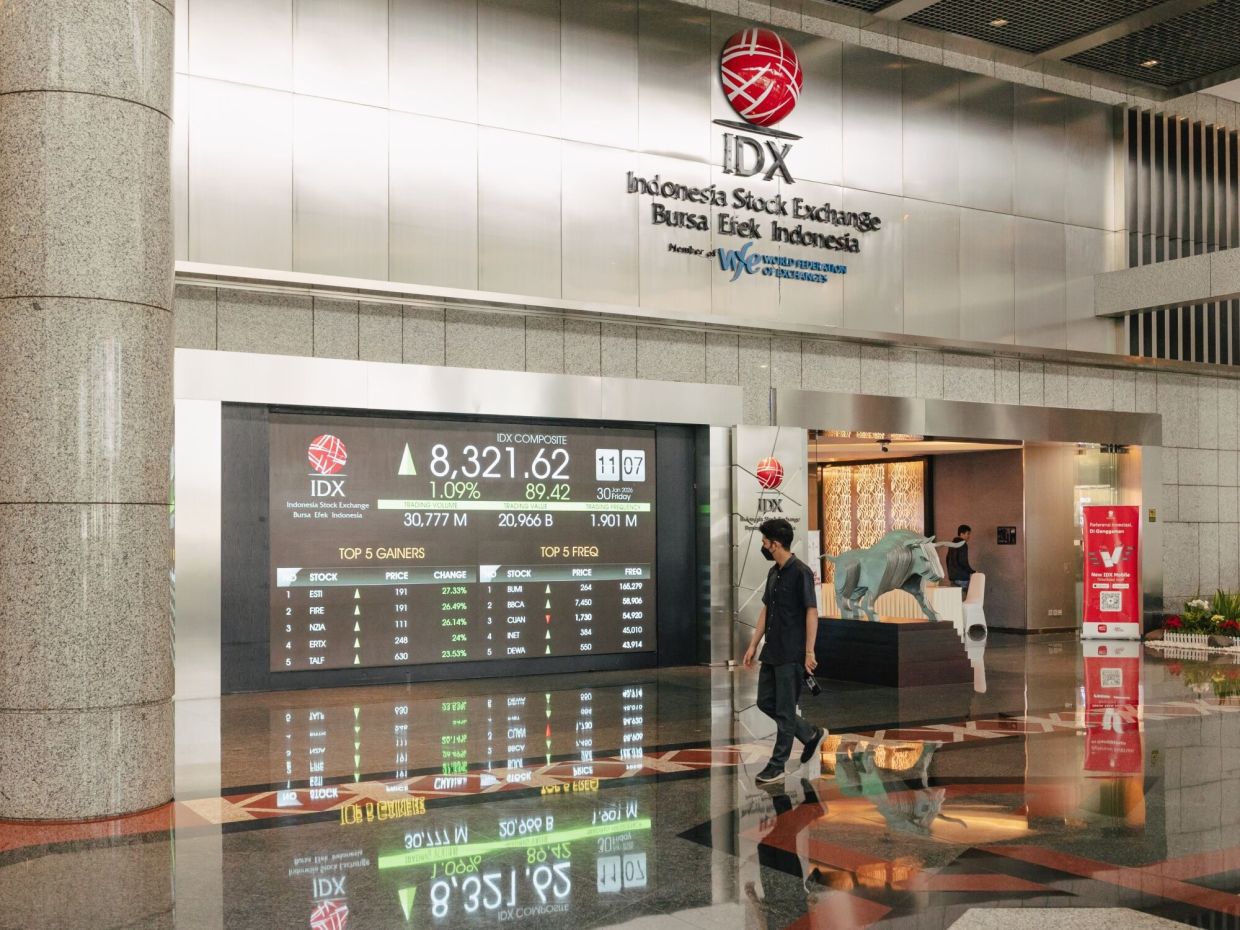
The world's largest stock market index provider has turned up the heat on Indonesia's capital markets, citing troubling gaps in corporate ownership visibility and suspicious coordinated trading patterns that undermine the integrity of price discovery across the exchange. The warning, delivered through MSCI's market accessibility review on Thursday, arrives at a critical juncture for Southeast Asia's largest economy, which faces an existential test of its emerging market credentials in a decision due next week. Should MSCI proceed with downgrading Indonesia from emerging to frontier status, the consequences could be severe—analysts estimate outflows totalling as much as $13 billion from passive and active funds whose mandates hinge on MSCI classifications.
The transparency signal represents the latest twist in a saga that began in January when MSCI first flagged investability concerns and warned of a potential downgrade. In Thursday's review, the index provider specifically downgraded Indonesia's information flow criterion to negative, a technical but weighty move that reflects pervasive opacity in how shareholdings are disclosed and how market activity unfolds. This opacity, MSCI argued, prevents global investors from accurately gauging true free float—the portion of shares available to foreign buyers—and distorts their ability to price securities fairly. For multinational fund managers already nervous about allocating fresh capital to emerging Asia, such findings feed legitimate worries about whether Indonesia's markets operate with sufficient transparency for large-scale institutional investment.
Yet a more granular reading of MSCI's assessment offers a glimmer of hope to Indonesia watchers. Mohit Mirpuri, a fund manager at SGMC Capital in Singapore, cautioned against reading the Thursday review as a broadside rejection of Indonesia's investability. He pointed out that only one accessibility metric deteriorated, while Indonesia maintained respectable scores relative to regional peers including South Korea, China, and India on several critical dimensions. Mirpuri's base case assumption is that Indonesia will retain its emerging market designation, suggesting that market participants may be prone to catastrophising at a moment when Jakarta's policymakers have begun mobilising reforms.
Those reforms, spurred by the January alarm, signal that Indonesia's authorities recognise the stakes involved. The exchange operator and financial services regulator pushed through measures including a doubling of the minimum free float requirement for newly listed companies to 15 percent. In a dramatic show of accountability, the heads of both the exchange and the regulatory body resigned in a single afternoon in January, clearing space for new leadership to chart a different course. These moves represent genuine structural change, not mere cosmetic gestures, though they arrived only after MSCI's warning prompted market jitters.
The intensity of MSCI's scrutiny has had real consequences for Indonesia's equity market. In April, MSCI extended its review of Indonesian markets, effectively keeping the downgrade threat alive. In May, it removed six companies from its indexes, most of them linked to prominent business tycoons with concentrated ownership structures. That delisting triggered another sharp sell-off in Indonesian stocks, underscoring how heavily the market hangs on MSCI's next move. For global index-tracking funds—which collectively manage trillions of dollars and mechanically buy or sell to match index weightings—an MSCI downgrade would force automatic liquidation of Indonesian holdings, creating a vicious cycle of selling pressure regardless of fundamental business conditions.
Beyond the technical governance issues that concern MSCI, Indonesia faces a broader macroeconomic storm that has eroded investor appetite well before index reclassification fears took hold. Under President Prabowo Subianto's administration, populist policy initiatives have clashed with fiscal discipline, prompting sharp currency depreciation. The rupiah has hit record lows against the dollar, compelling Indonesia's central bank to hike interest rates aggressively in recent weeks to stabilise the currency and prevent further capital flight. MSCI has also flagged structural shortcomings in Indonesia's foreign exchange infrastructure, noting an absence of an efficient offshore currency market and binding constraints on onshore trading—practical barriers that make large-scale foreign investment logistically awkward.
International ratings agencies have amplified the gloom. Both Moody's and Fitch cut their outlooks on Indonesia's sovereign debt to negative in recent months, citing eroding policymaking credibility as the $1.4 trillion economy—once celebrated as a model emerging market—battles to restore investor confidence. These downgrades suggest that the transparency issues MSCI identifies are symptoms of a broader governance challenge, not isolated anomalies that targeted reforms can quickly remedy. The rupiah's weakness and the central bank's defensive rate hikes indicate that foreign investors have already begun rotting their positions ahead of the MSCI verdict, a form of pre-emptive de-risking that could accelerate sharply if the downgrade materialises.
The damage to Indonesia's equity market has already been substantial. The Jakarta Composite Index has tumbled 29 percent so far this year, making it the world's weakest major stock market and wiping out many foreign investors' gains from previous years. Foreign selling pressure has mounted relentlessly, with international portfolio managers liquidating approximately $3.65 billion of Indonesian stock holdings through 2025, a net outflow that dwarfs inflows into other Southeast Asian markets and signals deep reputational harm. For domestic investors, the slide has eroded wealth and confidence; for policymakers, it represents a tangible cost of perceived mismanagement and opacity.
The irony facing Indonesia is that the transparency and governance deficiencies MSCI criticises are partly structural legacies of Indonesia's concentrated business landscape, in which tycoon-led conglomerates dominate the stock exchange and cross-shareholding patterns reflect family control rather than market discipline. Addressing these patterns requires more than tweaking rules—it demands a cultural and institutional shift toward arm's-length corporate governance that has eluded many emerging markets despite decades of reform efforts. MSCI's decision next week will essentially judge whether Indonesia has progressed far enough to warrant continued emerging market status, or whether the opacity and governance risks justify relegation to frontier tier, a classification typically applied to smaller, less liquid markets with greater political and economic volatility.
For Malaysian investors and policymakers watching from across the Strait, the Indonesia drama offers instructive lessons about the fragility of emerging market status and the mounting scrutiny from global index providers that now function as gatekeepers for trillions in passive investment flows. Malaysia itself has faced MSCI reviews and index-related concerns in the past, making the Indonesia case directly relevant to Southeast Asian capital market stability more broadly. The region's reputation for governance and transparency stands at stake as one of its largest economies grapples with an index reclassification that could trigger years of underperformance and capital starvation, irrespective of underlying business fundamentals.

