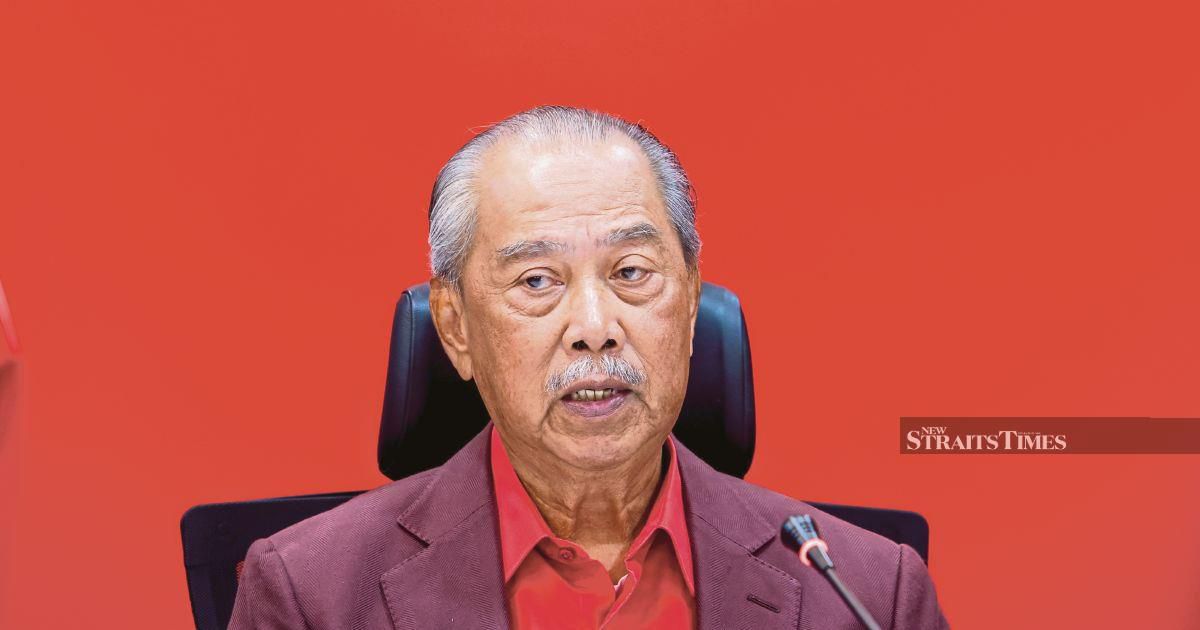
Bersatu president Tan Sri Muhyiddin Yassin has levelled fresh allegations that Umno is engineering a scheme to destabilize the unity government that currently holds power at the federal level. His claims suggest deepening tensions within the multi-party coalition that brought together historically opposed political forces following the 2022 general election.
The Bersatu chief's accusations carry significant weight given his prominent position in recent Malaysian political history. Muhyiddin himself served as Prime Minister under the Perikatan Nasional banner before that administration unraveled in August 2021. His experience navigating the fractious dynamics of coalition politics positions him as a seasoned observer of the intricate negotiations and power struggles that characterize Malaysia's political landscape.
Umno's alleged strategy, according to Muhyiddin's claims, mirrors the tactics that previously contributed to the PN government's collapse. Understanding these historical patterns is crucial for comprehending the current political climate. The Perikatan Nasional coalition, which initially commanded parliamentary support following the 2020 general election, deteriorated due to internal defections, disagreements over policy direction, and calculated political maneuvering by coalition members seeking to maximize their influence or pivot toward more advantageous alignments.
The unity government represents an unprecedented political experiment in Malaysia. Formed after the 2022 election produced no clear majority for any single political bloc, it required Umno, Pakatan Harapan, Bersatu, and several smaller parties to set aside longstanding rivalries and work toward shared governance. This arrangement has fundamentally altered Malaysian politics, forcing former adversaries to cooperate on budgets, legislation, and executive appointments—a challenging undertaking given decades of competitive positioning.
Umno's position within this framework deserves closer examination. As Malaysia's oldest ruling party with the deepest institutional roots, Umno brings substantial organizational capacity and parliamentary numbers to the coalition. However, the party has experienced internal turbulence, including leadership transitions and factional disputes. Some analysts suggest that Umno's considerable political experience creates incentives for the party to explore alternative arrangements that might consolidate its power or influence relative to coalition partners.
Muhyiddin's warnings about potential governmental instability resonate within a broader context of Malaysian political volatility. Since the 2018 general election, Malaysia has experienced frequent shifts in parliamentary alliances, multiple prime ministerial changes, and recurring crises of governmental legitimacy. Each transition has disrupted economic planning, investor confidence, and public service efficiency. The prospect of further governmental instability carries tangible implications for economic policy continuity and Malaysia's regional standing.
For Southeast Asia, Malaysia's internal political stability matters considerably. As a founding ASEAN member and the organization's current chair or rotating priority, Malaysia's governance challenges can influence regional diplomatic initiatives and economic integration efforts. Persistent governmental uncertainty weakens Malaysia's negotiating position within ASEAN forums and complicates regional economic coordination on critical matters including trade, security, and climate resilience.
The specific mechanics of Muhyiddin's allegations remain partially unclear from available reporting. Typically, such claims involve accusations of backroom negotiations, attempts to persuade coalition lawmakers to defect, or deliberate obstruction of government initiatives. In Malaysia's fluid political environment, individual parliamentarians sometimes shift allegiance in response to incentives—ministerial positions, development allocations for their constituencies, or strategic advantages within their respective parties. Controlling such movement represents an ongoing challenge for any coalition leadership.
The implications for ordinary Malaysians extend beyond political theater. Governmental instability disrupts service delivery, delays major infrastructure projects, and creates uncertainty for businesses attempting long-term planning. Malaysia's younger generations, in particular, have grown weary of the constant political turbulence that has characterized the past six years. Public opinion surveys consistently reveal frustration with coalition politics and demands for stable governance focused on economic development rather than factional maneuvering.
Umno's response to these allegations will prove revealing. The party's leadership may dismiss Muhyiddin's claims as politically motivated positioning, or provide substantive rebuttals addressing specific accusations. The manner in which Umno responds—whether defensively or through counterattacking Bersatu—could either confirm suspicions of destabilizing activity or demonstrate genuine commitment to the unity government framework.
Longer-term, these allegations highlight a fundamental vulnerability within Malaysia's current coalition structure. Unity governments depend entirely upon the continued cooperation and trust of constituent parties. Once that trust erodes sufficiently, governmental collapse becomes merely a matter of timing and tactical opportunity. Previous Malaysian coalitions have demonstrated how quickly such arrangements can unravel when partners conclude that alternative configurations better serve their interests.
Moving forward, the unity government faces the challenge of proving that pragmatic cooperation among ideologically diverse partners can produce stable, effective governance. Success requires not merely avoiding collapse but delivering measurable benefits that convince coalition members and the broader electorate that continued cooperation serves national interests. How the current coalition manages internal tensions—whether through transparent communication, equitable power-sharing mechanisms, or demonstrated policy achievements—will substantially determine both Malaysia's immediate political trajectory and its regional influence throughout 2024 and beyond.

