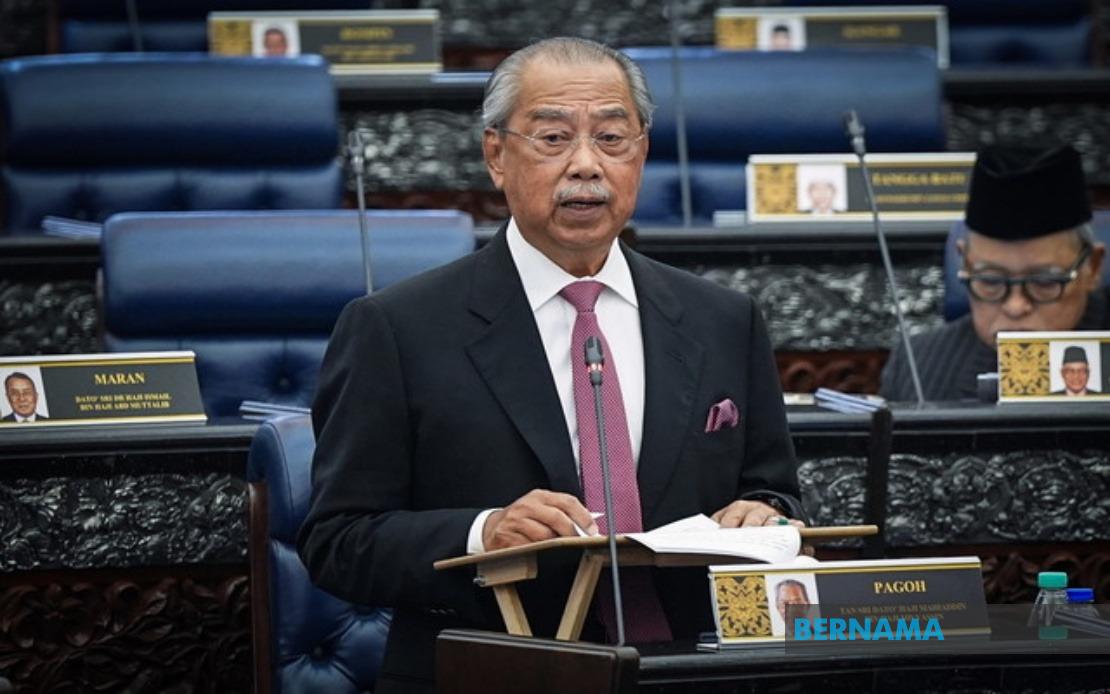
Former Prime Minister Tan Sri Muhyiddin Yassin has pushed the government to launch an urgent, comprehensive and transparent forensic audit of Tabung Haji's fund management, with completion targeted within a year. Speaking during parliamentary debate on the institution's Royal Commission of Inquiry report on August 11, the Pagoh MP and Bersatu president stressed that such an examination was essential given the governance and transparency shortcomings revealed by the commission's investigation.
The forensic audit, Muhyiddin argued, would serve multiple critical functions: tracing the trajectory of funds, uncovering fraudulent activity, identifying misuse of authority, and establishing any instances of carelessness or mismanagement. He emphasised that individuals found culpable in depleting Tabung Haji's resources through any of these mechanisms must face legal consequences. This position reflects mounting political pressure to hold officials accountable for what has emerged as one of Malaysia's most significant institutional financial scandals in recent years.
The RCI's findings paint a sobering picture of Tabung Haji's financial health during the 2014-2020 period, documenting estimated cumulative losses totalling between RM10 billion and RM12.6 billion. These figures underscore the scale of deterioration within an institution that manages savings for hundreds of thousands of Malaysian Muslims. Muhyiddin's insistence that such revelations demand immediate and decisive intervention without equivocation signals the gravity with which parliamentary leaders view the commission's conclusions.
Parliamentary momentum for aggressive action extended beyond Muhyiddin's intervention. Syed Saddiq Syed Abdul Rahman, the MUDA representative for Muar, proposed establishing a Multi-Agency Task Force dedicated to investigating 14 problematic investments identified in the RCI report. His approach emphasised cross-institutional coordination, advocating for involvement from the Malaysian Anti-Corruption Commission, the Royal Police, and the Inland Revenue Board to ensure investigations proceeded systematically rather than through fragmented departmental efforts.
Syed Saddiq's proposal carried particular weight given its potential to expose connections across multiple state-owned entities. He recommended extending the task force's investigative scope beyond Tabung Haji to encompass Felda, FGV, and Eagle High—other government-linked companies with histories of financial difficulty. This broader perspective suggests growing recognition that mismanagement within Tabung Haji may reflect systemic weaknesses affecting Malaysia's entire portfolio of sovereign wealth vehicles and state enterprises.
The MUDA lawmaker additionally advocated for forensic audits targeting each of the 14 identified problematic investments specifically, creating parallel investigative streams that could complement the multi-agency task force's work. This dual-pronged approach would theoretically establish both individual culpability and quantifiable financial losses, providing evidentiary foundations necessary for potential prosecution and recovery efforts.
Datuk Seri Hasni Mohammad, representing the Simpang Renggam constituency under Barisan Nasional, reinforced calls for enforcement transparency by proposing that the MACC, police, and relevant agencies furnish regular progress reports within established timeframes. This suggestion acknowledges that parliament and the public require systematic updates rather than sporadic announcements, establishing accountability mechanisms within the oversight process itself. Hasni's emphasis on transparent reporting cadences underscores frustration with past opaqueness in handling high-profile institutional failures.
Hasni further proposed that parliament adopt a continuous, cross-party, and institutionalised oversight framework for monitoring RCI recommendation implementation. Rather than treating the August 11 special sitting as a legislative endpoint, he advocated establishing permanent parliamentary vigilance, with regular status reports submitted to the Dewan Rakyat. Such an approach would embed oversight into parliament's routine functioning and prevent political attention from dissipating as media coverage fades.
The RCI report, released publicly on July 29 following government approval, documented governance weaknesses throughout Tabung Haji's operations during the seven-year investigation period and advanced 25 distinct recommendations for institutional reform. By late July, Tabung Haji had implemented approximately 75 percent of these recommendations, suggesting recognition of the institution's problems, though critics question whether procedural compliance addresses the deeper accountability deficits evident in the commission's findings.
The special parliamentary sitting provided legislators their first formal opportunity to examine and debate the commission's conclusions comprehensively. This occasion reflected broader public interest in understanding how an institution entrusted with managing pilgrimage savings for ordinary Malaysians experienced losses at such magnitude. The debate underscored that beyond technical financial questions, the Tabung Haji situation represents a crisis of institutional trust and fiduciary responsibility.
For Malaysian readers and regional observers, the parliamentary response carries implications extending well beyond a single institution. Tabung Haji's difficulties illuminate vulnerabilities within Malaysia's governance architecture affecting state-owned enterprises and sovereign wealth management more broadly. The momentum for forensic audits, multi-agency investigations, and strengthened parliamentary oversight suggests potential systemic reforms, though translating legislative calls into sustained institutional change requires navigating political complexities and bureaucratic resistance.
The timeline Muhyiddin proposed—completing the forensic audit within twelve months—establishes measurable expectations that will test government commitment to accountability. Whether enforcement agencies pursue investigations with genuine vigour, whether parliament maintains bipartisan oversight focus, and whether reforms extend to other problematic entities remain open questions that will significantly shape Malaysia's institutional trajectory and investor confidence in public sector financial stewardship.

