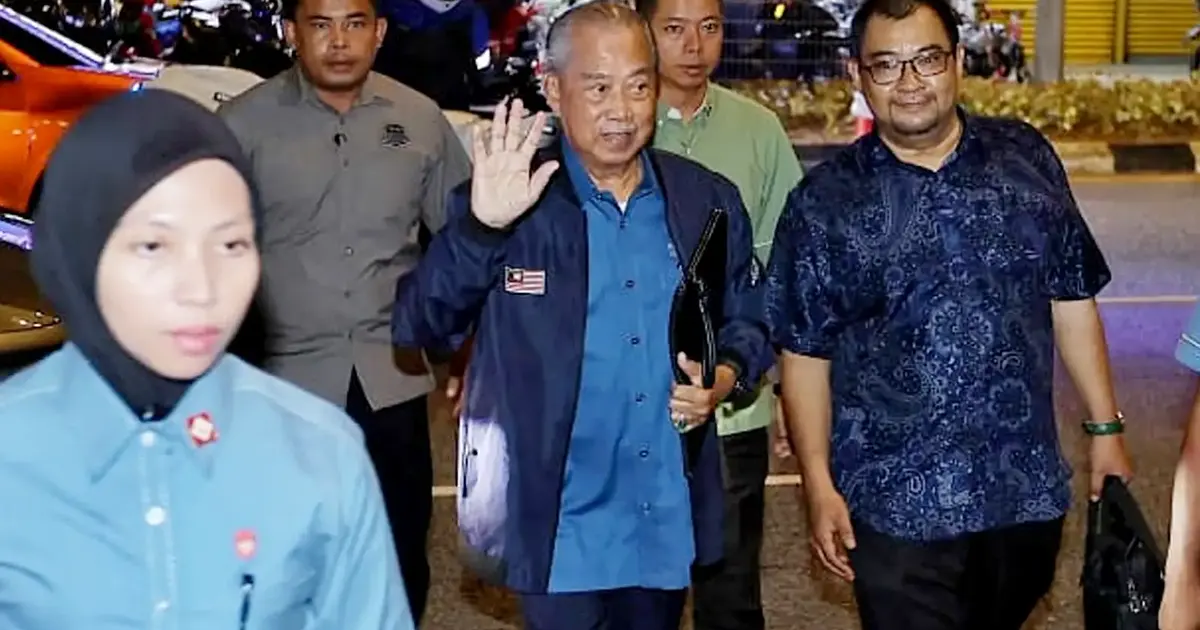
Tan Sri Muhyiddin Yassin convened an urgent gathering of Perikatan Nasional leadership on Friday night, bringing together key figures from coalition member parties to navigate the political turbulence triggered by PAS's abrupt decision to terminate its relationship with Bersatu. The emergency session reflects the mounting instability within the opposition alliance, which has faced successive setbacks in recent months as its constituent parties grapple with conflicting interests and strategic disagreements.
The immediate catalyst for the hastily arranged meeting centres on PAS's formal withdrawal from its partnership with Bersatu, a move that carries significant ramifications for the coalition's cohesion and electoral viability. For months, tensions between the two Malay-Muslim dominated parties have simmered beneath the surface, with disagreements over electoral strategy, seat distribution, and ideological positioning creating rifts that have proven increasingly difficult to manage. The severance represents not merely a tactical recalibration but a fundamental rupture in what was once positioned as a natural alliance between parties claiming similar grassroots appeal and voter demographics.
Bersatu's standing within Perikatan Nasional has been precarious even before PAS's announcement. The party, which emerged from a 2020 split within UMNO spearheaded by Muhyiddin, has struggled to establish an independent power base and has frequently found itself negotiating from a position of weakness within the broader coalition. Its reliance on PAS and other member parties for parliamentary support has left it vulnerable to leveraging and exclusion, particularly as calculations around coalition viability have shifted in the face of changing political fortunes across Malaysia.
The Friday evening meeting will require Muhyiddin and Bersatu's leadership to articulate a coherent response to PAS's departure while simultaneously reassessing the coalition's fundamental architecture. The discussions will likely explore whether Bersatu can sustain meaningful influence within Perikatan Nasional as a diminished entity, or whether the party faces pressure to seek alternative political arrangements. The outcomes will carry implications not only for the opposition's immediate parliamentary positioning but also for the trajectory of electoral politics ahead of the next general election cycle.
PAS's decision to sever ties cannot be divorced from the broader competitive dynamics within Malaysia's opposition landscape. The Islamic party has consistently calculated that its interests are better served by pursuing independent positioning and establishing direct electoral appeal rather than being bound to coalition arrangements that may constrain its autonomy. The severance reflects a judgment that PAS gains more political capital by operating unilaterally than by remaining tied to allies perceived as less ideologically aligned or electorally disadvantageous.
For Muhyiddin personally, the crisis poses both a leadership test and a strategic challenge. As the architect of Perikatan Nasional, he faces pressure to either stabilize the alliance or oversee its graceful dissolution. The manner in which he navigates the PAS-Bersatu rupture will significantly influence perceptions of his political acumen among coalition partners and within the broader opposition movement. His credibility as a coalition builder rests partly on his ability to manage such moments of acute tension and competing interests among member parties.
The institutional weakness of Perikatan Nasional as a coalition has become increasingly apparent through successive crises. Unlike formal mergers or integrated party structures, coalition arrangements rely heavily on personal relationships, mutual advantage calculations, and shared electoral interests—all of which can evaporate rapidly when circumstances shift. The absence of binding institutional mechanisms to manage disputes or enforce discipline means that withdrawal becomes an option whenever a party member calculates that departure serves its interests better than continued membership.
Bersatu's vulnerability extends beyond the immediate PAS severance. The party faces ongoing questions about its parliamentary relevance, its ability to win seats independently, and its political sustainability as a distinct entity. These structural weaknesses will likely feature prominently in Friday's discussions, as Muhyiddin and other leaders confront difficult questions about whether Bersatu can function effectively as a reduced member of an already fragmented coalition, or whether the party's long-term interests lie in pursuing different political arrangements.
The implications for Malaysian opposition politics extend far beyond Perikatan Nasional's internal dynamics. The coalition's destabilization comes at a time when the broader opposition movement faces questions about its capacity to present a unified, credible alternative to the current government. Regional observers view coalition stability as essential for opposition parties to mount effective electoral challenges and develop coherent policy platforms capable of resonating with voters beyond narrow factional bases. The PAS-Bersatu rupture therefore reverberates across the entire opposition ecosystem, amplifying concerns about fragmentation and strategic incoherence.
The meeting itself will serve multiple functions beyond immediate crisis management. It provides an opportunity for member parties to reassess coalition viability, explore the possibility of restructuring arrangements to address grievances that contributed to PAS's departure, and potentially signal to external observers that Perikatan Nasional retains sufficient cohesion to warrant serious political consideration. How substantively these discussions engage with underlying structural problems—rather than merely treating them as temporary interpersonal disputes—will largely determine whether the coalition survives this episode intact or faces further destabilization in coming weeks.

