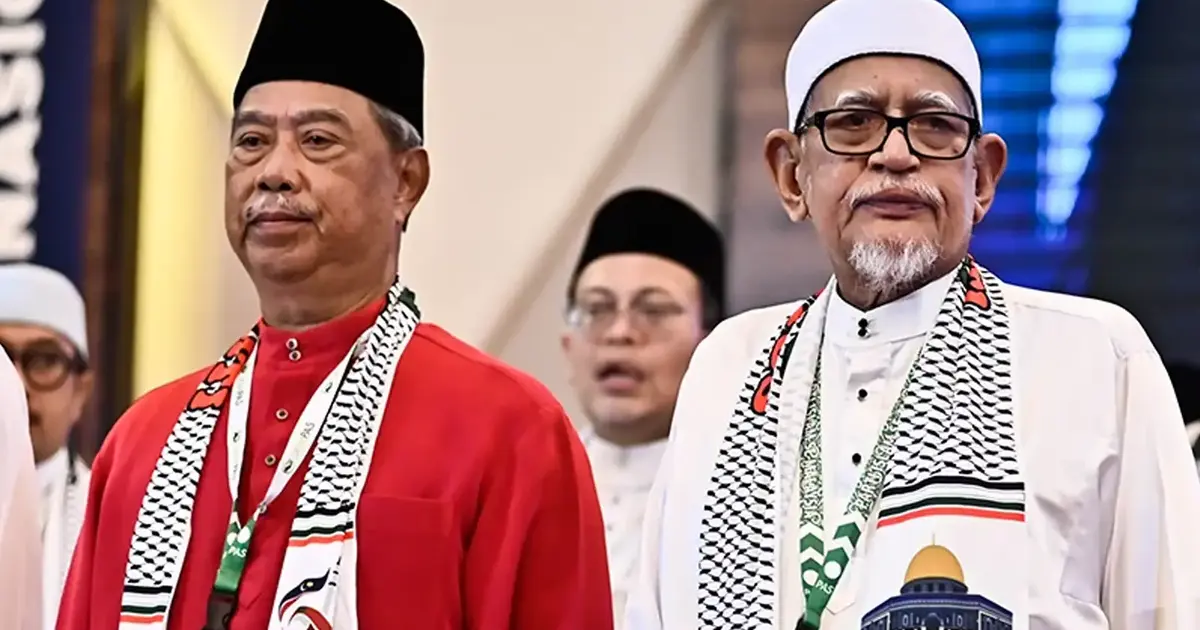
Bersatu president Muhyiddin Yassin has launched a public rebuke of PAS, alleging that the Islamic party has breached coalition protocol by independently pursuing discussions with Barisan Nasional. The accusation underscores deepening tensions within Perikatan Nasional, the coalition that has anchored Malaysian politics since 2020. Muhyiddin's statement reflects frustrations over what he characterises as unilateral decision-making that prioritises individual party interests over the broader alliance framework.
The controversy emerges at a particularly delicate moment for Malaysia's political architecture. Perikatan Nasional has served as a crucial stabilising force following the political upheavals of 2020, yet persistent disagreements between its major components—Bersatu, PAS, and smaller partners—continue to test the coalition's resilience. Muhyiddin's willingness to air grievances publicly suggests that behind-the-scenes tensions have reached a threshold where containment is no longer viable, raising questions about the durability of arrangements many analysts regarded as fragile.
PAS's independent outreach to Barisan Nasional represents a strategic pivot that contradicts explicit or implicit agreements within Perikatan Nasional. The Islamic party's actions suggest an assessment that flexibility in coalition positioning might serve its electoral and political interests better than rigid loyalty to existing arrangements. This calculation reflects PAS's significant electoral machinery and negotiating leverage, particularly given its strength in several key states and parliamentary constituencies. However, such moves inevitably trigger suspicion among coalition partners concerned about hidden agendas or shifting loyalties.
Muhyiddin's criticism highlights a fundamental challenge plaguing Malaysian coalition politics: the absence of binding institutional mechanisms to enforce unity. Unlike Westminster-style systems with formalised party discipline, Malaysian coalitions rely heavily on trust, mutual benefit calculations, and personal relationships between leaders. When these informal foundations crack, as appears to be happening now, entire arrangements become vulnerable. The Bersatu leader's public condemnation suggests he perceives the breach as significant enough to warrant escalation beyond private discussions.
The implications for Perikatan Nasional's stability deserve careful consideration. A coalition that cannot maintain internal discipline or prevent members from pursuing parallel negotiations faces credibility questions regarding its ability to govern coherently. For voters and investors assessing Malaysia's political environment, such discord signals potential governance challenges ahead. If coalition partners cannot coordinate on basic matters of strategy and communication, concerns naturally arise about their capacity to manage economic policy, legislative priorities, or inter-party resource allocation.
PAS's apparent willingness to engage with Barisan Nasional simultaneously reflects the complex realities of Malaysian coalition dynamics. Political parties often explore multiple options, hedge their bets, and maintain relationships across formal alliances—a pragmatic response to an unpredictable political landscape where coalitions have historically proven unstable. From PAS's perspective, maintaining communication channels with Barisan Nasional may represent prudent contingency planning rather than opportunistic betrayal. Nevertheless, such behaviour inevitably generates the suspicion that Muhyiddin now publicly articulates.
The historical context enriches understanding of this dispute. Perikatan Nasional emerged from the extraordinary circumstances of 2020, when political manoeuvring and defections created an opening for Muhyiddin and PAS to form a governing coalition. Neither component has completely shed the mentality of political opportunism that characterised that period. The alliance has never achieved the depth of integration or institutional maturity that characterises longer-established coalitions. Trust between major figures remains conditional and contingent on demonstrated mutual benefit.
Barisan Nasional's apparent willingness to engage with PAS separately indicates its own strategic recalibration. Historically Malaysia's dominant coalition, Barisan Nasional has declined significantly since 2018. Reopening channels with PAS offers potential advantages: PAS brings electoral strength in crucial constituencies, Islamic credentials that resonate with certain voter demographics, and demonstrated capacity to mobilise supporters. For Barisan Nasional, such conversations represent attempts to rebuild influence and parliamentary numbers after consecutive electoral disappointments.
The broader Southeast Asian dimension merits attention. Malaysian coalition politics influence regional stability and investment confidence. When major coalitions demonstrate internal coherence, foreign observers gain confidence in Malaysia's political predictability. Conversely, visible fractures and public recriminations raise questions about governmental continuity and the reliability of policy frameworks. This dispute therefore carries implications extending beyond domestic political theatre.
Muhyiddin's decision to air criticism publicly rather than manage tensions discreetly suggests calculation that transparency serves Bersatu's interests. By highlighting PAS's apparent breach, Muhyiddin positions Bersatu as the aggrieved party committed to coalition principles, potentially strengthening his standing with other Perikatan Nasional members and among voters valuing political stability. Simultaneously, the public rebuke signals that such transgressions carry costs—a message intended both for PAS and for potential coalition partners evaluating reliability.
The dispute ultimately raises fundamental questions about Malaysian coalition politics' sustainability. Until structural reforms establish clearer protocols, binding mechanisms, and enforcement procedures, coalitions will remain vulnerable to unilateral actions and strategic repositioning by ambitious parties. Whether Muhyiddin and PAS can resolve this particular dispute through renewed dialogue or whether it precipitates broader realignment remains uncertain. What appears clear is that Perikatan Nasional's internal contradictions continue intensifying, requiring substantive remedial action to prevent further deterioration.

