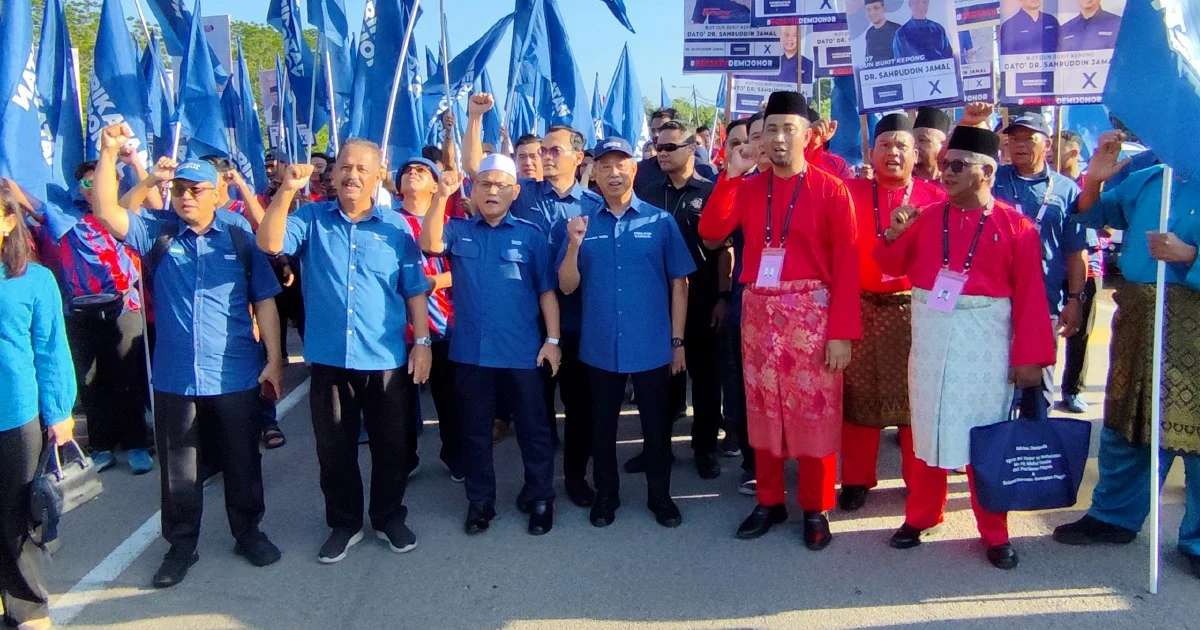
Tan Sri Muhyiddin Yassin, the president of Bersatu, made his presence felt at Pagoh on Tuesday morning by accompanying party nominee Sahruddin to the nomination centre, a symbolic gesture highlighting the party's commitment to the keenly contested Bukit Kepong state seat in the ongoing Johor election. The Bersatu leader arrived at the Pagoh Sports Complex Hall at 8.45 am, where nomination proceedings were taking place for candidates vying to represent the constituency.
The move reflects a coordinated strategy by Bersatu to project confidence and organisational strength in one of the key battlegrounds of the Johor state poll. By personally attending the nomination process alongside his candidate, Muhyiddin sent a clear message to party members, supporters, and rival coalitions that Bersatu views the Bukit Kepong contest as strategically significant to its electoral objectives in the state.
Bukit Kepong carries particular resonance in Johor's political landscape, serving as a conventional barometer of support for competing political blocs. The constituency's voting patterns have historically reflected broader trends in state politics, making it a crucial indicator of electoral momentum. Bersatu's decision to field a candidate and invest leadership attention in the nomination process suggests the party assesses the seat as winnable or at minimum defensible.
Muhyiddin's hands-on participation in the nomination day proceedings demonstrates his willingness to engage directly in campaign activities, contrasting with leadership styles in some competing parties where national figures maintain distance from grassroots nomination events. This approach underscores his attempt to maintain tight control over the party apparatus and reinforce party discipline as Bersatu navigates an increasingly complex coalition landscape in Malaysia.
The Johor state election represents a critical test for Bersatu's relevance in Malaysian politics. The party, which emerged from a split within UMNO and subsequently underwent its own internal fractures, has struggled to establish a stable identity within coalition frameworks. Strong performance in Johor could strengthen Muhyiddin's hand in federal-level coalition negotiations and provide concrete evidence of electoral viability beyond incumbency advantages.
Sahruddin's nomination for Bukit Kepong marks a continuation of Bersatu's strategy of fielding candidates across diverse constituencies rather than concentrating resources in traditional strongholds. This approach, while potentially spreading party resources thin, allows Bersatu to maintain a presence across the state and prevent rival coalitions from capturing seats unopposed. The party's calculation appears to be that contesting widely maintains organisational engagement and provides opportunities for unexpected gains.
The nomination process itself serves as more than mere procedural formality in Malaysian electoral contests. Nomination days generate substantial media coverage and provide opportunities for parties to demonstrate grassroots mobilisation capability. The presence of senior party figures like Muhyiddin signals to observers the intensity of party focus on particular seats and can influence voter perceptions about candidate viability and party momentum.
Johor's electoral significance extends beyond state-level implications for Malaysian national politics. As the home state of numerous prominent political figures across different coalitions, election results here carry outsized importance for future coalition formation at federal level. Strong showing by any coalition in Johor creates leverage in subsequent negotiations over federal positions and portfolio allocations, making apparently local contests inherently linked to national political dynamics.
Bersatu's positioning in the Johor election also reflects the broader fragmentation of Malay-Muslim politics in Malaysia. With multiple parties competing for the same voter base across ideological spectrums, internal party unity becomes increasingly important for electoral success. Muhyiddin's public engagement with nomination activities serves a secondary purpose of reinforcing party cohesion and preventing defections to competing parties offering alternative political homes for Malay-Muslim voters.
The nomination centre event provided Bersatu with an opportunity to generate favorable coverage and shape the narrative around its campaign. Photography and media access during nomination proceedings offer free publicity that amplifies campaign messaging beyond paid advertising. By ensuring Muhyiddin's visible participation, Bersatu maximised the newsworthiness of the nomination event and reinforced its portrayal as a serious contender in the Johor state poll.
Looking ahead, the outcome in Bukit Kepong will form part of the broader assessment of Bersatu's electoral performance in Johor. Collectively, these results will determine the party's trajectory, influence future coalition arrangements, and shape Muhyiddin's political standing within the increasingly volatile landscape of Malaysian politics. The nomination process, therefore, represents not merely an administrative step but a visible marker of competitive intent.

