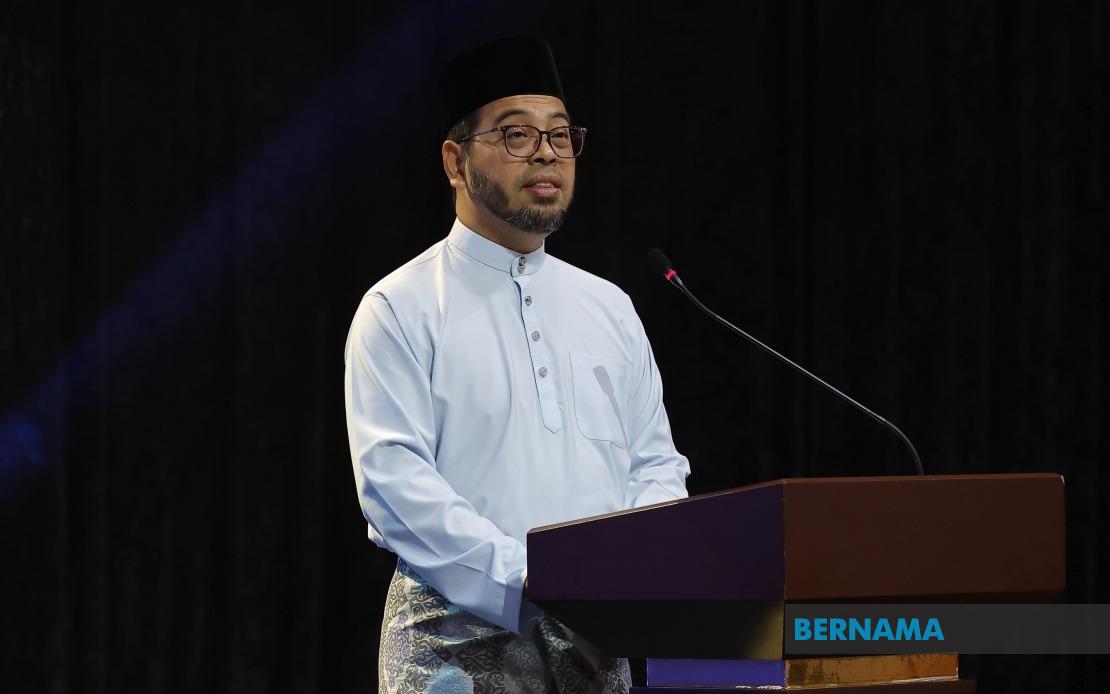
Religious Affairs Minister Dr Zulkifli Hasan has called on the Muslim community in Malaysia to transcend existing divisions and resolve long-standing grievances as a foundation for building a more cohesive ummah capable of addressing mounting external pressures. Speaking at the national Maal Hijrah 1448H/2026M celebration held at Putra Mosque in Putrajaya on June 17, Zulkifli emphasized that sustained hostility within Muslim society fundamentally weakens collective resilience and obstructs meaningful progress toward shared objectives.
The ceremony, which carried the theme "MADANI Dihayati, Ummah Diberkati", drew high-level participation including Sultan Nazrin Shah of Perak and Deputy Prime Minister Datuk Seri Fadillah Yusof, underscoring the government's commitment to religious and community dialogue at the highest levels. The presence of these officials reflected broader recognition within Malaysia's political establishment that addressing Muslim unity has become a priority concern as the nation faces mounting economic uncertainty and geopolitical volatility affecting the wider region.
Zulkifli articulated a vision of transformation rooted in personal development, contending that genuine societal advancement requires individuals to undergo profound internal change spanning intellectual, spiritual and moral dimensions. This framing positions community unity not merely as a political objective but as a consequence of individual spiritual maturation and recommitment to shared Islamic principles. By linking personal transformation to collective strength, the minister sought to reframe the unity discussion beyond surface-level reconciliation toward deeper philosophical and faith-based renewal.
The minister drew explicit connections between internal Muslim cohesion and Malaysia's capacity to manage external challenges. He noted that Malaysia remains vulnerable to global disruptions spanning supply chain interruptions and macroeconomic volatility currently impacting economies worldwide. This assessment reflects growing awareness among Malaysian policymakers that regional economic resilience increasingly depends on domestic social stability and collective confidence, making Muslim community unity a matter of strategic national interest rather than purely religious concern.
Zulkifli's remarks advanced a contemporary reinterpretation of the hijrah concept, repositioning it beyond the classical Islamic understanding of physical migration to encompass continuous spiritual and moral journey. Under this expanded framework, hijrah becomes an ongoing process of discarding destructive behaviors and embracing character traits that cultivate social harmony among Muslims. This intellectual recasting allows religious leadership to address modern challenges of social fragmentation and communal discord through language rooted in Islamic tradition while remaining relevant to contemporary Malaysian circumstances.
The minister explicitly linked strengthened community bonds to the effective implementation of initiatives designed to elevate Muslim dignity and preserve Islamic values within Malaysian society. He argued that religious objectives cannot be successfully advanced when the community remains fractured by internal disputes, creating a logical chain connecting unity to religious preservation. This argument potentially carries weight across diverse Muslim constituencies that may otherwise disagree on specific doctrinal or political matters but share concern about Islam's place in an increasingly pluralistic Malaysian society.
Acknowledging Malaysia's multi-religious and multi-ethnic composition, Zulkifli affirmed that all citizens regardless of faith background bear collective responsibility for maintaining national peace, stability and shared prosperity. This inclusive framing balanced the emphasis on Muslim unity with recognition of broader national cohesion requirements, suggesting that religious community strengthening serves not sectarian interests but overall national wellbeing. Such positioning may prove significant as Malaysia navigates complex questions about the relationship between religious identity and national belonging.
The ceremony featured recognition of prominent Islamic scholars and intellectuals. The National Tokoh Maal Hijrah award went to International Islamic University Malaysia Rector Prof Emeritus Datuk Dr Osman Bakar, acknowledging his contributions to Islamic intellectual life within Malaysia. Moroccan scholar Dr Ahmad Al-Raysuni received the International Tokoh Maal Hijrah award, indicating Malaysia's engagement with broader Islamic scholarly networks and commitment to positioning itself within wider Muslim intellectual circles. These awards suggested the government's interest in elevating academic and spiritual leadership as models for the kind of personal and community development Zulkifli had emphasized.
The gathering at Putra Mosque carried symbolic weight as the location for articulating government positions on Muslim community development. The venue's formal religious setting reinforced the spiritual rather than purely political nature of the message, though the attendance of senior government officials clearly indicated state endorsement of the unity agenda. This combination of religious venue and political presence reflected how Malaysian governance increasingly integrates religious and administrative authority on matters affecting Muslim citizens.
Zulkifli's call for unity emerges against a backdrop of persistent theological and political differences within Malaysian Islam, including longstanding disagreements between different school organizations, reform movements, and interpretations of Islamic law and practice. While the minister did not explicitly address these specific fissures, the emphasis on transcending disputes and abandoning hostility implicitly acknowledged their reality. The challenge of translating rhetorical calls for unity into concrete institutional changes remains substantial, particularly given entrenched organizational interests and differing visions for Islam's role in Malaysian public life.
The economic dimension underlying the unity appeal warrants particular attention for Malaysian and Southeast Asian observers. As inflation, currency volatility and supply chain disruptions continue affecting the region, Malaysian policymakers appear to believe that social cohesion and national confidence become increasingly precious economic assets. A fragmented Muslim majority community might struggle to maintain the collective confidence necessary for sustained economic activity and investment, making the unity agenda partly an economic rather than purely religious calculation.
Zulkifli's remarks also reflect recognition within Malaysia's religious establishment that contemporary global challenges require sophisticated responses transcending traditional sectarian divisions. Climate disruption, migration pressures, technological change and evolving geopolitical alignments affect all Muslim communities regardless of doctrinal differences. From this perspective, Muslim unity becomes a prerequisite for effective collective action on issues that transcend theological disputes and demand pragmatic cooperation toward shared survival and prosperity.