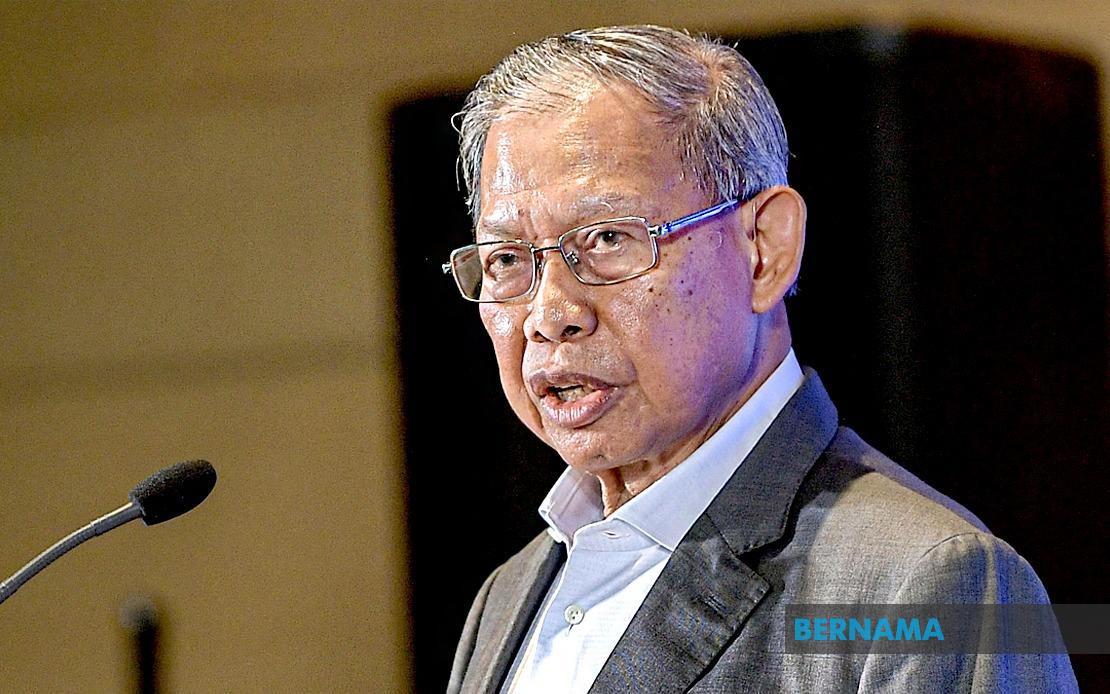
Datuk Seri Mustapa Mohamed has drawn a final line under his electoral ambitions, declaring at an event in Pasir Mas that he will not be returning to contest seats in the upcoming 16th General Election. The 76-year-old former Jeli Member of Parliament, who returned to UMNO in June after a five-year stint with Bersatu, used the occasion to make an emphatic case for generational renewal within the party and Malaysian politics more broadly.
Speaking candidly about his physical condition, Mustapa acknowledged the practical realities of advancing age that have prompted his decision to step away from electoral competition. He described his gait as no longer steady and suggested that fairness to political parties and voters alike demands that politicians recognise when it is time to make space for others. This acknowledgment represents a refreshing directness in Malaysian political discourse, where senior figures often remain reluctant to explicitly address the succession question.
The former Minister of International Trade and Industry framed his withdrawal not as a retreat but as a strategic repositioning of his political engagement. Rather than disappearing from public life entirely, Mustapa envisions a role in which he provides mentorship and strategic counsel to a new cohort of UMNO leaders. He emphasised that although his days of active campaigning have ended, he remains committed to the party's welfare and to Malaysia's political future, viewing his experience as an asset that younger colleagues can draw upon.
Mustapa's public advocacy for generational leadership carries particular weight given his own trajectory. His career spanned multiple ministerial roles and decades of parliamentary service, giving him standing to speak about the importance of renewal. His willingness to explicitly encourage younger politicians to step forward contrasts with the pattern in many Asian democracies, where entrenched leadership structures sometimes resist such transitions. In the Malaysian context, where UMNO has grappled with questions of party reinvigoration and public confidence, such statements from respected figures may help reshape perceptions about who bears responsibility for the party's future direction.
The timing of this announcement, coming just weeks before what many analysts expect will be a general election call within the next 12 to 18 months, signals that Mustapa's decision is not merely personal but reflects broader calculations within UMNO about succession planning. His return to the party in June, after leaving in September 2018, had itself generated speculation about his potential electoral involvement. His clarification now removes any ambiguity and may clear the path for other candidates to develop campaigns without concern about competition from a heavyweight figure.
Beyond electoral politics, Mustapa has outlined plans to remain visible through academic channels. He intends to share his knowledge and experience with students at both public and private tertiary institutions, suggesting that his contribution to Malaysia's development will increasingly occur through education and knowledge transfer rather than through direct political competition. This approach aligns with international trends wherein retired senior politicians have sought to influence policy directions and develop talent through teaching and advisory roles.
For UMNO specifically, Mustapa's positioning as a mentor rather than a competitor may help address a significant vulnerability the party has faced in recent years: questions about whether senior figures prioritise institutional renewal or personal retention of power. His explicit endorsement of younger leaders assuming responsibilities, coupled with his own withdrawal, creates political space and sends a symbolic message about generational transition that could prove valuable as the party attempts to rebuild public trust.
The Independence Month celebration held alongside the "Welcome Home" event underscored the patriotic dimension of Mustapa's message. His articulation of a commitment to national excellence beyond his own political career frame his withdrawal as consistent with a broader dedication to Malaysia's wellbeing. This framing allows him to maintain political relevance and institutional influence even as he steps back from electoral competition, a balance that many retiring politicians struggle to achieve.
Mustapa's emphasis on fair representation for younger candidates also carries practical implications for seat distribution within UMNO ahead of any general election. Constituencies currently held by ageing MPs represent potential opportunities for party renewal, and Mustapa's public backing for such generational shifts could encourage senior colleagues to consider their own timing and succession planning. In a party where seniority and tenure have traditionally conferred considerable power, such encouragement from a respected elder statesman may prove influential.
The broader Malaysian political landscape has increasingly forced questions about leadership transitions, not only within UMNO but across the political spectrum. As the nation approaches what is likely to be a pivotal electoral contest within the current parliamentary term, the readiness of political parties to facilitate generational change may significantly influence voter perceptions and electoral outcomes. Mustapa's public commitment to supporting younger leaders, combined with his own withdrawal from direct competition, represents one significant data point in this ongoing process of Malaysian political evolution.

