Malaysia's commitment to social cohesion rests fundamentally on the principle of mutual respect, according to Queen Raja Zarith Sofiah, who underscored this value as essential to the nation's continued stability and prosperity. Speaking through a statement shared on the official Facebook page of Sultan Ibrahim Sultan Iskandar, Her Majesty reflected on the respect that has long characterised interactions among Malaysians of different backgrounds, affirming that this ethos remains as vital today as it has been throughout the country's history of multiculturalism.
The Queen's remarks come at a time when social harmony and intercommunal understanding are frequently tested by divisive rhetoric and polarisation across Southeast Asia. By elevating mutual respect to the status of foundational principle, Her Majesty reinforced the role that personal dignity and courteous conduct play in maintaining the social fabric. This message carries particular resonance in a nation where religious diversity, ethnic plurality, and competing narratives can strain cohesion if not actively managed through conscious cultivation of respectful engagement.
Central to Her Majesty's statement was a reference to Islamic teaching on interpersonal relations. The Queen specifically drew attention to a hadith recorded by Al-Bukhari, narrated through Abu Hurairah RA, in which Prophet Muhammad articulated three foundational principles of ethical conduct. The teaching stipulates that believers should refrain from causing harm to their neighbours, should honour their guests, and should either speak words of goodness or maintain silence rather than spread negativity. These principles, spanning the realms of domestic relations, hospitality, and discourse, collectively establish a framework for respectful coexistence that transcends religious boundaries.
The invocation of Islamic sources to advocate for broader social values demonstrates how religious principles can serve as bridges to shared ethical ground rather than divisive barriers. In the Malaysian context, where Islam is the official religion yet the Constitution guarantees freedom of religion, such articulation by the Queen signals that values rooted in faith traditions need not exclude those of other backgrounds from their moral ambit. The emphasis on restraint in speech and the elevation of courtesy reflects timeless wisdom relevant to contemporary challenges of online discourse and public debate, where anonymity and digital platforms frequently erode the restraint and respect that face-to-face interaction encourages.
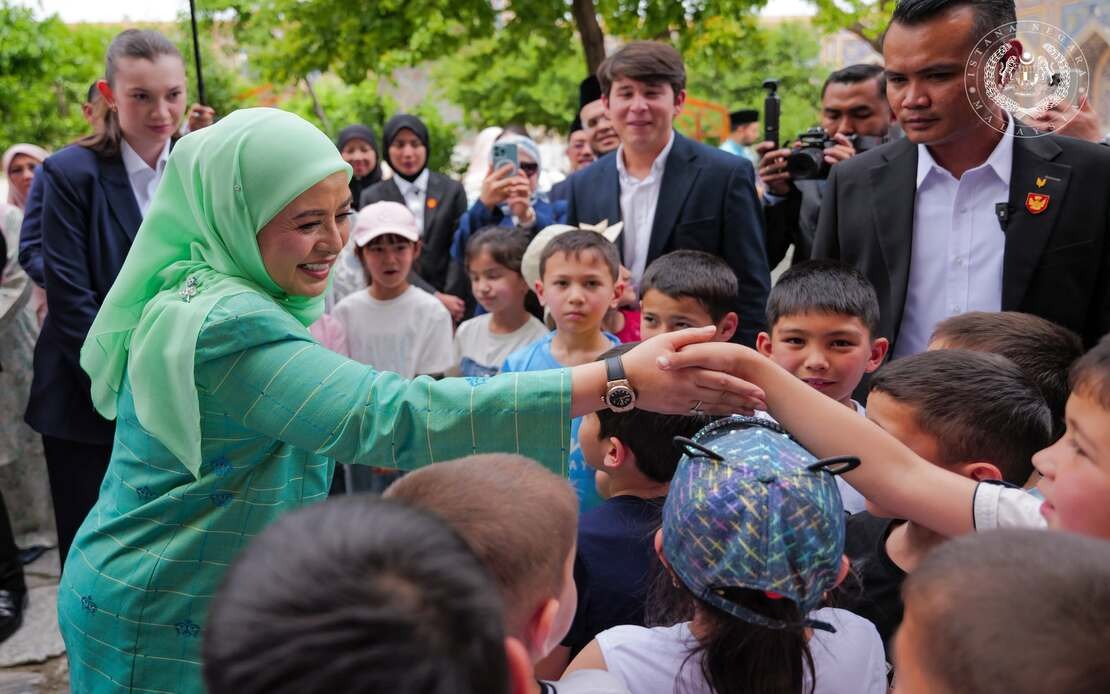
Her Majesty also referenced a moment of direct engagement that illustrated these principles in practice. During an encounter at Istana Negara in February, the Queen interacted warmly with more than one hundred international tourists representing diverse nations and cultures. This interaction exemplified gracious conduct toward visitors, embodying the Islamic principle of honouring guests while simultaneously demonstrating Malaysia's capacity to welcome and make comfortable those from outside the national community. Such moments of genuine human connection, often overlooked in discussions of national harmony, serve as practical demonstrations of respect in action rather than rhetoric alone.
The significance of the Queen's intervention in the discourse on social harmony lies partly in the platform and authority she commands. As a constitutional figurehead respected across Malaysia's complex political landscape, Her Majesty can speak to values that transcend partisan divisions. By framing mutual respect as foundational to unity and well-being rather than as merely aspirational rhetoric, she positioned it as essential to the practical functioning of a multiethnic, multireligious state. This distinction matters considerably, as it reframes respect not as a luxury available only in times of abundance but as a prerequisite for national stability and economic progress.
The timing of the Queen's statement also merits attention. Regional tensions, including disputes over maritime boundaries, resource competition, and ideological differences across Southeast Asia, create environments where nations may prioritise narrow national interest over broader regional harmony. Malaysia's own experience navigating pluralism and managing competing visions of national identity makes its reaffirmation of respect particularly meaningful as a model for the wider region. Smaller and more diverse states throughout Southeast Asia confront similar challenges in balancing national cohesion with individual freedom and community representation.
Furthermore, the Queen's emphasis on courtesy both domestically and internationally suggests awareness that Malaysia's standing in regional and global affairs depends partly on the reputation for respect and hospitality that the nation cultivates. Tourism, trade, and diplomatic relations all benefit when a country is perceived as welcoming and respectful toward outsiders. By highlighting the interaction with international visitors, Her Majesty connected local social values to national economic and soft power interests, showing how personal conduct aggregates into collective national character.
The broader implications of the Queen's intervention extend to contemporary challenges within Malaysian society itself. Issues ranging from interfaith dialogue to political civility, from workplace relations to online behaviour, all hinge on whether mutual respect can be sustained as a guiding principle. The Queen's careful grounding of respect in both Islamic teaching and universal ethical principle creates space for diverse segments of society to embrace this value from their own philosophical and spiritual frameworks rather than as an imposition from external sources.
Moving forward, the Queen's articulation of mutual respect as foundational to harmony offers Malaysian society and its regional neighbours a compelling reminder that inclusive societies require constant, deliberate cultivation of respectful engagement. This is not a passive state but an active practice requiring intentional choice, particularly in moments of disagreement or tension. As Malaysia continues to navigate its role as a bridge-builder in a complex region, the cultivation of mutual respect at every level—from interpersonal relations to international diplomacy—remains essential to achieving the stability and prosperity that all Malaysians and their neighbours deserve.

