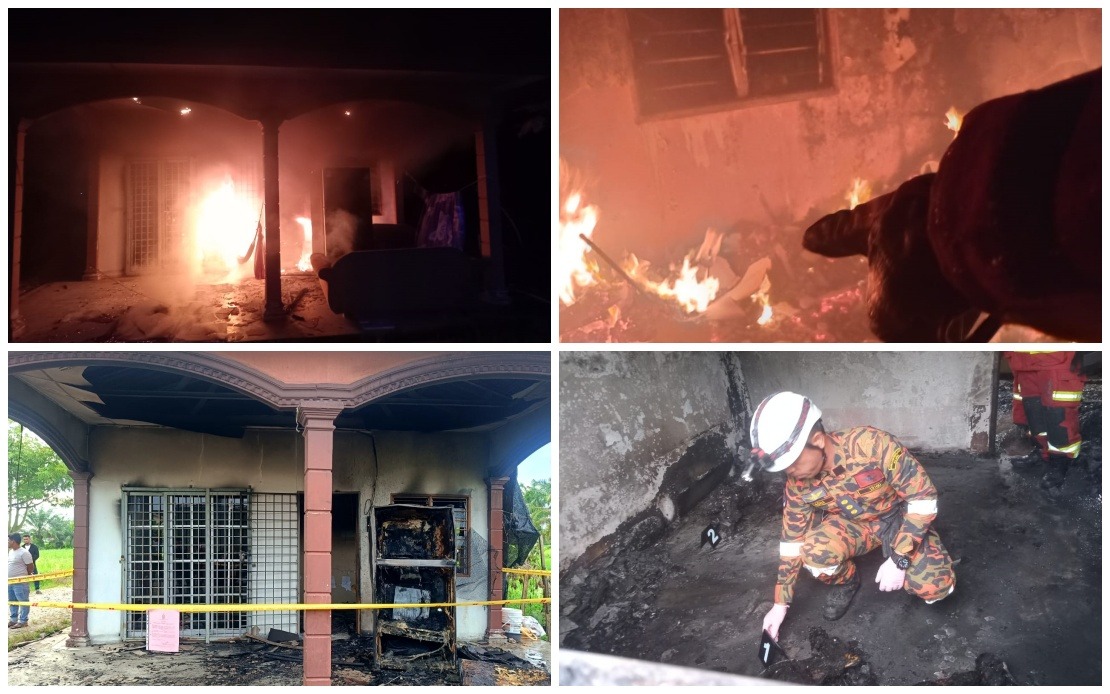
A tragic house fire in the early hours of Friday claimed the lives of three members of a Myanmar refugee family in Taman Serai Maju, Bagan Serai, Perak, leaving their mother hospitalized with burn injuries. The incident highlights ongoing vulnerabilities facing refugee communities in Malaysia, many of whom live in overcrowded residential spaces and face heightened risks from domestic hazards.
The deceased were identified as Mohd Yunus Nor Ali, 27, and his two young sons Muhammad Woheed Mohd Yunus, aged 6, and Mohamad Aheed Mohd Yunus, aged 3. The children's mother, Saniya Jahan Juma Abul Kasim, 24, also a Myanmar refugee, sustained burns to her hands and feet and was transported to hospital for treatment. Emergency responders received the alert at 5:17 am, with the first fire brigade vehicle reaching the scene thirteen minutes later.
According to Perak Fire and Rescue Department director Datuk Sayani Saidon, the residential structure was a modest Class A house measuring 20 feet by 40 feet that sheltered seven foreign nationals. Upon arrival, approximately 70 per cent of the building was engulfed in flames. The blaze had spread rapidly through the confined space, trapping occupants and complicating rescue efforts. Sayani's team deployed systematic search and rescue protocols using established firefighting procedures to locate and extract victims from the burning structure.
The rescue operation revealed a scene of devastation in the house's first room, where all three victims were discovered. Medical personnel from the Ministry of Health who arrived at the scene pronounced all three deceased at the location. The swift response prevented further casualties, though paramedics provided emergency care to the surviving family member before she was transported via Emergency Medical Rescue Services vehicle to receive hospital treatment for her injuries.
Firefighters managed to suppress the flames by 6:20 am, with full containment of the incident completed by 7:35 am. The bodies were subsequently handed over to Royal Malaysia Police for formal procedures and investigation. The confined space of the residential unit and the density of occupants likely contributed to the difficulty in rescue operations and the tragic outcome.
Preliminary investigations by the Perak Fire and Rescue Department's forensic team indicate that the fire originated in the first room where the victims were located. However, the precise cause remains under active investigation. Authorities are examining electrical systems, potential open flames, or other ignition sources that may have triggered the blaze. The department has not yet released conclusive findings regarding the sequence of events that led to the fire's outbreak.
This tragedy underscores the precarious living conditions facing many refugee families across Malaysia. Myanmar refugees, particularly those from the Rohingya community, often inhabit shared residential spaces due to economic constraints and limited housing options. Such overcrowded conditions, combined with aging or poorly maintained infrastructure, create significant fire safety risks. Many residents lack awareness of emergency procedures or access to adequate fire prevention equipment.
The incident also reflects broader challenges in housing standards and building safety compliance within informal settlements and densely populated residential areas. While authorities enforce regulations in formal housing sectors, enforcement in areas housing vulnerable populations often lags. This disparity in regulatory oversight exposes refugee families to heightened environmental hazards they have limited capacity to mitigate independently.
Malaysia hosts one of the largest refugee populations globally, with approximately 180,000 registered Myanmar refugees according to UN records. This community faces systemic barriers to formal employment, education, and adequate housing, pushing many into marginal living arrangements. The death of two young children in this fire raises urgent questions about child protection mechanisms and welfare support systems available to refugee communities.
Local authorities and humanitarian organizations have increasingly called for enhanced fire safety protocols in areas with high concentrations of refugee populations. This includes provision of smoke detectors, fire extinguishers, emergency evacuation training, and community education initiatives delivered in languages accessible to foreign residents. Such preventive measures could significantly reduce mortality and injury rates in future incidents.
The tragedy also extends beyond immediate safety concerns to encompass emotional and psychological impacts on the surviving family and the broader refugee community in Bagan Serai. Losing a spouse and two children simultaneously represents devastating trauma for the hospitalized mother, compounded by the uncertainty of her legal status and access to comprehensive medical and psychological support services.
Investigations into this incident will likely prompt reviews of building safety standards in similar residential areas. The Royal Malaysia Police and Fire and Rescue Department will work to establish the definitive cause and determine whether regulatory violations or negligence contributed to the disaster. Their findings may inform policy discussions regarding housing standards and safety oversight for vulnerable populations.
As Malaysia continues hosting significant refugee populations, this incident serves as a stark reminder that protection extends beyond legal recognition and documentation. Ensuring adequate housing standards, fire safety provisions, and emergency preparedness for refugee communities represents both a humanitarian imperative and a practical public safety necessity for Malaysian communities nationwide.

