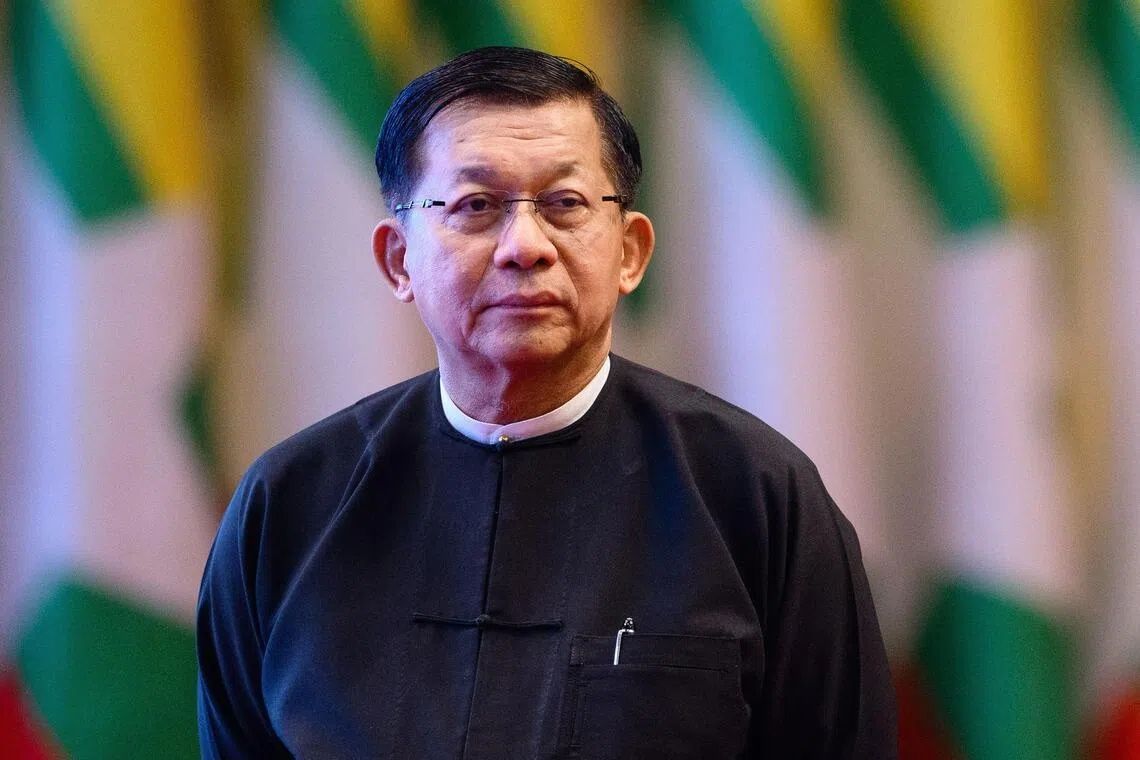
Myanmar's former military ruler Min Aung Hlaing touched down in Thailand on Thursday, marking his debut overseas journey since shedding his military uniform to assume the presidency of his isolated nation. The visit represents a carefully orchestrated effort to reposition Myanmar within the Southeast Asian community and signal that the country remains a viable partner despite international isolation stemming from the 2021 coup that toppled democratically elected leader Aung San Suu Kyi.
Min Aung Hlaing orchestrated the takeover four years ago, claiming electoral irregularities and promising a swift return to civilian rule. Instead, his consolidation of power triggered a devastating internal conflict that has claimed over 100,000 lives across competing factions, fragmenting Myanmar's political and social fabric. The subsequent civil war has created one of Southeast Asia's most intractable humanitarian crises, displacing millions and destabilising neighbouring regions.
In an audacious manoeuvre to restore legitimacy, the military junta organised elections in April that international observers and Western governments uniformly dismissed as choreographed theatre designed to legitimise military dominance beneath a civilian veneer. Despite these condemnations, Min Aung Hlaing emerged as president, technically stepping down from his formal military role while maintaining substantive control over state apparatus and security forces.
Thailand has emerged as the principal architect of Myanmar's gradual rehabilitation within regional structures, positioning itself as an intermediary between the isolated nation and Asean. This diplomatic initiative extends beyond bilateral engagement to encompass broader efforts within the eleven-member regional bloc, which has maintained significant distance from Myanmar's leadership since the putsch. The bloc's decision to exclude Myanmar's representatives from high-level summits reflected widespread concern about the coup's legitimacy, though this stance has begun softening through carefully calibrated measures.
Min Aung Hlaing's diplomatic offensive has accelerated since assuming civilian garb, encompassing strategic visits to major powers including India and China, along with fellow Asean member Laos. These carefully sequenced engagements demonstrate a calculated strategy to present Myanmar as a functioning state worthy of normalisation rather than pariah status. Thursday's Thailand visit, featuring formal ceremony at Government House and scheduled meetings with Prime Minister Anutin Charnvirakul, elevates this campaign to new prominence.
Yet significant contradictions underscore the limitations of Myanmar's rebranding efforts. While pursuing restoration of diplomatic credentials and regional acceptance, Myanmar's leadership has consistently rejected Asean's five-point consensus framework, which prescribes dialogue with opposition forces and transitional pathways toward genuine democracy. According to independent analyst David Mathieson, this paradoxical approach reflects Min Aung Hlaing's preoccupation with status and prestige rather than substantive political transformation. The military strongman appears intent on securing international recognition while resisting meaningful engagement with competing political actors within Myanmar itself.
Thailand possesses substantial practical motivations for pursuing normalised relations with its volatile neighbour. The porous Myanmar-Thailand border hosts numerous ethnic armed organisations engaged in protracted conflict with Rangoon's military, and spillover violence regularly threatens Thai communities residing in frontier zones. Simultaneously, Thailand grapples with the refugee crisis resulting from Myanmar's internal warfare, hosting millions of displaced persons in camps and informal settlements straining Bangkok's humanitarian and administrative capacity. Border stability remains foundational to Thai national security and economic development.
Beyond security dimensions, Thailand confronts emerging transnational criminal enterprises exploiting Myanmar's permissive governance environment. Cybercrime networks orchestrating international scams operate from Myanmar's borderlands with near impunity, while narcotics trafficking through the region continues generating substantial criminal profits and addiction problems throughout Southeast Asia. Thailand's Foreign Minister Sihasak Phuangketkeow explicitly flagged scam networks as priority discussion points during Min Aung Hlaing's visit, signalling that Bangkok views diplomatic engagement as instrumental to addressing these challenges.
The visit's formal programme emphasises economic and labour cooperation, with scheduled memorandums of understanding reflecting mutual interest in practical collaboration. A state dinner and business forum complement ceremonial elements, collectively conveying Thailand's effort to integrate Myanmar into normal diplomatic and commercial relationships. These protocols suggest Bangkok genuinely intends substantive engagement rather than purely symbolic gestures, though sceptics question whether Min Aung Hlaing will reciprocate with meaningful policy changes.
Concurrently, recent developments regarding Suu Kyi offer modest indications of potential humanitarian progress. The detained democratic leader received a visit from an International Committee of the Red Cross representative on Monday, constituting her first documented contact with a foreign official since her detention. Though remaining under house arrest and facing numerous legal charges, this meeting suggests Myanmar's authorities may be calibrating their approach toward international scrutiny, possibly influenced by Thailand's diplomatic engagement.
Human rights advocates and pro-democracy organisations vehemently oppose Thailand's accommodation of Min Aung Hlaing, arguing that diplomatic normalisation confers undeserved legitimacy upon a military leader responsible for crimes against humanity. Justice for Myanmar and similar organisations contend that Min Aung Hlaing, already subject to International Criminal Court warrants and Western sanctions, should face accountability rather than diplomatic recognition. This principled critique highlights the fundamental tension between pragmatic regional stability efforts and justice-oriented approaches to addressing the Myanmar crisis.
Thailand's calculated balancing act reflects broader Southeast Asian pragmatism regarding Myanmar's future trajectory. Rather than isolation and punishment, Bangkok has opted for engagement and integration, betting that sustained diplomatic contact and economic interdependence may eventually moderate Myanmar's military leadership and facilitate political normalisation. Whether this gamble produces genuine transformation or merely provides cover for continued authoritarian consolidation remains the fundamental question animating Myanmar's uncertain regional rehabilitation.

