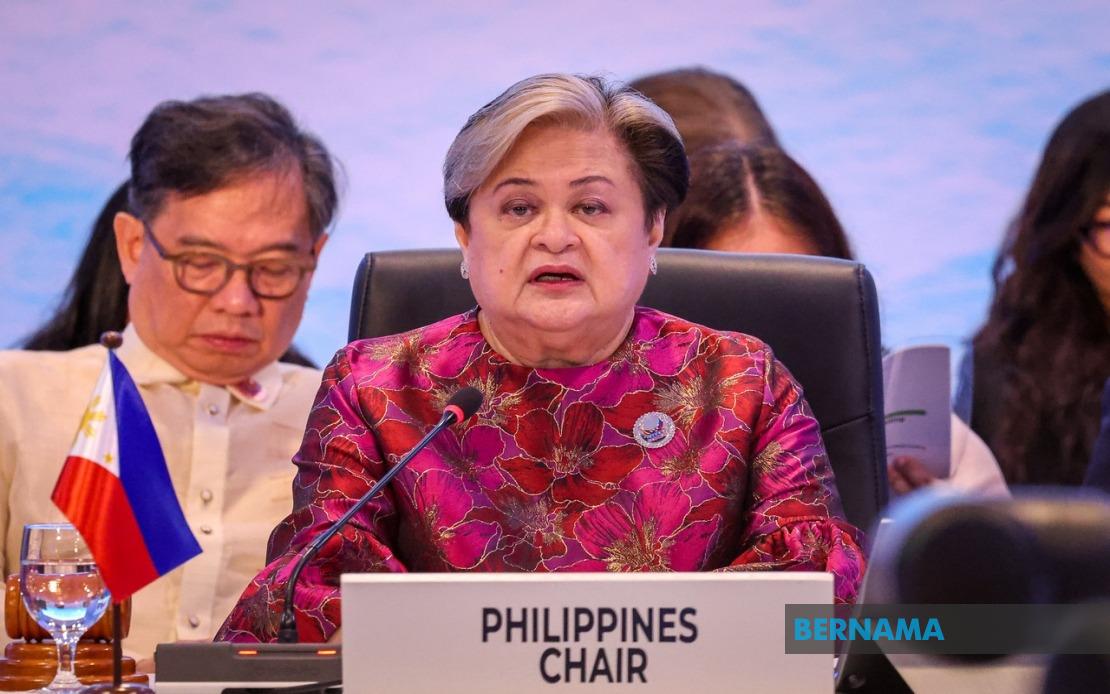
Myanmar's path back to full participation in ASEAN official gatherings remains uncertain, with no timeline for its reintegration into the regional bloc's meeting schedule. Speaking after the 59th ASEAN Foreign Ministers' Meeting in Pasay City on Thursday, Philippine Foreign Secretary Ma. Theresa Lazaro underscored that substantive progress on Myanmar's compliance with the Five-Point Consensus has not materialised sufficiently to warrant a change in the country's status, signalling that normalisation within ASEAN structures is likely months or years away.
The Five-Point Consensus, adopted in April 2021 following Myanmar's military coup, remains the foundational framework guiding ASEAN's engagement with the junta. The agreement calls for an immediate ceasefire, dialogue among all parties, humanitarian assistance, and mediation by an ASEAN envoy. Yet nearly four years after its adoption, questions persist about how seriously the Myanmar government has pursued these commitments. Lazaro's remarks reflect frustration within the regional bloc that substantive movement on any of these fronts has stalled, with ethnic armed organisations controlling significant territory and ongoing violence displacing thousands.
During bilateral discussions with Myanmar's foreign minister at the Pasay City meeting, ASEAN representatives pressed the junta on its concrete steps toward implementing the consensus. Lazaro indicated that Myanmar's responses have raised fresh concerns rather than provided reassurance. The lack of clarity on compliance suggests that the military leadership either lacks the political will to move toward dialogue and reconciliation, or faces internal constraints that prevent meaningful engagement with civilian opposition groups and ethnic armed organisations. This distinction matters for understanding ASEAN's options: whether Myanmar's absence from meetings reflects deliberate obstruction or circumstances beyond the junta's immediate control.
ASEAN's posture toward Myanmar balances principle with pragmatism. The bloc has resisted calls from Western nations and human rights advocates to suspend Myanmar outright, preferring instead to condition its participation on observable progress toward the Five-Point Consensus. This approach reflects ASEAN's doctrine of non-interference and consensus decision-making, which makes it difficult to impose punitive measures unilaterally. However, it also means that Myanmar remains in a state of diplomatic limbo, present at some ASEAN forums but excluded from others, with no clear pathway forward. Lazaro's comments suggest that ASEAN will continue this holding pattern indefinitely, waiting for compliance signals that may never arrive.
The junta's failure to demonstrate commitment to the consensus has consequences beyond ASEAN protocols. Myanmar's exclusion from high-level meetings marginalises the country within regional affairs at a time when its economic and security crises deepen. The military government, isolated internationally and facing mounting internal pressure, has little incentive to negotiate on terms dictated by ASEAN. This dynamic creates a potential deadlock: ASEAN will not readmit Myanmar without compliance, but the junta sees little benefit in complying with ASEAN expectations when the bloc lacks enforcement mechanisms.
Lazaro's emphasis on ASEAN's "patience" masks underlying frustration that has accumulated over successive meetings. The Philippines, which holds the ASEAN chair this year, faces pressure to demonstrate that engagement can produce results. Yet Myanmar's recalcitrance suggests otherwise. Some ASEAN members, particularly those bordering Myanmar, worry that continued isolation could destabilise the region further, driving more refugees across borders and empowering ethnic armed organisations that operate in cross-border zones affecting Thailand and Laos. This concern, however, has not translated into pressure to accommodate Myanmar's return to meetings.
Beyond the diplomatic stalemate, ASEAN is pursuing humanitarian engagement as a supplementary track. Lazaro confirmed plans to lead a delegation to Myanmar in the fourth quarter of 2026, targeting areas controlled by ethnic armed organisations to assess humanitarian needs and coordinate assistance. This mission, coordinated with the ASEAN Humanitarian Centre and international organisations including Médecins Sans Frontières and the World Food Programme, acknowledges that Myanmar's population suffers regardless of political negotiations. Reaching vulnerable communities will require negotiations with both the junta and armed groups, underscoring ASEAN's attempt to maintain channels of engagement without legitimising the regime.
The delegation's scale and composition signal ASEAN's commitment to the Myanmar file, but also the complexity of operating in a fractured landscape. Securing permits from the junta while accessing areas outside government control requires delicate diplomacy and suggests that any humanitarian mission will face practical and political obstacles. Success will depend partly on the military government's willingness to cooperate, providing another opportunity to assess junta attitudes toward ASEAN initiatives.
For Malaysia and other Southeast Asian nations, Myanmar's continued exclusion from ASEAN meetings raises broader questions about the bloc's credibility and leverage. ASEAN's non-interference doctrine, designed to respect member sovereignty, becomes problematic when a member state's internal crisis radiates instability across borders. Malaysia, which hosts significant Myanmar migrant populations and conducts cross-border trade, has practical stakes in Myanmar's trajectory. The exclusion of Myanmar from ASEAN deliberations also diminishes the bloc's voice in addressing regional security issues that intersect with Myanmar's instability, from drug trafficking to refugee flows.
The Five-Point Consensus, despite its prominent role in ASEAN's Myanmar policy, has not delivered tangible progress. No ceasefire has held, dialogue remains non-existent, humanitarian access remains severely constrained, and ASEAN's mediation efforts have yielded no breakthroughs. This record suggests either that the consensus itself is inadequate or that ASEAN lacks mechanisms to enforce its provisions. Neither prospect bodes well for Myanmar's reintegration in the foreseeable future. The junta, secure in its grip on the capital and major cities despite ongoing insurgency, appears content to operate outside ASEAN's good graces rather than comply with demands it views as externally imposed.
Lazaro's statement that Myanmar's return is "still far off" likely understates the reality. Without clear catalysts for change—a shift in military leadership, a decisive military defeat, or international intervention—Myanmar will remain in ASEAN's outer circle indefinitely. This outcome neither isolates the junta effectively nor integrates it productively, leaving ASEAN suspended in a middle position that satisfies neither critics of military rule nor pragmatists advocating engagement. As Myanmar's crisis deepens and regional impacts intensify, this ambiguous status may prove unsustainable, forcing ASEAN eventually to choose between formal suspension and renewed engagement—neither of which current policies offer.

