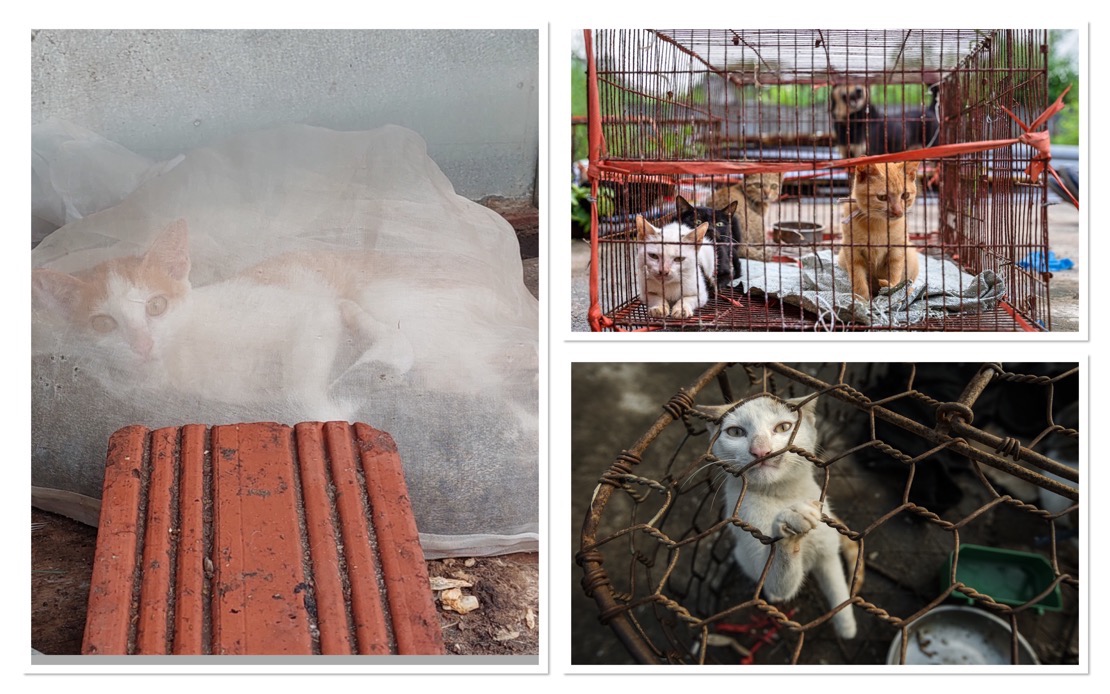
A brutal and largely clandestine trade in cat meat continues to flourish across Indochina, sustained by deeply rooted cultural superstitions despite mounting evidence that the practice enjoys minimal public support. According to global animal welfare organisation FOUR PAWS, approximately one million cats are killed each year in Vietnam alone, with smaller numbers also falling victim in Cambodia and Laos. The persistence of this trade reveals a troubling disconnect between folk beliefs rooted in tradition and the views of modern populations in the region, a pattern that carries significant implications for animal welfare advocacy across Southeast Asia.
The demand for cat meat is primarily driven by superstitious beliefs rather than dietary necessity. In parts of Indochina, particularly Vietnam, consuming feline meat at specific times during the lunar calendar is believed to reverse periods of misfortune and attract good luck. Additionally, consumers attribute medicinal and health-enhancing properties to the meat, though these claims lack scientific foundation. Jon Rosen Bennett, who oversees dog and cat welfare initiatives at FOUR PAWS, explained to regional news agencies that cat consumption is rooted in "cultural, traditional or social reasons, rather than because it is a major dietary staple." This distinction is important: the trade persists not out of nutritional need but out of attachment to practices that have become detached from their original context in an increasingly urbanised and educated region.
The economic dimensions of the trade reveal how superstition translates into market activity. FOUR PAWS investigations conducted in Vietnam during 2020 documented that live cats were purchased for between US$6 and US$8 per kilogramme, equivalent to roughly RM25 to RM33. Once processed, the meat commanded significantly higher prices, ranging from US$10 to US$12 per kilogramme, or approximately RM41 to RM49. Black cats attracted premium pricing due to their perceived special properties connected to luck and healing, demonstrating how cultural mythology directly influences pricing structures and creates economic incentives for traffickers to continue sourcing animals.
The mechanics of the trade involve organised criminal networks that operate with relative impunity across provincial boundaries. A recent case in Ho Chi Minh City illustrated the scale of organised activity when local police dismantled a trafficking gang and recovered approximately 500 cats that had been stolen from homes and streets. Nine gang members were detained for their involvement in inter-provincial smuggling operations spanning three years. Despite such enforcement actions, the absence of a comprehensive nationwide ban on cat slaughter, sale, and consumption in Vietnam allows these operations to continue with minimal legal consequence, creating a permissive environment for traffickers.
Notably, public opinion in the region stands starkly opposed to the practice, suggesting that cultural tradition alone does not explain the trade's persistence. Surveys conducted by FOUR PAWS found that nearly 90 per cent of Vietnamese respondents expressed support for a complete ban on the dog and cat meat trade. More strikingly, over 90 per cent stated that such consumption does not reflect Vietnamese culture as they understand it today. This data indicates that the trade is sustained not by broad-based cultural acceptance but rather by a minority engaged in trafficking and consumption, often driven by economic incentives or attachment to superstitious beliefs that younger generations increasingly reject.
Beyond animal welfare concerns, the underground trade poses significant public health risks that extend throughout the region. The uncontrolled movement of live animals across provincial and international borders creates pathways for disease transmission, particularly of zoonotic illnesses such as rabies. Bennett emphasised that "the mass undocumented movement of animals across borders poses a serious threat to public health, with the potential spread of rabies and other zoonotic diseases." For Malaysian readers and Southeast Asian policymakers, this dimension is particularly relevant given the region's ongoing efforts to contain infectious disease outbreaks and the demonstrated capacity of zoonotic pathogens to spark regional health crises.
Felines are not the only animals caught in this trade. An estimated 10 million dogs are slaughtered for meat annually across Southeast Asia, creating a parallel crisis that extends the welfare and public health concerns beyond cats. Like the feline trade, dog meat consumption is increasingly rejected by urban populations, with public sentiment shifting decisively against the practice. However, the cultural sensitivity surrounding dog meat consumption remains acute in certain societies, complicating advocacy and enforcement efforts. The coexistence of these two trades suggests a broader pattern of informal wildlife exploitation sustained by superstition and economic incentives rather than genuine cultural continuity.
Government and international advocacy efforts have achieved limited success despite decades of campaigns to halt the practice. FOUR PAWS, recognising this stagnation, expanded its strategic approach in early June by launching an online public reporting platform in Cambodia, leveraging digital technology to enable citizens to report trafficking activity directly. This innovation reflects a shift toward community-based enforcement mechanisms that may prove more effective than traditional government prohibition, particularly in jurisdictions where formal institutions have struggled to contain organised trafficking.
The persistence of the cat meat trade amid overwhelming public opposition suggests that policy interventions must target the criminal networks and economic actors sustaining supply rather than relying solely on public awareness campaigns. Malaysia and other Southeast Asian nations should consider whether information-sharing agreements and cross-border cooperation frameworks could disrupt trafficking networks more effectively than national-level restrictions alone. Additionally, coordinated regional action establishing binding restrictions could eliminate the incentive for traffickers to exploit jurisdictional differences by moving operations across borders, a tactic that currently enables continued activity despite local enforcement efforts.

