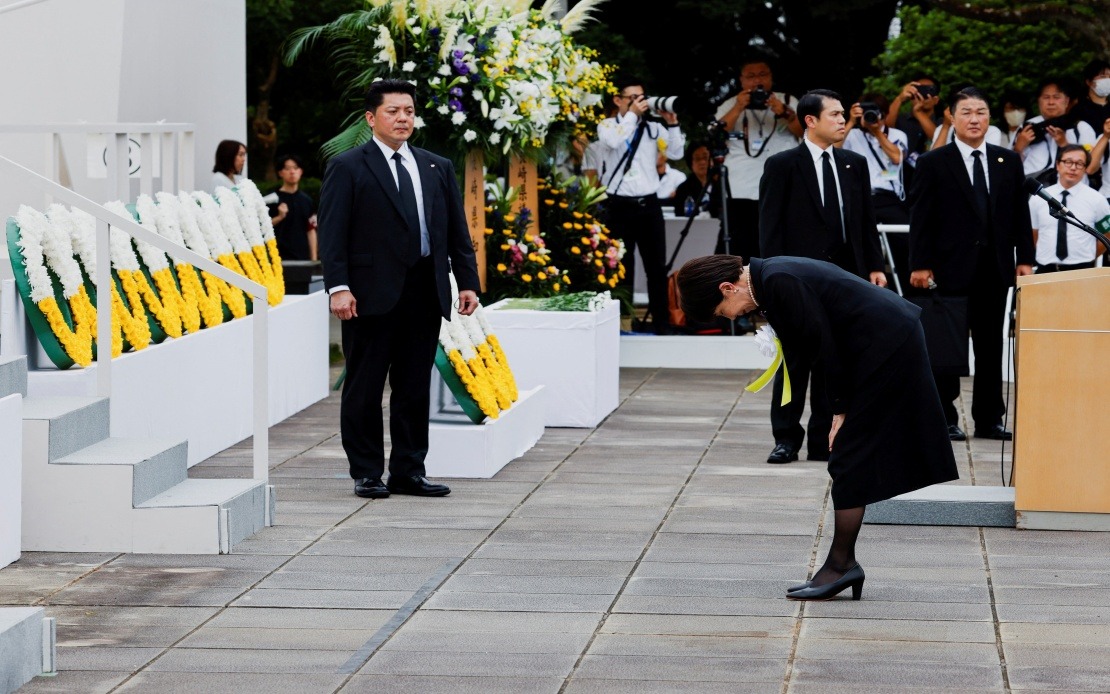
On August 9, Nagasaki observed the 81st anniversary of the catastrophic atomic bombing that devastated the southwestern Japanese city in 1945, drawing attention once more to the enduring tension between nuclear abolition and strategic deterrence in an increasingly unstable world. The commemoration ceremony highlighted the growing disconnect between the aspirations of nuclear weapons victims and the strategic calculations of major powers, a schism that carries implications for regional security across Asia and beyond.
The bombing of Nagasaki occurred just three days after Hiroshima was destroyed by an atomic device, signifying humanity's descent into an unprecedented era of mass destruction. The "Fat Man" plutonium bomb detonated at 11.02 a.m. on that August morning, leaving the city in ruins and ushering in the nuclear age. Nagasaki retains the sobering distinction of being the last place on Earth to suffer a nuclear attack, a distinction that has shaped Japan's approach to weapons policy for eight decades.
The immediate human toll was staggering. Approximately 74,000 people perished in Nagasaki by the end of 1945, with countless others enduring decades of radiation-related illness and trauma. Survivors, known as hibakusha, represent a living archive of nuclear warfare's consequences, their testimonies serving as powerful counterweight to abstract theories of deterrence. Yet time is running out to preserve this testimony—the average age of officially recognised hibakusha now exceeds 86 years, creating an urgent imperative to document their experiences before this generation passes.
Mayor Shiro Suzuki used the anniversary ceremony to deliver a message that transcends national borders: humanity cannot sustainably coexist with nuclear weapons. This plea for disarmament echoes the position Japan has maintained for decades, yet the statement arrives at a moment when Japan's own nuclear doctrine faces unprecedented scrutiny. Prime Minister Sanae Takaichi, attending the ceremony, affirmed that the government remains committed to Japan's three non-nuclear principles—prohibitions on producing, possessing, or permitting nuclear weapons on Japanese soil.
Yet this reaffirmation masks deeper uncertainties roiling Japanese policy circles. Debate has intensified within political and security establishments about whether Japan should reconsider these longstanding principles in light of shifting geopolitical realities, particularly China's military modernisation and North Korea's expanding nuclear arsenal. The fact that Takaichi felt compelled to explicitly restate adherence to these principles at Hiroshima's ceremony just days earlier suggests the debate has moved from fringe discussion to mainstream deliberation.
The symbolic fragility of Japan's non-nuclear stance became more apparent in May when the quinquennial Nuclear Non-Proliferation Treaty review conference concluded without consensus for the third consecutive iteration. The monthlong meeting in New York failed to produce binding outcomes, reflecting deepening rifts between nuclear-armed nations and those seeking disarmament. This diplomatic stalemate underscores the structural challenges confronting efforts to prevent nuclear weapons proliferation and promote their elimination at the global level.
From a Southeast Asian perspective, Japan's potential nuclear rearmament would represent a watershed moment, fundamentally reconfiguring the region's security architecture. Malaysia and other ASEAN nations have historically relied on Japan's pacifist constitution and non-nuclear status as anchoring factors in regional stability. Any Japanese reversal could trigger cascading security dilemmas, potentially prompting South Korea and other regional actors to reassess their own strategic postures. The debates happening in Tokyo thus carry implications far beyond Japan's borders.
UN Secretary-General António Guterres transmitted a statement to be read at the Nagasaki ceremony, indicating international acknowledgment of the ceremony's significance. Yet such gestures, while meaningful, have failed to translate into substantive progress on disarmament. The widening gap between rhetorical commitment to nuclear abolition and strategic incentives to retain such weapons reflects a fundamental contradiction in international relations that remains unresolved.
The hibakusha community and their advocates face a race against mortality to transmit their warnings to younger generations who lack lived memory of nuclear devastation. This transmission of knowledge becomes especially critical as geopolitical tensions intensify and some political leaders appear willing to contemplate previously unthinkable scenarios. The survivors' efforts to prevent nuclear weapons use through testimony and education represent an alternative form of security strategy—one based on preventing escalation through moral suasion rather than deterrent credibility.
Japan's August 15 surrender that year formally concluded World War II, yet the shadow of nuclear weapons has defined the subsequent eight decades. The bombing of Nagasaki accelerated Japan's capitulation, demonstrating the weapon's coercive power and establishing the strategic logic that has underpinned nuclear deterrence theory ever since. Contemporary policymakers grapple with whether that same logic remains valid in a multipolar world characterised by sub-state actors, cyber warfare, and conventional precision weapons.
The Nagasaki commemoration thus serves multiple purposes simultaneously: remembering the victims, transmitting lessons to future generations, reasserting Japan's pacifist commitments, and providing a platform for disarmament advocacy. Yet it also throws into sharp relief the profound tensions between memory and strategy, between ethical imperatives and strategic calculations. As long as these tensions remain unresolved at the international level, ceremonies like Nagasaki's will continue to juxtapose hope against historical reality.

