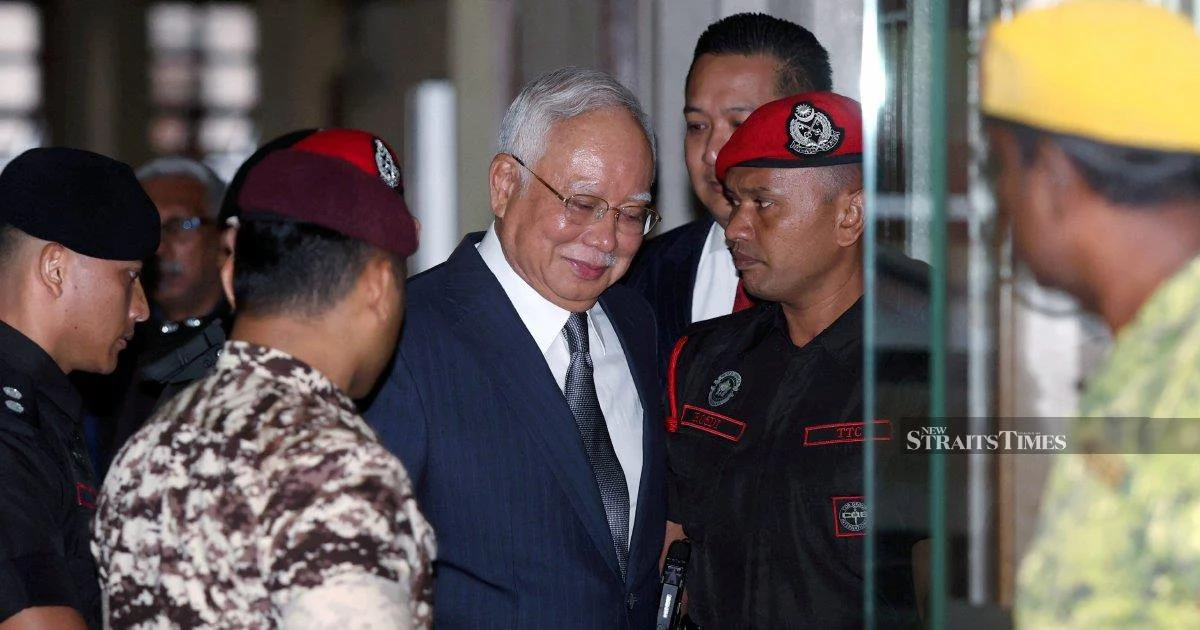
A high court judge has concluded that former Prime Minister Datuk Seri Najib Razak and fugitive financier Low Taek Jho functioned as a coordinated unit in systematically diverting vast sums from 1Malaysia Development Bhd, the state investment vehicle at the centre of Malaysia's largest corruption scandal. The judicial finding represents a critical moment in the prolonged legal reckoning over the fund's collapse, establishing through detailed court analysis that the two men operated with deliberate synchronisation to facilitate the embezzlement scheme.
The connection between Najib and Jho Low has long formed the cornerstone of corruption allegations that emerged following 1MDB's catastrophic implosion in 2015. Jho Low, who remains a fugitive beyond Malaysian jurisdiction, was instrumental in establishing the fund's operational framework and maintained extraordinary influence over its investment decisions despite holding no official position. His access to corridors of power and ability to direct hundreds of millions of dollars with minimal oversight proved instrumental in executing the theft, with investigators and prosecutors arguing that such unfettered control would have been impossible without explicit authorisation from the nation's highest political office.
The judicial determination of a deliberate "hand-in-hand" relationship carries substantial legal significance beyond the immediate criminal proceedings against Najib. Malaysian authorities have pursued parallel civil recovery actions, and establishing conscious collaboration strengthens their arguments for asset seizures and damages claims. The finding effectively negates any defensive posture suggesting Najib was merely a figurehead unaware of the mechanics of fund diversion or that Jho Low operated independently without explicit sanction from political leadership.
For Malaysian observers tracking the protracted aftermath of the 1MDB collapse, the court's analysis illuminates how institutional safeguards fundamentally failed. The fund's board structure, which included members appointed through political channels, failed to provide meaningful oversight despite operating within the internationally integrated financial system where such transfers should have triggered scrutiny from compliance frameworks. The deliberate coordination between political authority and the private businessman demonstrates how personal relationships can supersede institutional checks designed to prevent precisely this form of state asset plunder.
Jho Low's continued flight from Malaysian jurisdiction underscores the international dimensions of the scandal. Despite Interpol red notices and diplomatic pressure from Malaysian authorities, the businessman has evaded extradition from multiple jurisdictions, complicating efforts to secure testimony and recover assets now dispersed across global financial centres. His absence from Malaysian courts prevents direct examination of his role in meetings with Najib and other political figures, requiring judges to reconstruct the relationship through documentary evidence, financial records, and testimony from subordinates.
The implications extend beyond individual criminal accountability to broader questions about governance reform in Malaysia's institutional framework. The 1MDB episode revealed how concentrated political power, combined with weak internal controls over sovereign wealth vehicles, creates environment permitting extraordinary theft. Subsequent governments have implemented restructuring measures, though critics argue reforms remain incomplete and that political pressure continues influencing independent oversight agencies tasked with monitoring such entities.
For regional Southeast Asian readers, the case offers cautionary illustration of how opacity in government investment vehicles poses systematic risk. Multiple ASEAN nations operate sovereign wealth funds and development agencies with comparable mandates to 1MDB, yet governance architecture and oversight independence varies considerably. Malaysia's experience demonstrated that sophisticated financial structures and international legitimacy provide insufficient protection when fundamental separation between political direction and institutional independence becomes compromised through personal relationships and concentrated authority.
The court's findings also carry implications for Malaysia's international standing. Foreign investors initially assessed 1MDB as credible instrument for channelling capital toward strategic development projects, with the fund securing prime real estate and securing commitments from major international financial institutions. The systematic looting damaged not merely individual confidence in specific entities but Malaysian institutions' broader reputation for financial probity, requiring sustained effort to rebuild international confidence in government-linked entities.
Assets traceable to the 1MDB embezzlement remain subject to recovery proceedings across multiple jurisdictions, with Malaysian authorities pursuing civil claims in London, Singapore, and the United States. The courts' determination of active collaboration between Najib and Jho Low reinforces arguments that recovered funds should revert to Malaysian national purposes rather than being distributed among creditors in insolvency proceedings. This legal positioning carries significant consequence given the magnitude of recovered assets and ongoing negotiations with various international partners regarding asset division.
Najib's continued defence strategy has centred on claims of insufficient knowledge regarding specific transactions and allegations that subordinates exploited their positions without his explicit direction. The judicial finding directly contradicts this narrative, establishing through careful analysis of documented communications and financial flows that the arrangement reflected conscious coordination rather than incidental oversight failure. This assessment likely influences the trajectory of remaining appeals and any potential additional charges in the broader legal portfolio being pursued against individuals connected to the scheme.
The decision also underscores persisting challenges in Malaysia's anti-corruption infrastructure, particularly regarding high-profile prosecutions involving former political leadership. The extended timeline since initial investigations commenced in 2015, combined with numerous court appearances and procedural complexities, reflects the difficulties in prosecuting cases of this magnitude and political sensitivity. Sustained public attention remains necessary to ensure the judicial process continues methodically toward conclusion despite pressure from various quarters seeking modified outcomes.
Moving forward, the established court finding regarding Najib and Jho Low's coordinated conduct provides foundation for strengthening Malaysia's institutional responses to corruption risk. Lessons regarding political influence over supposedly independent entities, necessity for genuinely autonomous oversight, and importance of transparent appointment processes for board members and leadership all demand ongoing attention. The scandal's resolution, though advancing through courts, requires parallel investment in preventive institutional reform to ensure Malaysian development vehicles operate with genuine independence from individual political figures.