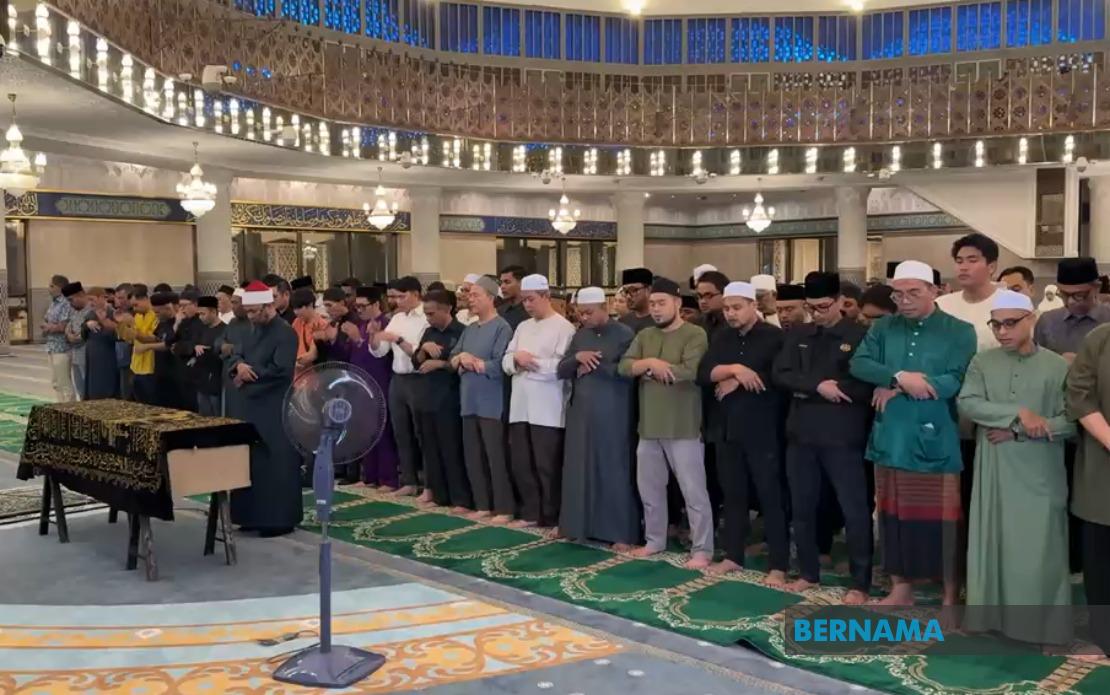
The remains of Datuk Kamil Misuari, husband of Women, Family and Community Development Minister Datuk Seri Nancy Shukri, underwent funeral rites at the National Mosque in Kuala Lumpur on the evening of June 18, with arrangements made for his return to Sarawak for interment. The ceremonial process began at Ampang Hospital, where the deceased had been receiving medical care, before transitioning to the nation's principal place of worship for final respects and religious observances attended by family and close associates.
According to a statement issued by the minister's office, the preparation of the remains commenced at Ampang Hospital at 9 pm, following customary Islamic practices. The body was subsequently conveyed to the National Mosque at 10 pm, establishing a window for mourners and companions of the departed to offer their condolences and pay tribute. This timing reflected both the gravity of the occasion and the logistical coordination required to honour a figure connected to Malaysia's ministerial ranks.
The funeral prayer service itself was scheduled to commence at 10.50 pm, with officials indicating that once this spiritual component of the ceremony concluded, transport arrangements would immediately shift toward the airport. By 11.20 pm, the remains were designated for transfer to Kuala Lumpur International Airport, from where they would be airlifted to Sarawak—the home state—for final burial according to family wishes and local customs.
Observations at the Forensic Department of Ampang Hospital revealed a substantial gathering of relatives and intimate friends during the final hours before the funeral service. Among those present was Education Minister Fadhlina Sidek, whose attendance underscored the ministerial dimension of the loss and reflected the interconnected nature of Malaysia's government leadership. The presence of senior colleagues symbolised both personal solidarity with Nancy Shukri and institutional acknowledgment of the family's standing within the federal administration.
The late Datuk Kamil Misuari had been hospitalised since the preceding Friday, with his condition experiencing a sharp deterioration during the afternoon hours preceding his death. This relatively brief terminal phase meant that arrangements had to be expedited—a reality that the minister's office managed with considerable efficiency, coordinating multiple venues and ensuring that Islamic funeral protocols were observed without compromise despite time constraints.
Family representatives travelled from Lahad Datu in Sabah to participate in the Kuala Lumpur ceremony, demonstrating the geographically dispersed nature of the extended family and the centralised importance of conducting formal funeral rites in the capital before transporting the remains to Sarawak. This geographic spread reflects migration patterns common among Malaysian families whose members occupy professional positions across different states.
The involvement of multiple government ministers in attending the hospital and funeral arrangements illustrates the interconnected social fabric of Malaysia's political leadership. Such attendance is customary when losses occur within ministerial families, serving as both genuine expressions of sympathy and subtle affirmations of institutional bonds between colleagues. The participation of Education Minister Fadhlina Sidek, in particular, signalled cross-portfolio solidarity within the cabinet structure.
The rapid transition from hospital to mosque to airport represented a tightly coordinated sequence that honoured both Islamic requirements and practical necessities. The National Mosque served its traditional function as a venue for high-profile funeral services, providing a setting appropriate for a figure whose spouse held ministerial rank. The location itself carries symbolic weight in Malaysian civic life, representing inclusive spiritual space open to the nation's diverse Muslim population regardless of social standing.
Sarawak's significance as the final destination reflected the deceased's roots or family connections to the eastern Malaysian state. The decision to conduct preliminary funeral ceremonies in Kuala Lumpur before returning the remains to Sarawak follows a pattern whereby prominent Malaysians undergo initial religious and ceremonial processes in the capital, where government networks facilitate attendance by colleagues and institutional representatives, before burial occurs in their home states where extended family and community ties remain strongest.
The sequence of events—from hospital care through ritual preparation, spiritual observance, and onward transportation—encapsulates both the personal dimensions of familial loss and the formal protocols that govern how Malaysian society processes death, particularly when it touches figures within government circles. For Nancy Shukri, managing her ministerial responsibilities while navigating such personal tragedy represents a challenge faced occasionally by Malaysia's political leadership, where public duty and private grief intersect.

