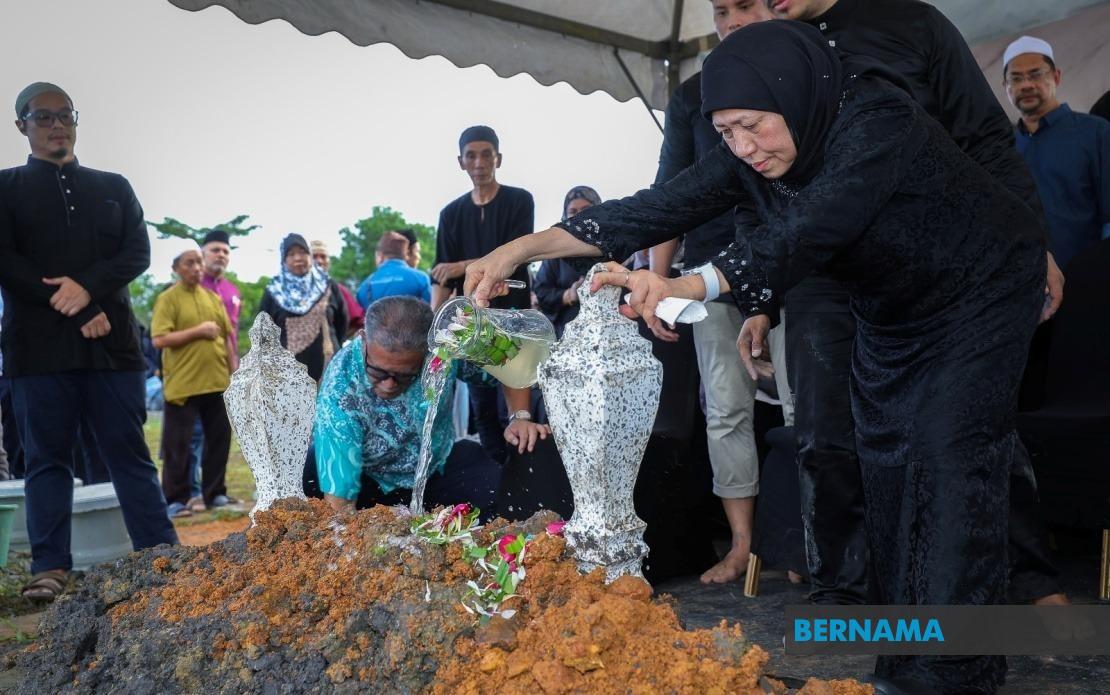
Datuk Kamil Misuari, the husband of Women, Family and Community Development Minister Datuk Seri Nancy Shukri, was interred at Samariang Muslim Cemetery in Kuching on June 19, with approximately 100 family members and close associates gathering to bid farewell. The funeral service concluded at 5.15 pm following Islamic rites performed earlier in the day.
Kamil's final journey took him from Kuala Lumpur, where he had passed away at a hospital, to his home state of Sarawak. His remains arrived at Kuching International Airport at 12.50 pm and were subsequently transported to the family residence, where mourners performed the customary funeral prayers before proceeding to the cemetery for the burial.
The 65-year-old Kamil, who married Nancy in 1985, leaves behind his widow and their three children. The couple had spent nearly four decades together, with Nancy eventually rising to the ministerial rank in Malaysia's federal government, a position that underscores the family's standing in the nation's public sphere.
Nancy Shukri's portfolio as Women, Family and Community Development Minister places her among Malaysia's senior political figures, making the loss a matter of public note. The minister's responsibilities encompass significant social policy areas affecting the nation's families and communities, roles that demand substantial time and attention at the federal level.
The burial in Kuching reflects the family's deep roots in Sarawak, one of Malaysia's two East Malaysian states. For many prominent Malaysians, particularly those from East Malaysia who have established careers in Kuala Lumpur, the choice to bury loved ones in their home state carries cultural and familial significance, maintaining the connection between individual lives and ancestral communities.
The turnout of approximately one hundred mourners—a substantial gathering in funeral terms—indicates the respect and standing Kamil commanded within his extended family and social circle. In Malaysian Muslim funeral traditions, such attendance represents meaningful recognition of the deceased's life and relationships, with numbers often reflecting both the individual's character and their family's prominence.
The logistics of transporting Kamil from Kuala Lumpur to Sarawak within a single day demonstrates the practical arrangements required when senior government figures lose family members. The coordination between federal authorities, airport operations, and local funeral services underscores how the machinery of state intersects with personal grief, particularly when those affected hold prominent positions.
For Nancy Shukri, managing ministerial duties while grieving represents a personal challenge faced by Malaysia's political leadership. Female ministers holding portfolios related to family and community development face particular scrutiny regarding work-life balance, a consideration that extends beyond the immediate period of mourning to ongoing public perception of their capacity to lead.
The loss comes at a time when Malaysia's cabinet continues grappling with multiple policy challenges. The Women, Family and Community Development Ministry oversees initiatives ranging from support services for vulnerable populations to gender equality programs, areas that require sustained ministerial attention and advocacy.
For Malaysian readers, particularly those from Sarawak, this event serves as a reminder of the interconnected nature of family ties across the country's geography. Many Malaysians maintain similar dual connections—established careers in the peninsula while maintaining family and burial sites in East Malaysia—a pattern reflecting the nation's formation as a federation bringing together diverse regional communities.
The passing of Kamil also highlights the personal dimensions often invisible in public life. While Nancy Shukri is known primarily through her ministerial role, she is also a widow who has lost her partner of nearly four decades. Such moments puncture the public persona to reveal the human experiences underlying political life, experiences shared across all segments of Malaysian society regardless of status or position.

