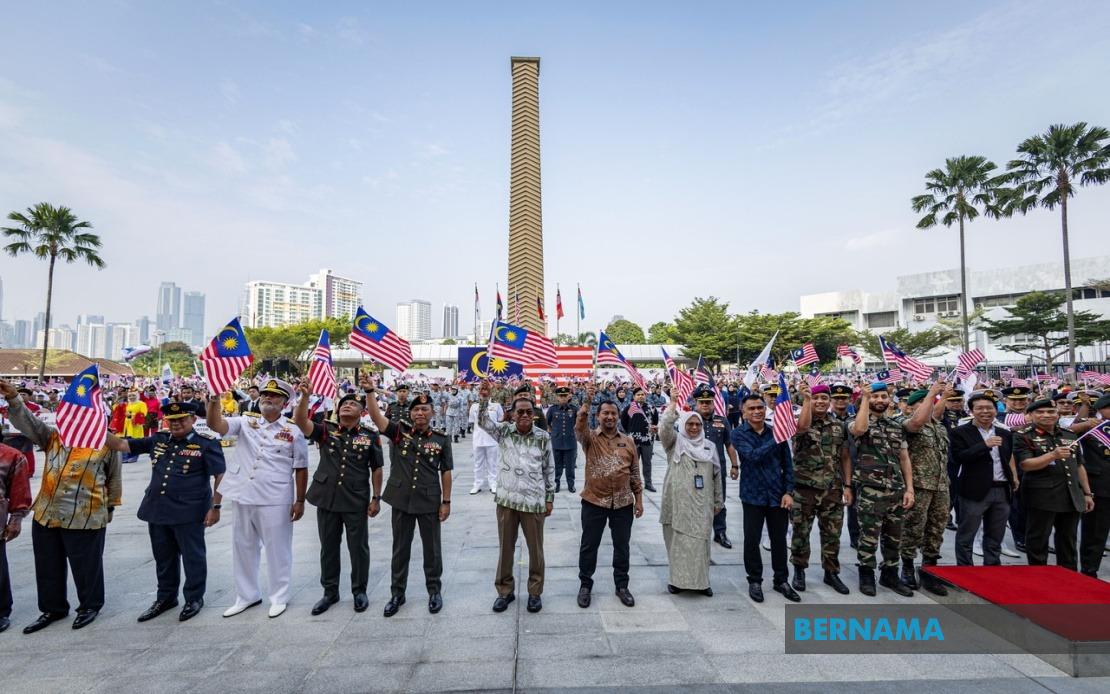
Defence Minister Datuk Seri Mohamed Khaled Nordin has issued a forthright appeal to Malaysians to approach the upcoming National Day and Malaysia Day celebrations as occasions for national solidarity rather than forums for airing specific grievances or pursuing political agendas. Speaking at the launch of the Defence Ministry's National Month and Fly the Jalur Gemilang campaign in Kuala Lumpur, he cautioned against allowing emotive responses to particular issues from overshadowing the deeper purpose of commemorating the nation's independence and identity.
Mohamed Khaled's intervention reflects growing concern within government circles that scheduled festivities risk being hijacked by organised boycott movements anchored to contentious matters. He specifically referenced recent calls to shun National Day commemorations over the Rohingya refugee situation, signalling that such tactics represent precisely the kind of politicisation he believes undermines national cohesion. His remarks underscore a broader tension between those viewing national celebrations as spaces for civil protest and those seeing them as occasions demanding unconditional national pride.
The Defence Minister emphasised that Malaysia's foundational strength derives not from uniformity of opinion but from the deliberate cultivation of mutual respect and harmony across the nation's diverse religious and ethnic communities. This framing is significant because it positions boycott movements as threats to the carefully negotiated social contract that has historically enabled Malaysia's multicultural coexistence. His argument essentially contends that selective participation in national ceremonies, motivated by disapproval of government policies, risks corroding the shared civic vocabulary that transcends day-to-day political disputes.
Mohamed Khaled's call for Malaysians to wave the Jalur Gemilang with pride and gratitude carries particular weight given his portfolio. As Defence Minister, he oversees the armed forces and security apparatus tasked with protecting national sovereignty and territorial integrity. His invocation of border security personnel's sacrifices functions both as a genuine tribute and as a subtle reminder of national vulnerabilities that transcend domestic political disagreements. This rhetorical move positions patriotic observance as inseparable from collective security concerns.
The government's emphasis on using National Month as an opportunity to demonstrate Malaysian resilience and unity carries implications for how Southeast Asian neighbours perceive regional stability. In a region where questions of national sovereignty, territorial disputes, and maritime security periodically surface, portraying Malaysia as internally unified and collectively committed to national interests constitutes a form of soft statecraft. A fractured or visibly divided population marking national celebrations could inadvertently signal weakness in contexts where perceptions of internal cohesion influence international relations.
Mohamed Khaled's rejection of boycott campaigns articulates a particular understanding of permissible political dissent. Rather than opposing government action through non-participation in state ceremonies, he implicitly advocates for alternative channels of expressing disagreement. This distinction between legitimate political speech and symbolic withdrawal from national observances reflects differing philosophies about how democracies negotiate between individual conscience and collective identity. The Defence Minister's position prioritises the latter, suggesting that national occasions occupy special constitutional space warranting deference to unity norms.
The timing of this intervention matters considerably. Malaysia Day falls on September 16, marking the 1963 formation of Malaysia through the merger of Malaya, Sabah, Sarawak, and Singapore. Malaysia Day celebrations carry particular significance in East Malaysian states, which sometimes feel their contributions to the federation are undervalued in national discourse dominated by peninsular concerns. Ensuring robust participation across all thirteen states in September festivities therefore becomes important for demonstrating genuine nationwide buy-in to the Malaysian project itself.
Recent refugee crises and humanitarian disasters have intensified public discourse around Malaysia's international responsibilities, particularly regarding vulnerable populations. The Rohingya situation remains emotionally charged, with civil society organisations arguing that national celebrations ring hollow if the country simultaneously fails to adequately address humanitarian obligations. Mohamed Khaled's specific reference to this issue acknowledges the genuine moral weight these concerns carry for many Malaysians, even as he argues they should not dictate participation in national commemorations.
The Defence Ministry's particular focus on flying the Jalur Gemilang reflects understanding that national symbols carry disproportionate weight in shaping collective identity and social cohesion. When portions of the population deliberately avoid displaying national insignia, governments interpret this not merely as political statement but as rupture in the civic fabric. By framing flag-waving as an expression of love for country rather than automatic endorsement of government policies, Mohamed Khaled attempts to reclaim national symbolism from what he perceives as politicised appropriation.
His appeal for prayers for national wellbeing and security personnel's safety introduces spiritual and emotional dimensions often absent from policy discourse. This rhetorical move transforms national observance from civic obligation into expression of collective hope and gratitude, potentially resonating with Malaysians across faith communities. The invocation of both national and spiritual dimensions creates multiple levels of identification with the celebratory occasion, broadening its appeal beyond purely political calculations.
The government's push for unity-focused National Day celebrations occurs against backdrop of ongoing parliamentary political manoeuvring and periodic questions about institutional stability. By elevating National Day from routine public holiday to occasion for deliberate reinforcement of national cohesion, Mohamed Khaled signals that authorities view such symbolic moments as strategically important for maintaining social stability. This instrumentalisation of patriotism reflects calculation that emotional appeals to national identity may prove more effective than policy arguments in securing public participation.
Moving forward, the tension between honouring legitimate grievances and maintaining national unity during commemorative occasions will likely intensify. Malaysia's multicultural character, which its leaders rightly celebrate as competitive advantage, simultaneously generates diverse perspectives on national priorities and international obligations. Successfully navigating these competing demands without either suppressing dissent or fragmenting national identity represents ongoing challenge for Malaysian governance.

