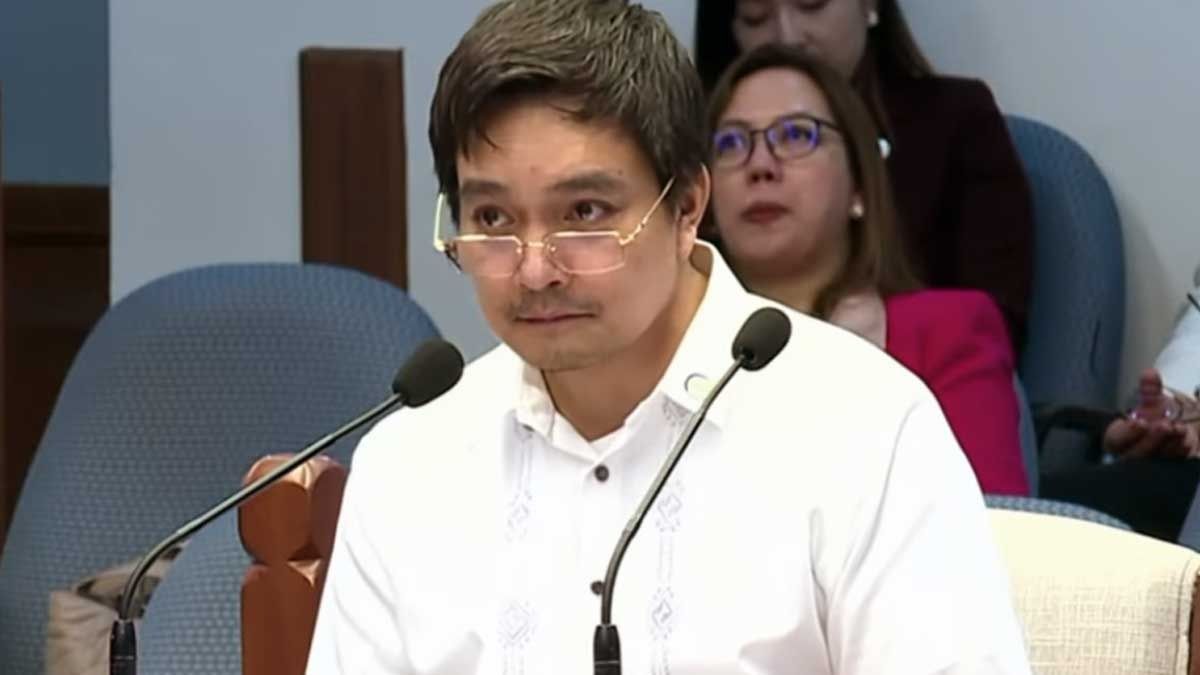
A critical admission unfolded during the impeachment trial of Vice President Sara Duterte on Tuesday when the National Bureau of Investigation's Regional Director Jeremy Lotoc conceded he possessed no personal knowledge that Duterte had contracted someone to kill President Ferdinand Marcos Jr., yet insisted the evidence his agency accumulated substantiated the charge. The testimony exposed a fundamental tension at the heart of the case: the gap between investigative suspicion and judicial proof, a distinction that has become increasingly visible as the impeachment proceedings advance in the Senate.
Lotoc, who headed the NBI's Crime Division at the time of the investigation, led the agency's examination of assassination threats Duterte made during a public online media briefing on November 23, 2024. Those remarks formed the foundation of the fourth article of impeachment filed against her. During cross-examination by defence lawyer Mark Vinluan, the NBI official was repeatedly pressed to clarify the nature and scope of the evidence linking the Vice President to a murder plot, a line of questioning designed to expose weaknesses in the prosecution's circumstantial case.
When Vinluan pointedly asked whether Lotoc possessed personal knowledge that Duterte had engaged someone to kill the president, the first lady Liza Araneta-Marcos, and former House Speaker Martin Romualdez, the witness responded with careful language that distinguished between belief and proof. "We do believe that the Vice President had contracted [someone], but I don't have personal knowledge, if that is the personal knowledge you want to know about," Lotoc stated. He added that their belief rested upon "the evidence that we've gathered and based on our investigation," though he never detailed the specific nature of that evidence during this exchange. The response encapsulated the investigative dilemma facing prosecutors: whether circumstantial evidence and contextual factors could meet the threshold required for conviction in an impeachment trial governed by constitutional standards.
The proceeding grew heated at one point when Vinluan questioned whether Duterte's corruption allegations against named individuals in the same video were actually "true and happened in real life." When Lotoc confirmed merely the "existence of those utterances," the defence counsel sarcastically remarked that the witness had thereby admitted that "the congressmen are all corrupt." This prompted private prosecutor Amando Ligutan to object, accusing Vinluan of "twisting the answer of the witness." The exchange revealed the rhetorical minefields both sides navigated, where admissions about what was said could be weaponized into admissions about what was true. Presiding officer Senator Francis "Chiz" Escudero interjected to restore order, observing acidly that the proceedings were not a "college debate," and directing both sides to avoid such interpretive contortions.
Escudero's admonishment reflected the Senate's institutional concern that the trial maintain procedural integrity and focus on the substantive legal questions at hand. The presiding officer instructed Lotoc to provide "complete and specific answers" to prevent further misinterpretation. Yet when Vinluan seized on this guidance to ask directly whether the witness had personal knowledge that Duterte contracted an assassin, Lotoc again answered affirmatively, explaining that he believed it "because of the pieces of evidence that we've gathered." The witness was adamant about his characterisation of Duterte's own statement in the video as evidence of a genuine murder contract, even as he acknowledged lacking the direct proof typically required to establish such a serious allegation.
Later questioning from Senate President Sherwin Gatchalian probed the evidentiary foundation more directly. When Gatchalian asked what evidence demonstrated Duterte's capability to carry out her threats, Lotoc initially responded that "she is the vice president of the Republic of the Philippines," a position inherently endowed with state resources and authority. Gatchalian immediately challenged this reasoning, arguing that occupying the vice presidency did not automatically confer the capability or intent to commit murder. After Lotoc conceded the point, Gatchalian pressed him to articulate what concrete evidence the NBI had assembled. The exchange highlighted a methodological gap in the prosecution's presentation: the leap from opportunity and motive to actual capacity, let alone proven action.
At this juncture, Lotoc introduced a new evidentiary thread by referencing the case against Duterte's father, former President Rodrigo Duterte, before the International Criminal Court concerning alleged extrajudicial killings perpetrated during his administration's war on drugs campaign. Lotoc reasoned that the family history of alleged state-sponsored violence, combined with her current position as Vice President, established her capability to orchestrate assassination. "We all know the background that her father, who was a former president, is currently facing a case before the ICC due to alleged extrajudicial killings, among others," he explained. "So we considered that, indeed, being in that situation, she has the capability, aside from the fact that she is the Vice President."
This reasoning invokes a controversial logical framework that imports family associations and historical patterns into an individual assessment of criminal intent and capacity. It represents an attempt to bridge the evidentiary chasm by relying on contextual and biographical factors rather than direct proof of the alleged assassination plot. For Malaysian observers, the strategic deployment of family history as evidence may resonate given the region's experience with dynastic politics, though the jurisprudential soundness of such reasoning remains contested among legal scholars. The approach also raises broader questions about due process standards in impeachment proceedings and whether the presumption of innocence can withstand argument by association and inference.
The impeachment trial's trajectory suggests that both the prosecution and defence will continue to contest the meaning and sufficiency of evidence in highly polarised circumstances. The Philippines' impeachment provisions allow for removal based on culpability standards that may differ from criminal courts, yet the proceedings' public prominence invites scrutiny from constitutional lawyers and civil society observers tracking the institutional health of the nation's democracy. For regional onlookers, the case underscores the ongoing vulnerabilities of presidential systems in Southeast Asia when political institutions are weaponised during moments of executive conflict. The outcome will likely influence not only the immediate political landscape but also perceptions of whether impeachment remains a legitimate constitutional remedy or has evolved into a partisan tool.
Lotoc's testimony epitomises the challenge facing fact-finders in high-stakes political trials: distinguishing between evidence of wrongdoing and evidence of political hostility, and determining whether investigative conviction suffices when proof in the strict sense remains elusive. The Senate's ultimate judgment will necessarily reflect not merely the evidential record but also broader institutional calculations about the nature of accountability, the limits of executive power, and the precedent being set for future political disputes within the Philippine system.

