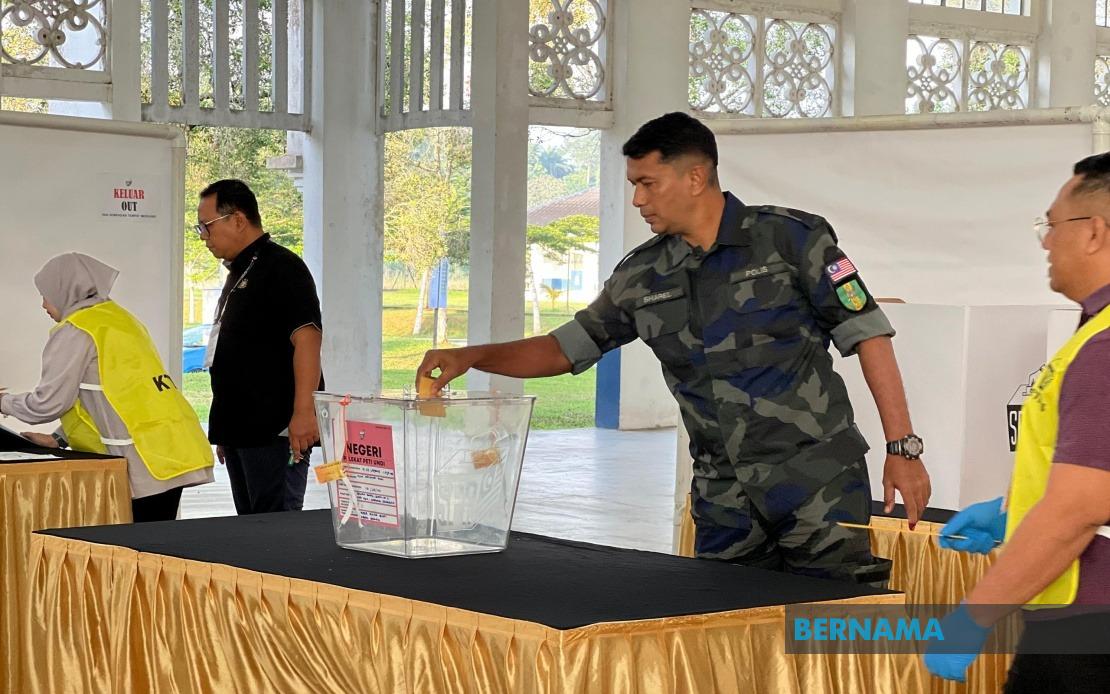
Security personnel and their spouses across Johor participated in advance voting on July 7, with 24,751 eligible early voters turning out at 64 designated polling centres throughout the state. This phase of voting precedes the main election day on July 11, when 2.7 million registered voters across the state will decide the composition of the 56-seat state assembly. The early voting process, a common practice in Malaysian elections to accommodate those in uniform and their dependents, reflects the logistical complexity of managing simultaneous voting arrangements for personnel who may be on duty during the main polling period.
The early voter cohort comprised two distinct groups. Military personnel affiliated with the Malaysian Armed Forces, alongside their spouses, accounted for 12,041 of those casting ballots early. An additional 12,710 voters came from the Royal Malaysia Police and General Operations Force, together with their families. This structure acknowledges the operational constraints faced by uniformed services, ensuring that those tasked with election day security duties themselves retain the democratic right to vote.
Police voters demonstrated particular engagement with the electoral process. Of the 12,067 police personnel expected to vote in person during the early voting window, the majority participated at designated polling stations. A smaller contingent of 643 police voters had already submitted their ballots through postal voting arrangements, indicating that multiple options had been made available to accommodate different circumstances and postings across the geographically dispersed state.
Operational coordination required substantial resource deployment. The police force mobilised 3,565 personnel to manage the early voting process statewide, a figure that included 647 officers, 2,806 rank-and-file constables, and 112 civilian administrative staff. Their responsibilities extended beyond simply supervising the casting of votes, encompassing ballot box security, transportation of electoral materials, traffic management in and around voting venues, and heightened security patrols to prevent any disruption to the electoral process.
Physical arrangements reflected the distributed nature of voting across the state. A network of 53 police stations and 11 military installations served as polling centres, opening their doors simultaneously at 8 am to standardise the voting experience. However, closing times varied considerably depending on expected voter turnout at each location. Smaller polling stations, such as Tenang Police Station in the Tenang constituency which accommodated merely six voters, were scheduled to close by midday. Conversely, centres expecting higher volumes, including the Muar District Police Headquarters, Kahang Police Station, and Johor Bahru Utara Police headquarters, remained operational until 6 pm to facilitate all eligible voters.
The 16th Johor state election represents a significant electoral contest in the peninsula's largest state by area. One hundred and seventy-two candidates are competing across the 56 state constituencies, indicating competitive contests in many areas. The July 11 main polling day will determine not only which candidates win individual seats but also which political coalition secures the numbers necessary to form government and appoint the state menteri besar.
Securely managing completed ballot papers presented another layer of electoral administration. All ballot boxes from the early voting phase will be sealed and stored at designated police stations until the conclusion of ordinary polling on Saturday. Only after the main election day polling stations close will these early ballots be retrieved and their contents counted alongside votes cast during the regular voting period. This sequencing prevents any premature knowledge of voting patterns that might influence turnout or tactical voting decisions during the main polling day.
The logistical approach to early voting reflects broader practices embedded within Malaysia's electoral framework. By accommodating security personnel through dedicated early voting arrangements, the Election Commission ensures that those responsible for maintaining order on election day do not face conflicting demands between professional duties and civic participation. This system acknowledges the reality that police and military personnel, particularly those stationed in critical positions, may be unable to vote during standard hours without compromising election security operations.
For the broader Malaysian electorate and particularly for Johor residents, early voting data typically provides preliminary indicators of electoral engagement, though these figures cannot be extrapolated to general population voting patterns. The participation of nearly 25,000 early voters underscores the administrative machinery required to manage modern democratic elections in a state with a population exceeding 4 million. The complexity of coordinating multiple voting channels, securing ballot materials, deploying adequate personnel, and maintaining strict protocols demonstrates why election administration demands substantial coordination across government agencies.
The transition from early voting to main polling day will see electoral activity intensify dramatically. With 2.7 million registered voters across 56 constituencies, the July 11 main polling day will represent one of Johor's largest democratic exercises. The successful execution of the early voting phase demonstrates institutional readiness for managing this substantially larger undertaking, though election officials will undoubtedly monitor any irregularities or logistical issues encountered during the early period to refine procedures for the main voting day.

