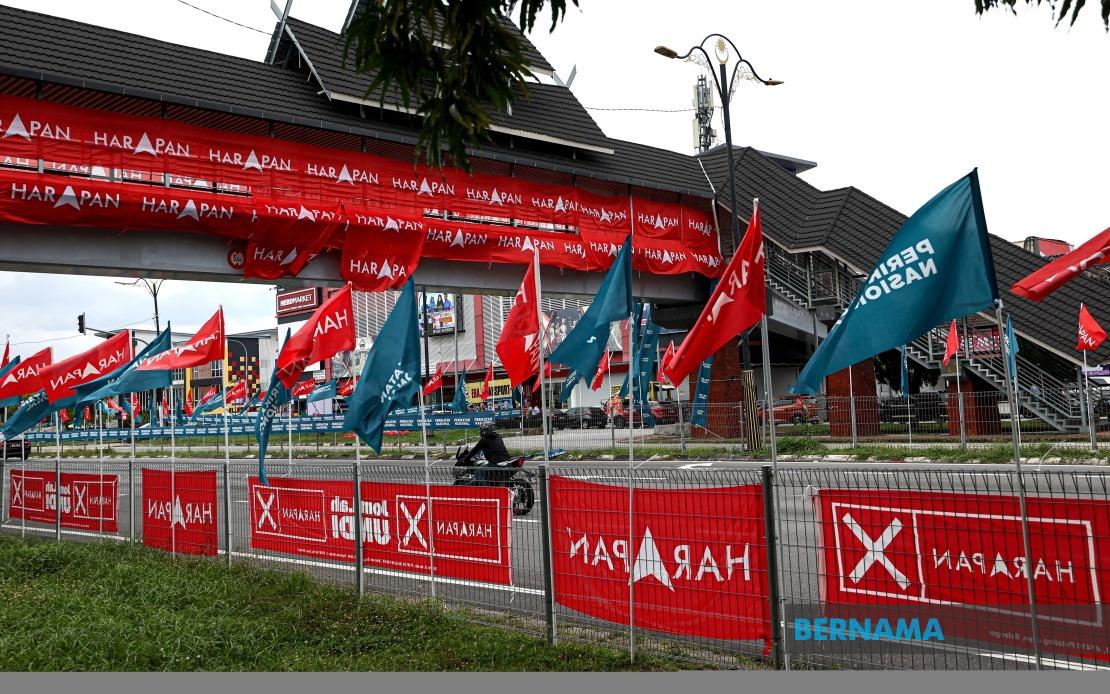
The Negeri Sembilan state election campaign is transitioning from its cautious opening phase into a period of accelerated competition as the first seven days of canvassing draw to a close. While the initial week saw relatively measured political activities, campaigners across the competing coalitions are preparing for a notably more vigorous push in the coming days, signalling that the genuine battle for the 36 state seats has only just begun.
Despite the constitutional mandate for extensive campaigning, the opening week was characterised by a measured approach from all three major contending blocs. The traditional visual element of Malaysian campaigns—the colourful "flag war" where candidates and supporters plaster constituencies with party banners and posters—has remained restrained, concentrated primarily in accessible zones such as community gathering spaces, local roads, and busy intersections rather than saturating entire electoral divisions. This measured deployment of resources reflects a strategic calculation that the campaign period still offers ample time for more intensive efforts as polling day approaches.
Candidates have leaned heavily on time-honoured engagement methods, particularly direct interactions in small group settings where voters can voice concerns and candidates can address local grievances without the formality of major rallies. House-to-house visits continue to form the backbone of on-the-ground operations, while religious gatherings and informal neighbourhood walkabouts provide additional touchpoints for building grassroots connections. Simultaneously, political operatives have recognised the essential role of digital platforms in expanding their reach beyond traditional face-to-face channels, particularly among younger and more digitally-engaged voter segments.
The presence of high-ranking federal leaders underscores the national significance being attached to this state-level contest. Prime Minister Datuk Seri Anwar Ibrahim, in his capacity as Pakatan Harapan chairman, has made two campaign visits to Negeri Sembilan during the opening week, while Deputy Prime Minister and Barisan Nasional chief Datuk Seri Dr Ahmad Zahid Hamidi has deployed his efforts across three separate visits to bolster his coalition's candidates. These visits serve multiple purposes beyond simple endorsements—they signal the importance both coalitions attach to retaining or gaining ground in a state that serves as a bellwether for broader electoral trends affecting the peninsula.
Menteri Besar Datuk Seri Aminuddin Harun, who remains in contention for the Linggi state seat, has articulated Pakatan Harapan's methodical opening strategy. Rather than launching spectacular events, the coalition consciously opted for what political professionals term micro-campaigning—targeted engagement with defined voter groups through personalised conversations and community-specific messaging. Aminuddin acknowledged that while this approach would intensify considerably in the second week, predicting seat gains remained premature given the fluid nature of electoral politics in Malaysia.
Barisan Nasional's approach similarly emphasises foundational groundwork, with the coalition's deputy chairman Datuk Seri Mohamad Hasan, who holds the Rantau assembly seat alongside his role as Foreign Minister, calling for sustained momentum and systematic coverage of every constituency under his coalition's banner. His emphasis on ensuring candidates and campaign workers maintain intensive voter contact reflects an understanding that elections are ultimately won through persistent, granular engagement rather than headline-grabbing events. This conviction has driven BN's strategic allocation of effort across its 25 contested seats.
Negeri Sembilan UMNO's representative Datuk Seri Jalaluddin Alias, defending the Pertang seat, reported positive momentum within the Jelebu parliamentary zone specifically, where Barisan candidates have progressively expanded their voter contact radius. This incremental geographic expansion of campaign intensity represents the natural evolution as campaigns transition from week one to week two, when previously passive voter segments begin engaging more actively with competing messages.
Political analysts have begun discerning clearer electoral contours after the opening campaign week. Dr Mujibu Abd Muis, a political scientist at Universiti Teknologi MARA's Seremban campus, observed that the contest's fundamental shape has crystallised around a primary Pakatan Harapan versus Barisan Nasional contest, while Perikatan Nasional remains in a momentum-building phase with considerably fewer visible organisational resources deployed thus far. Pakatan Harapan's deployment of sophisticated micro-campaigning techniques has proven particularly visible, reflecting both strategic choice and operational capacity differences between the competing blocs.
Dr Mujibu emphasised a significant evolution in voter decision-making that these micro-campaigning trends reflect. Contemporary Malaysian voters increasingly evaluate political candidates through a lens of direct community engagement and personal visibility rather than traditional mass rally attendance or abstract ideological messaging. This behavioural shift has profound implications for campaign strategy, requiring political operatives to prioritise authentic grassroots presence over spectacular one-off events designed primarily for media coverage. Candidates who fail to maintain consistent, substantive engagement with their constituencies risk appearing disconnected from voter concerns regardless of their party's national message clarity.
The final campaign week traditionally proves decisive, as previously uncommitted voters and fence-sitters crystallise their choices before entering polling booths. Campaign intensity typically peaks during this period, with major political figures converging on competitive constituencies and all operational resources being mobilised. The second and final weeks ahead are expected to transform the relatively subdued opening into the intense political theatre Negeri Sembilan residents have witnessed in previous state elections.
The 16th Negeri Sembilan state election features 103 candidates competing across 36 state seats, substantially more than the total number of available positions. Pakatan Harapan fields the maximum 36 candidates, followed by Barisan Nasional with 25 candidates, Bersatu with 24, and Perikatan Nasional fielding 11. Smaller participants including Barisan Jemaah Islamiah Se-Malaysia, Parti Orang Asli Malaysia, and Parti Sosialis Malaysia each contribute one candidate, while four independent candidates round out the roster. This unusually crowded field reflects both the perceived competitiveness of the election and the tactical decisions of various political organisations regarding seat contest strategies.
Early voting is scheduled for July 28, providing supporters unable to vote on the main date with an alternative, while the primary election day has been set for August 1. These dates establish an increasingly compressed campaign calendar, meaning the intensified activities anticipated for week two will quickly give way to the decisive final week before Malaysian voters in Negeri Sembilan head to polling stations. The coming fortnight will substantially determine whether Pakatan Harapan can consolidate its position or whether Barisan Nasional can recover lost ground in this strategically important state.

