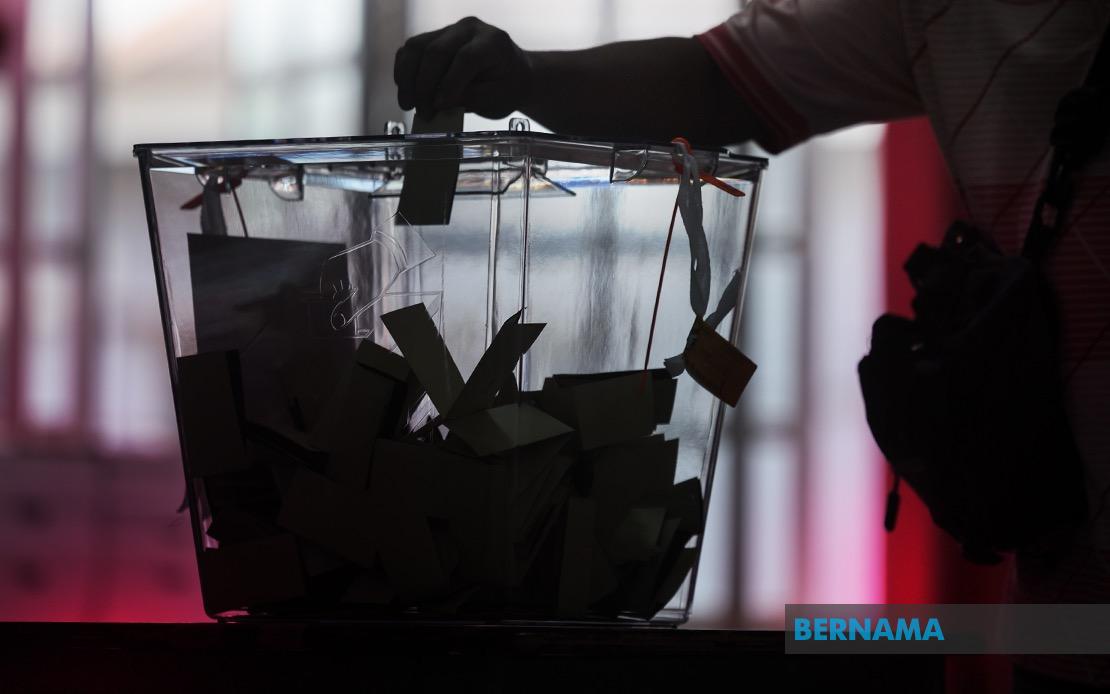
The staggered closure of early polling centres across Negeri Sembilan on July 28 reflects the logistical complexity of managing votes for military and police personnel before the state election's main polling day on August 1. Opening at 8am as scheduled, the 38 early voting locations will not operate on a uniform timetable, with closures beginning at midday and extending through to late afternoon—a structure outlined in a Federal Government Gazette published on July 23 that stipulates precise closing times for each voting venue.
The earliest group of closures will affect nearly half of all early polling centres. A total of 18 locations will shut their doors at noon, each serving a single state constituency and encompassing facilities such as district police headquarters, police stations, and the 508th Army Reserve Regiment at Jalan Rasah Camp. These constituency-level closures span Chennah, Pertang, Jeram Padang, Lenggong, Nilai, Seri Menanti, Johol, Labu, Rahang, Rantau, Kota, Chuah, Lukut, Bagan Pinang, Linggi, Gemas, and Gemencheh, concentrating early voting opportunities in the morning hours for voters in these areas.
A smaller cohort of centres will remain open longer, accommodating those unable to cast early ballots during the morning session. The Bahau early polling location and one centre in Paroi will extend operations until 2pm, providing an intermediate closure window. Beyond these midday and early afternoon cutoffs, the remaining 18 centres will operate throughout the full span, remaining accessible until 5pm and enabling voters with afternoon schedules to participate in early polling. The extended hours in select constituencies—including Repah, Gemas, Sri Tanjung, Linggi, Rantau, Chembong, Paroi, Rahang, Bukit Kepayang, Pilah, Sikamat, Temiang, Nilai, Serting, Klawang, and Sungai Lui, alongside two facilities in Bagan Pinang—reflect anticipated voter demand and administrative readiness in those districts.
The early polling process is designed primarily for security personnel and their families who may face operational constraints on election day itself. Military personnel eligible to vote early number 16,884, while the police force contributing 5,455 officers underscores the significance of allowing these essential service members to participate in advance. This special voting arrangement recognises the unpredictable deployment schedules and operational demands placed upon security services, ensuring their democratic participation is not compromised by work commitments on the main polling date.
The main election on August 1 will present a markedly different operational structure, with 395 polling centres opening across the state from 8am to 6pm in venues such as schools, community halls, colleges, sports complexes, and public halls. This vastly larger network of voting stations will serve the broader electorate, with 867,151 regular voters registered to cast their ballots in the contest for state representatives. The multiplication of polling stations and extended hours on election day ensures that the general voting population enjoys substantially greater accessibility and flexibility compared to the compressed early polling schedule.
The Negeri Sembilan State Legislative Assembly was formally dissolved on June 5 following approval from Tuanku Muhriz Tuanku Munawir, the Yang Dipertuan Besar of Negeri Sembilan, initiating the electoral cycle that culminates with these early and main polling dates. This formal dissolution represents the constitutional machinery required to set in motion the biennial state election process across Malaysia's central region.
Results from the 15th state election in 2023 provide essential context for understanding the competitive landscape in this 16th contest. Pakatan Harapan secured dominance with 17 of 36 seats, establishing a governing coalition within the state legislative body. Barisan Nasional claimed 14 seats, positioning itself as the primary opposition force, while Perikatan Nasional captured five seats, representing the third political force in the assembly. These distribution patterns will likely inform campaign strategies and coalition negotiations as parties contest the 36 available seats in the upcoming election.
The tiered closure schedule for early voting reflects consideration of how different constituencies may require adjusted arrangements. Rather than imposing a uniform cutoff across all locations, electoral administrators have differentiated access based on constituency characteristics and anticipated early voter volumes. This approach demonstrates an attempt to balance operational efficiency—ensuring security personnel and administrators are not stretched across extended hours at underutilised centres—with electoral access, maintaining extended availability in constituencies where demand justifies it.
For Malaysian voters and observers, the Negeri Sembilan election serves as an important bellwether for political currents within the country, particularly given the recent shifts in federal-level politics and ongoing coalition manoeuvres within Pakatan Harapan. The state's electoral outcome could signal voter sentiment regarding the incumbent PH government's performance, while also reflecting the effectiveness of Barisan Nasional's ongoing repositioning efforts and any consolidation gains by Perikatan Nasional. The specific voting patterns across constituencies will merit close analysis for their implications regarding support for the incumbent coalition and potential shifts in political alignment.
Voters and electoral observers should note that the staggered closure times apply exclusively to early voting on July 28, with the main election maintaining consistent 8am-6pm hours across all 395 polling stations on August 1. Anyone eligible to vote but unable to participate in early polling should prioritise noting the date and location of their assigned polling station for the main election day, ensuring participation in what will be the decisive phase of the state electoral process. The Electoral Commission's publication of closing times via the Federal Government Gazette provides authoritative guidance for those planning early voting strategies.

