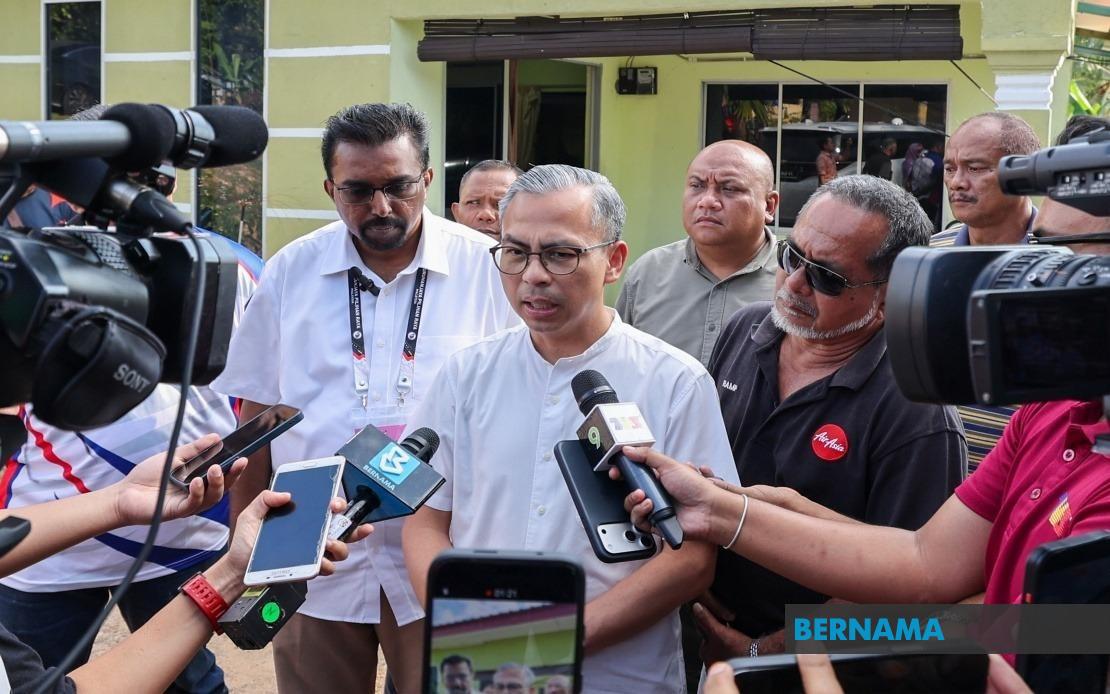
The campaign period for the Negeri Sembilan state election is unfolding with remarkably few breaches of social media conduct, according to Communications Minister Datuk Seri Fahmi Fadzil, who highlighted the Malaysian Communications and Multimedia Commission's modest complaint tally as evidence of orderly digital behaviour among candidates and voters alike. Speaking in Jempol on July 23, Fahmi attributed this controlled environment to a combination of platform vigilance, public awareness, and the relatively early stage of the six-day-old campaign.
The minister disclosed that of the 16 complaints lodged with MCMC since campaigning commenced, fourteen stemmed from ordinary telecommunications connectivity disruptions rather than deliberate violations of electoral rules. The remaining two cases involved fraudulent social media accounts operating under false identities, a perennial challenge for electoral authorities worldwide. This breakdown suggests that technical infrastructure problems, not political misconduct or information manipulation, constitute the primary friction point for voters and campaign teams seeking to utilise digital channels.
However, Fahmi cautioned against complacency as the election enters its decisive phase. He pointedly noted that the final 72 to 96 hours before polling on August 1 typically trigger a deluge of online activity from competing parties, pressure groups, and individuals motivated by electoral stakes. This temporal pattern, recognised across multiple democracies, creates vulnerability to coordinated disinformation campaigns, deepfake content, and inflammatory rhetoric designed to sway undecided voters in the campaign's closing moments. The minister's warning reflects genuine institutional concern about digital election integrity during these high-velocity periods.
Fahmi issued a call for public participation in maintaining electoral propriety online, urging citizens to report suspected violations directly to social media platforms and, should those operators prove unresponsive, to escalate matters to MCMC. This tiered complaint mechanism distributes enforcement responsibility across private platforms and public regulators, recognising that neither entity alone can monitor the entire digital ecosystem. The approach reflects broader Southeast Asian practices where telecommunications commissions and election authorities coordinate with technology companies to detect and contain viral misinformation.
Beyond electoral regulation, Fahmi raised a distinct but interconnected infrastructure challenge: patchy internet coverage in rural communities. A visit to Felda Palong 1, a palm oil estate settlement in the state, revealed that connectivity gaps clustered along main access roads rather than within residential zones themselves. This geographic pattern suggests that network deployment has prioritised densely populated urban and estate centres whilst leaving transportation corridors vulnerable, a distribution that impedes emergency communications and creates digital inequality for travellers and mobile workers.
The minister's frustration with the pace of telecommunications infrastructure rollout was evident in his directive to MCMC to resolve the connectivity gaps urgently. He articulated a principle underpinning modern infrastructure standards: wherever a road exists, internet access should follow. This aspiration aligns with Malaysia's broader digital economy agenda and reflects growing recognition that connectivity is foundational to emergency response, economic opportunity, and citizen engagement in democratic processes. The principle also implicitly critiques telecommunications providers' historically sluggish investment in remote areas where customer density does not justify rapid capital deployment.
Fahmi attributed continuing coverage shortfalls partly to the slow implementation of network sharing arrangements signed last year by telecommunications companies. Although industry memoranda of understanding ostensibly accelerate infrastructure optimisation through tower sharing and coordinated buildout, competitive pressures and regulatory complications have impeded progress. This gap between intention and execution illustrates a persistent tension in Southeast Asian telecommunications policy: formal agreements do not automatically translate into accelerated deployment when underlying business incentives remain weak.
To bridge coverage gaps, authorities have identified multiple intervention pathways. Construction of new dedicated telecommunications towers remains the traditional approach, though capital-intensive and time-consuming. Optimisation of existing infrastructure through technological upgrade and efficiency improvements offers quicker, lower-cost gains. Satellite services, particularly Starlink and similar constellation operators, present an interim solution for dispersed rural areas where terrestrial networks remain unprofitable. This layered approach reflects pragmatism about achieving coverage objectives through diverse means rather than insisting on conventional methods.
Fahmi additionally signalled expectations that telecommunications companies strengthen their customer feedback mechanisms, including through artificial intelligence deployment. AI-powered complaint-tracking systems would enable users to monitor resolution status in real time, reducing frustration with opaque carrier processes and creating accountability through transparency. This modernisation of customer service infrastructure addresses a secondary grievance: not merely poor coverage, but poor communication about coverage improvement timelines and remediation efforts.
The minister's comments, delivered during a Ziarah Kasih MADANI programme alongside Pakatan Harapan's Jeram Padang candidate G. Manivannan, underscored how election campaigns crystallise multiple governance issues beyond electoral mechanics. The Negeri Sembilan race, culminating in polling on August 1 with early voting on July 28, thus functions as a lens through which to assess not only digital election integrity but also rural infrastructure equity and telecommunications sector responsiveness to public need. For Malaysian voters and policymakers, the state election outcome may hinge partly on such foundational service delivery questions.

