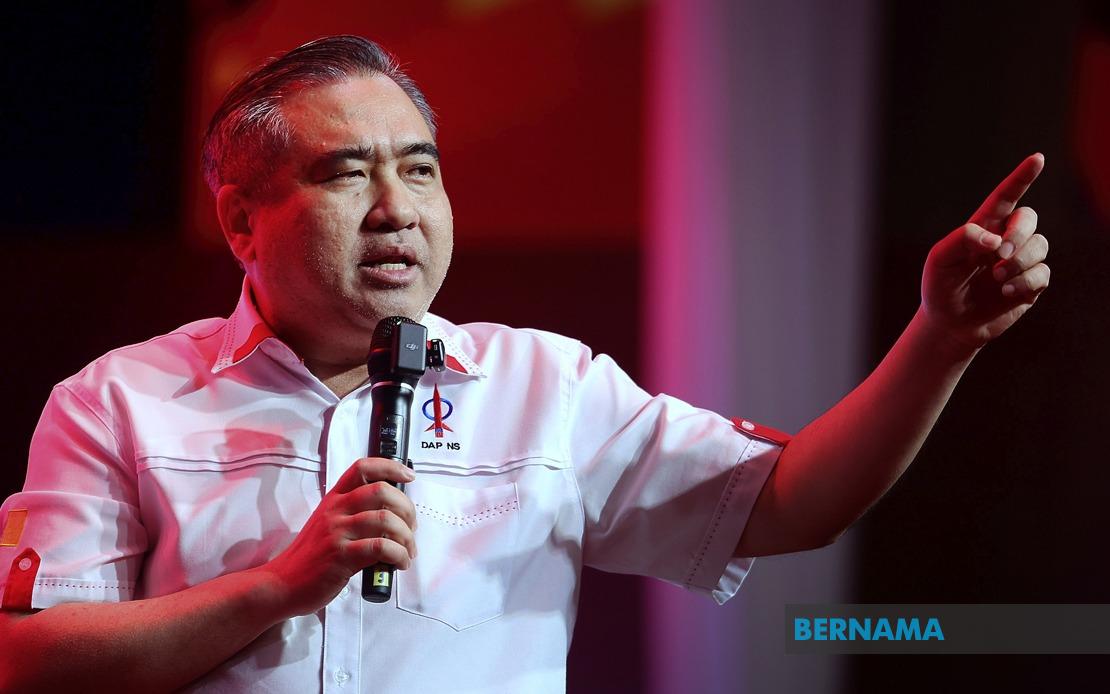
Transport Minister Anthony Loke has drawn a clear line in the sand for the ongoing Negeri Sembilan state election campaign, insisting that political contests should be decided on substantive policy offerings rather than personal attacks against opponents. Speaking at a Pakatan Harapan dinner in Seremban on July 19, the DAP secretary-general outlined his commitment to maintaining what he describes as a disciplined approach to campaigning that respects the collegial nature of Malaysia's current Unity Government arrangement.
Loke's statement reflects a broader directive from Prime Minister Datuk Seri Anwar Ibrahim, who has advised government officials to exercise restraint when campaigning in electoral contests. The message is particularly significant given that the Unity Government comprises multiple political parties that must continue working together at the Cabinet level regardless of electoral outcomes. This delicate balance requires Cabinet members to compartmentalise their roles as both coalition partners and electoral competitors, a challenge that Loke appears intent on navigating carefully.
The Transport Minister emphasised that he has deliberately refrained from launching attacks against any Cabinet colleague, viewing such restraint as essential to the functioning of Malaysia's complex power-sharing arrangement. Since ministers meet regularly at Cabinet sessions to address national business and coordinate policy implementation, maintaining personal civility and professional respect becomes operationally necessary. Loke's position suggests that the government is attempting to establish an unwritten code of conduct for the 2024 election cycle, where electoral competition does not devolve into public recriminations that could damage institutional relationships.
This approach has had practical consequences for Loke's campaign strategy in the Negeri Sembilan election. Notably, he has chosen not to campaign in the Rantau state constituency, despite its prominence as the seat contested by Foreign Minister and Barisan Nasional deputy chairman Datuk Seri Mohamad Hasan. The decision to stay away from Rantau explicitly aims to preserve harmony within the broader Unity Government framework, suggesting that Loke views electoral restraint as an investment in post-election governance stability.
Instead of spreading his efforts across multiple constituencies, Loke has concentrated his campaign activities on his own Chennah seat and has lent support to other DAP candidates contesting in the state. He is also assisting Menteri Besar Datuk Seri Aminuddin Harun in campaigning for the Linggi seat, focusing particularly on constituencies represented by his own party. This targeted approach allows him to maximise campaign effectiveness while adhering to his stated commitment to avoid confronting senior government figures from other coalition parties.
Addressing concerns that his ministerial responsibilities might lead to constituency neglect, Loke argued that his Cabinet position actually constitutes an asset for Chennah residents. He contended that holding ministerial office enables him to channel greater benefits and allocations to his constituency compared to what a non-ministerial representative might achieve. Specifically, he highlighted initiatives such as Kampung MADANI projects that his ministry has facilitated in the area, framing his dual role as one that combines electoral representation with enhanced resource access.
Loke further noted that he has assembled a dedicated full-time constituency team to manage day-to-day constituent relations and service requests, effectively delegating direct grassroots management to specialists while he fulfils Cabinet obligations. This organisational structure allows him to maintain constituency engagement without the omnipresence that a backbench politician might provide. For Malaysian voters accustomed to direct politician-constituent interaction, such arrangements represent a compromise between ministerial duty and local representation.
The Negeri Sembilan state election represents a significant test of how well the Unity Government's informal campaign discipline will hold during competitive polling. The 16th state election is particularly notable because it involves multiple coalition partners vying for control of state seats while simultaneously maintaining Cabinet partnerships at the federal level. Early voting is scheduled for July 28, with general polling day set for August 1, providing a compressed campaign period during which tensions might otherwise escalate.
For the broader Malaysian political landscape, Loke's emphasis on policy-based campaigning over personal attacks signals an attempt to elevate the tone of electoral discourse. In an era when political polarisation has intensified in many democracies, Malaysia's experience with power-sharing arrangements has created unique incentives for civility. The success or failure of this approach in Negeri Sembilan may influence how future elections involving coalition governance are conducted across the country.
The challenge for politicians like Loke will be maintaining this disciplined stance while still articulating clear policy differences with rivals. Campaign messaging must persuade voters to support their party without resorting to character assassination or inflammatory rhetoric about opponents. This requires more sophisticated political communication focused on future vision, specific policy proposals, and comparative effectiveness rather than personal criticism or scandal-mongering.
For Southeast Asian observers, Malaysia's experiment with managed electoral competition within governing coalitions offers insights into how multiparty democracies can accommodate both electoral competition and institutional cooperation. Whether this approach proves sustainable depends partly on whether leaders like Loke can convince their party members and grassroots supporters that winning through policy debate rather than personal attack serves long-term political interests.
As the Negeri Sembilan campaign intensifies over the coming weeks, the real measure of Loke's commitment will be whether other Cabinet ministers and senior government figures reciprocate his restraint. If the discipline holds across the coalition, it may establish a precedent that shapes Malaysian electoral culture for years to come. If it fractures under campaign pressure, the resulting institutional damage could complicate future coalition governance.

