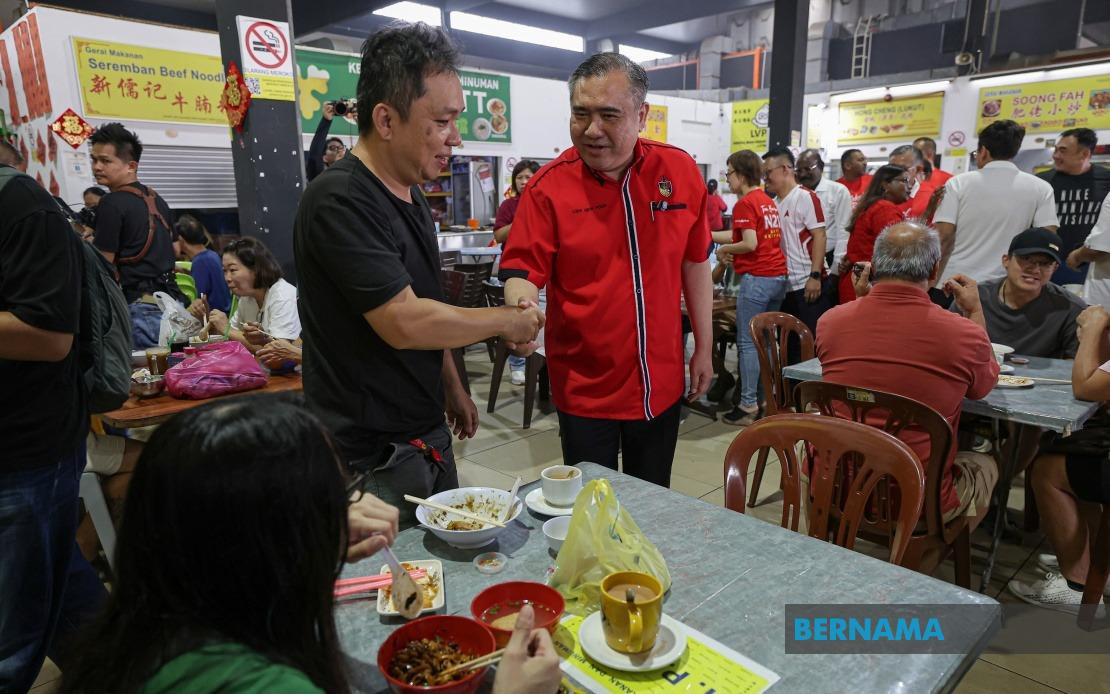
Transport Minister Anthony Loke has moved to enforce rigid traffic discipline across the 16th Negeri Sembilan state election campaign, warning that road safety standards cannot be compromised regardless of political ambitions. The DAP secretary-general made his position unambiguous during a campaign walkabout in Seremban, declaring that compliance with traffic laws represents a non-negotiable baseline for all candidates, supporters, and party machinery across the state.
Loke's intervention signals growing concern about campaign-related traffic violations during election periods, a persistent issue that has resulted in accidents and injuries during past electoral cycles across Malaysia. By centralising the compliance message through a cabinet minister, the directive carries both symbolic weight and institutional authority, potentially setting a precedent for how election campaigns should balance electoral vigour with public safety obligations. The minister's willingness to publicly link traffic compliance with campaign conduct reflects an acknowledgment that electoral enthusiasm sometimes overrides common sense on Malaysian roads.
The Transport Minister disclosed that he has personally mandated his party's campaign teams adopt strict safety protocols, beginning with non-negotiable helmet requirements for all motorcycle riders engaged in campaign activities. This granular approach to safety governance—emphasising that individual party members cannot participate in convoys without protective equipment—attempts to embed safety culture into campaign operations from the ground level upward. Loke recounted his direct involvement during nomination day proceedings, when he led a convoy from Pekan Titi to Kuala Klawang and explicitly informed participants that participation required helmet compliance.
Beyond helmets, Loke singled out the practice of supporters riding on vehicle tailgates as particularly dangerous, characterising such conduct as reckless and indefensible. This specific warning addresses a phenomenon commonly observed during Malaysian election campaigns, where enthusiastic supporters attempt to maximise visibility by positioning themselves precariously on moving vehicles. The minister's targeted critique of this behaviour indicates that his safety initiative addresses not merely regulatory compliance but actively hazardous customs that have become embedded in campaign culture.
The appeal to party leaders and candidates to model exemplary behaviour carries considerable significance, as campaign organisers and political figures typically influence how grassroots supporters conduct themselves. When senior politicians and candidates visibly comply with traffic regulations and demonstrate safety discipline, such behaviour filters through campaign hierarchies and affects supporter behaviour. Loke's explicit call for leadership by example attempts to harness this cascading influence to reshape campaign conduct across all competing parties.
The timing of these directives reflects the compressed campaign schedule in Negeri Sembilan, where the state assembly dissolution on June 5 initiated a campaign period culminating in polling on August 1, with early voting permitted on July 28. Within this approximately eight-week window, campaign activity typically intensifies substantially, with multiple convoys, rallies, and motorcades occurring daily across the state. Higher campaign intensity increases accident risk, particularly given the pressure on organisers to coordinate large-scale events efficiently.
The electoral landscape in Negeri Sembilan encompasses 889,490 registered voters, including 867,151 ordinary voters alongside 16,884 military personnel and their spouses plus 5,455 police officers eligible for early voting. This substantial electorate base creates logistical complexity for campaigners seeking to reach voters across the state's various constituencies. The pressure to manage large movements of supporters and vehicles during high-intensity campaign periods can inadvertently prioritise speed and coverage over adherence to traffic regulations, making ministerial intervention particularly timely.
Loke's enforcement approach differs subtly from typical government advisories about election-period traffic safety. Rather than issuing abstract warnings or generic safety reminders, the Transport Minister directly instructed his own party and personalised the compliance message through concrete examples and non-negotiable requirements. This strategy suggests recognition that voluntary compliance during election campaigns often proves insufficient without credible enforcement mechanisms and clear consequences for non-compliance within party structures.
The push for traffic discipline during election campaigns also carries broader implications for Malaysian road safety culture. Elections represent high-visibility moments when government messages about behaviour and conduct receive amplified public attention. When transport ministers and political leaders visibly model traffic compliance during campaigns, they reinforce messaging that safety rules apply universally rather than selectively depending on circumstances or priorities. This consistency strengthens broader road safety narratives beyond the election period itself.
For voters and ordinary citizens navigating roads during the campaign period, ministerial enforcement of traffic compliance potentially improves overall road conditions by reducing the disruption caused by large campaign convoys or supporter movements. When campaign organisers operate within strict traffic frameworks, they occupy road space more predictably and cause less congestion or unsafe driving by other road users attempting to navigate around campaign activities. Enhanced compliance therefore generates positive externalities for the wider driving public.
The Transport Minister's warnings also implicitly acknowledge that previous election campaigns have witnessed traffic violations serious enough to warrant cabinet-level intervention. By framing compliance as mandatory rather than advisory, Loke establishes clear boundaries that distinguish permissible campaign activity from dangerous or illegal conduct. This clarity reduces ambiguity about acceptable practices and empowers enforcement agencies to take action against violators without appearing to target specific parties.
Moving forward, the effectiveness of Loke's compliance directive will depend substantially on whether party organisers genuinely implement the requirements and whether supporters accept the imposed constraints. Political campaigns generate emotional intensity and competitive pressure that sometimes override rational consideration of safety consequences. Sustained messaging, visible enforcement, and peer pressure within campaign teams will prove essential to translating ministerial directives into actual behaviour change across the state's campaign operations.

