The 16th Negeri Sembilan state election officially commenced on July 18 with nomination proceedings taking place simultaneously across eight centres throughout the state, beginning at 9 am. Prospective candidates were required to lodge their nomination documents with Returning Officers before the 10 am deadline, following which the Election Commission would release the final list of eligible contenders. This milestone marks the formal start of what promises to be a closely watched electoral contest in the peninsula's central region, setting in motion the machinery that will determine which coalition secures the right to govern the state for the next five years.
The announcement of eligible candidates will trigger a 14-day campaign period extending until July 31 at 11:59 pm, during which political parties will intensify their grassroots mobilization efforts and policy presentations. Early voting has been scheduled for July 28, allowing military and police personnel alongside their families to cast ballots ahead of the main election day on August 1. The electoral timetable follows the dissolution of the Negeri Sembilan State Legislative Assembly on June 5, which occurred with the formal consent of the Yang Dipertuan Besar of Negeri Sembilan Tuanku Muhriz Tuanku Munawir, as constitutionally required.
As of the day preceding the nomination process, the Election Commission reported that 464 nomination forms had been distributed to interested parties, with 70 prospective candidates having already paid their mandatory election deposits to secure their candidacy. These figures suggest a moderately contested election across the state's 36 constituencies, indicating that while several seats may attract multi-cornered contests, others could potentially face uncontested returns or limited competition. The deposit requirement typically filters out frivolous or under-resourced candidacies, meaning that the 70 confirmed participants represent genuinely committed political aspirants.
Negeri Sembilan's electoral roll encompasses 889,490 registered voters, a substantial constituency spread across the state's diverse urban and rural communities. This total comprises 867,151 ordinary voters, alongside 16,884 military personnel and their spouses, and 5,455 police officers and their spouses. The inclusion of security personnel in the electoral process underscores Malaysia's commitment to ensuring that all eligible citizens, regardless of their service to the state, can exercise their democratic franchise. The voter base represents a cross-section of Malaysian society and will determine the direction of state governance for the coming years.
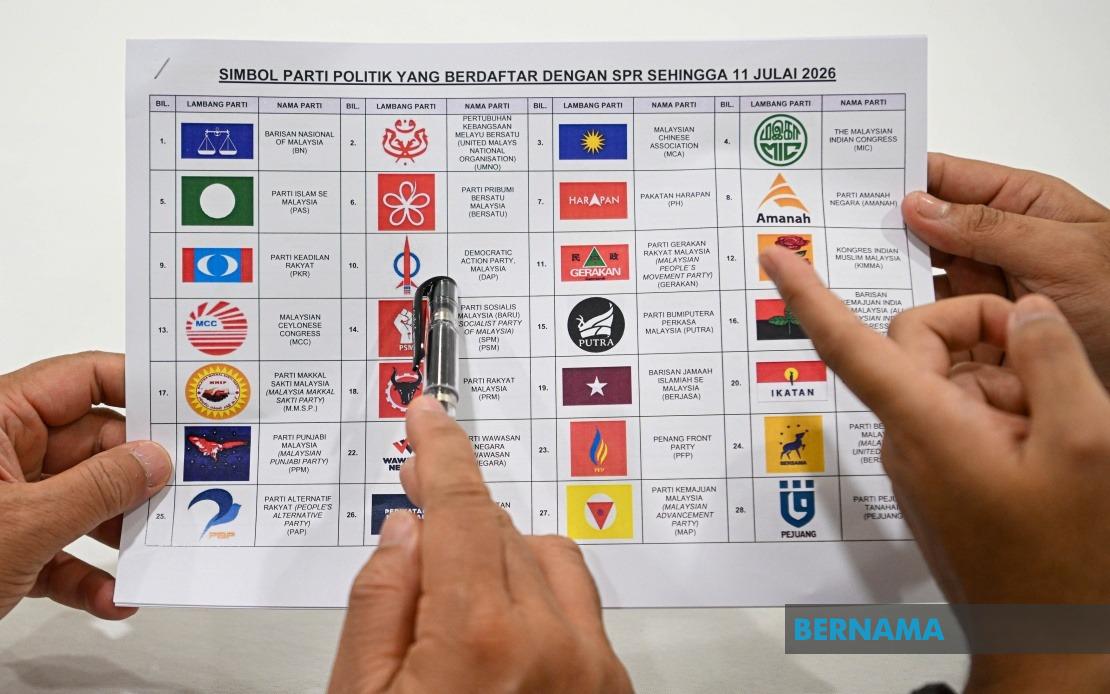
Pakatan Harapan has committed to a comprehensive contest, fielding candidates across all 36 state seats, signalling its intention to pursue outright victory rather than selective engagement. Barisan Nasional, the traditional ruling coalition, is contesting 25 seats, suggesting a more strategic approach focused on retaining strongholds and competitive battlegrounds. Perikatan Nasional, the newer coalition that has gained traction in recent electoral cycles, is fielding 11 candidates. Additionally, smaller parties including Parti Orang Asli Malaysia, the Socialist Party of Malaysia, and Parti Barisan Jemaah Islamiah Se-Malaysia are each contesting single seats, reflecting the increasingly fragmented nature of Malaysian politics at the state level.
Peikatan Nasional's presence in the contest is particularly noteworthy given that Parti Pribumi Bersatu Malaysia is fielding 24 candidates under the PN banner, including two candidates from Parti Bersepakat Hak Rakyat Malaysia running under the Bersatu logo. This arrangement reveals the complex coalition dynamics shaping the election, with smaller parties aligning with larger ones to maximize their electoral footprint. The Bersatu-led PN strategy represents an attempt to consolidate opposition votes against the incumbent Pakatan Harapan administration, potentially complicating vote distribution across the state's constituencies.
The previous state election in 2023 provides crucial context for understanding the current political landscape in Negeri Sembilan. Pakatan Harapan secured 17 of the 36 seats, enabling them to form the state government, while Barisan Nasional captured 14 seats and Perikatan Nasional won five. This result, though giving PH a working majority, was not an overwhelming mandate, meaning that the incumbent administration faces a genuine challenge from opposition coalitions. Several constituencies that PH won by narrow margins could swing either direction in 2024, making this election genuinely competitive and unpredictable in its outcome.
Security and public order considerations have prompted the Negeri Sembilan police to deploy substantial resources to manage the nomination process and subsequent campaign period. A total of 4,800 officers and personnel have been mobilized from the state force, augmented by an additional 1,373 officers from Bukit Aman headquarters. This significant deployment reflects the Election Commission's concerns about maintaining order during what is expected to be a high-energy campaign season, with nomination day particularly anticipated to draw large congregations of party supporters, political leaders, and candidates. The police preparations underscore the seriousness with which election security is treated in Malaysia's democratic processes.
The Election Commission has issued explicit reminders to all candidates and their supporters regarding compliance with electoral rules and regulations, particularly emphasizing the prohibition of provocative conduct that could disrupt the nomination or campaign proceedings. These directives represent standard protocol designed to ensure that the election environment remains conducive to genuine democratic competition rather than descending into acrimony or violence. The importance of such reminders reflects broader concerns about maintaining decorum in Malaysian political contests, ensuring that disputes are resolved through ballots rather than confrontation.
Weather forecasts presented by the Malaysian Meteorological Department indicated that most areas of Negeri Sembilan would experience generally fair conditions during the morning hours on nomination day, with the exception of Port Dickson and Seremban where rain was anticipated. Thunderstorms were forecast to develop across the entire state during afternoon hours, a pattern typical for the monsoon season in the peninsula. While weather-related disruptions to voting are typically limited in Malaysia's context, such forecasts are monitored by election officials to ensure that polling stations remain accessible and that voter turnout is not unnecessarily impeded by inclement conditions.
The Negeri Sembilan state election assumes considerable significance within the broader Malaysian political ecosystem. As a traditionally competitive state that has alternated between different political coalitions and where no single bloc commands overwhelming dominance, the election results could provide valuable insights into shifting electoral patterns across the peninsula. A clear victory for any coalition would suggest growing momentum in that direction, while a close result would indicate that Malaysian voters remain genuinely divided in their political preferences. The outcome may also influence dynamics at the federal level, particularly given ongoing tensions and realignments within the ruling coalitions.
For Malaysian and Southeast Asian observers, the Negeri Sembilan contest exemplifies the maturity of Malaysia's electoral democracy, demonstrating the country's ability to conduct regular, peaceful, and transparent democratic contests at the state level. The participation of multiple political coalitions, smaller parties, and independent actors reflects the diversity of political opinion across the state and the openness of Malaysia's political system to competition from multiple directions. As voting day approaches, all eyes will focus on whether incumbent Pakatan Harapan can retain its 2023 gains, whether Barisan Nasional can stage a comeback, or whether Perikatan Nasional can substantially increase its representation in the state assembly.

