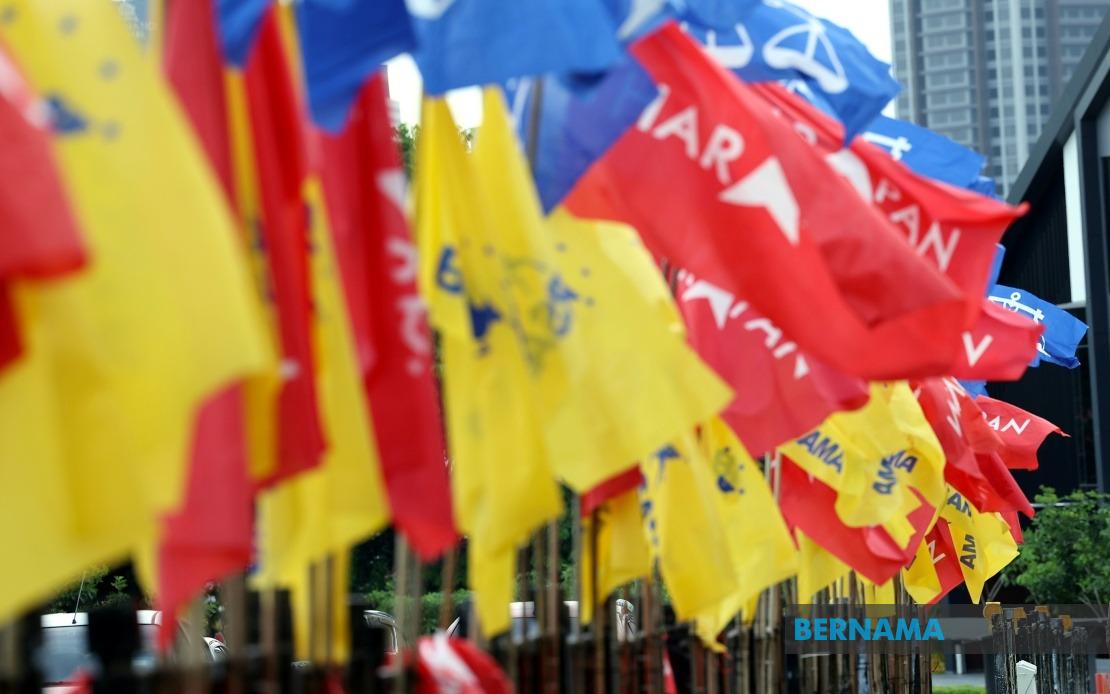
The Negeri Sembilan Palace has issued a formal directive to all political parties contesting the 16th state election, urging them to keep the royal institution completely separate from their campaign strategies and public communications. Through Datuk Azizi Mohamad Ali, Comptroller of the Negeri Sembilan Royal Household, palace authorities made clear that any attempt to associate the Ruler, the palace, or members of the royal family with partisan political interests would constitute a serious breach of protocol and respect.
The statement carries particular weight in Malaysia's constitutional context, where the position and dignity of the monarchy are protected not merely by tradition but by law. The palace's intervention signals concern that the intensity of electoral competition may encourage candidates and parties to leverage royal imagery or endorsement as a campaign tool. Such tactics, though historically present in Malaysian politics, represent a sensitive boundary that the institution feels compelled to reinforce during each electoral cycle.
Azizi's remarks emphasise that the monarchy functions fundamentally as a stabilising force standing above partisan division. By deliberately remaining neutral across all political contests, the royal institution preserves its symbolic role as a unifying entity that can command respect and loyalty across ideological boundaries. This separation of monarchy from politics has become increasingly important in Malaysia, where religious, communal, and regional identities often create sharp political divisions. The palace serves as a reminder that state institutions derive legitimacy partly from their perceived distance from day-to-day partisan struggle.
The palace specifically flagged the "3R" framework—religion, royalty, and race—as off-limits topics for campaign exploitation. This reflects lessons learned from previous electoral cycles where candidates have sometimes weaponised sensitive communal issues to mobilise support. By explicitly naming these categories before the campaign enters its most intense phase, the palace seeks to establish clear boundaries that transcend individual party discipline and appeal instead to candidates' broader civic responsibilities.
Negeri Sembilan's electoral context adds particular relevance to this warning. The state has experienced significant political volatility in recent years, with leadership transitions and shifting coalitional arrangements. In such environments where political fortunes remain fluid, there is heightened temptation for candidates to invoke any available symbolic resource, including the monarchy, to differentiate themselves or bolster their legitimacy. The palace's pre-election statement serves as both preventative guidance and a public record that can be referenced if violations occur.
The palace also addressed the circulation of misinformation, instructing the public to disregard unverified claims linking the royal institution to any political party or candidate. This dimension of the statement acknowledges the digital age challenge where false information, doctored images, or misleading videos can spread rapidly across social media platforms. By establishing the palace's official channels as the sole authoritative source on such matters, authorities attempt to combat fabricated endorsements or misleading associations that candidates themselves may not directly create but from which they might benefit.
Negeri Sembilan's state legislative assembly was dissolved on June 5, setting the election timeline that culminates in polling on August 1. Early voting commenced on July 28. The compressed campaign period means that multiple parties are simultaneously attempting to maximise their visibility and appeal, creating conditions where boundary-pushing becomes more likely. The palace's timing of this statement, issued when the campaign was already underway, suggests that preliminary observations of problematic behaviour or concern about likely violations prompted the formal intervention.
For Malaysian observers, the palace's statement reflects broader conversations about institutional independence and democratic health. Constitutional monarchies worldwide grapple with the tension between legitimacy derived from transcendent status and the reality that monarchs and their institutions inevitably become enmeshed in political processes. Malaysia's approach emphasises maintaining formal separation and explicit neutrality, even when this requires periodic public reminders to political actors about boundaries they should theoretically already understand.
The palace's appeal also underscores the responsibility of political parties to self-regulate and respect constitutional conventions without requiring external intervention. Malaysian democratic institutions depend partly on parties accepting norms that limit what they can do, even when violation might provide short-term electoral advantage. When palace authorities must explicitly warn against exploiting the monarchy, it implicitly suggests that existing party discipline and leadership commitment to institutional respect may be insufficient to prevent violations on their own.
Regionally, Malaysia's approach contrasts with some neighbouring democracies where royal institutions face more direct politicisation or challenge. Thailand's experience with contested monarchy and political instability stands as a cautionary example of what occurs when institutions fail to maintain effective separation from partisan competition. By reasserting this boundary clearly and regularly, the Negeri Sembilan Palace reinforces a Malaysian constitutional tradition that treats the monarchy as fundamentally different from and above political contestation, even as electoral competition becomes more intense and technologically mediated.

