Negeri Sembilan voters face an unusually fragmented political landscape when they go to the polls on August 1, with the 16th state election marking a significant departure from traditional two-party competition. Across 36 state assembly constituencies, candidates representing multiple coalitions—and increasingly independent candidates—will compete in contests ranging from bilateral struggles to unprecedented five-way battlegrounds. The shift reflects broader tensions within Malaysia's political ecosystem, where established power blocs face mounting pressure from emerging parties and local candidates seeking representation.
The most striking change lies in the proliferation of three-cornered contests. Twenty-one of the 36 seats will feature three-way races, compared with just seven in the 2023 state election—a threefold increase that underscores rising fragmentation. Simultaneously, straight fights have contracted sharply from 27 seats to merely 11, suggesting that Pakatan Harapan and Barisan Nasional can no longer dominate contests through direct confrontation alone. This structural transformation hints at voter dissatisfaction with binary political choices and the growing appeal of alternative political forces, particularly Parti Pribumi Bersatu Malaysia, which features prominently across multi-candidate constituencies.
Higher-order contests—four- and five-way battles—have also emerged, reflecting unprecedented complexity in Negeri Sembilan's political terrain. Four-cornered fights will occur in Jeram Padang and Rahang, each involving candidates from major coalitions alongside smaller parties and independent aspirants. Most significantly, Nilai and Sri Tanjung will each witness five-candidate contests, a phenomenon entirely absent from the 2023 state polls. These multi-candidate struggles create genuine uncertainty, as vote splitting may determine outcomes more decisively than traditional party machinery or messaging.
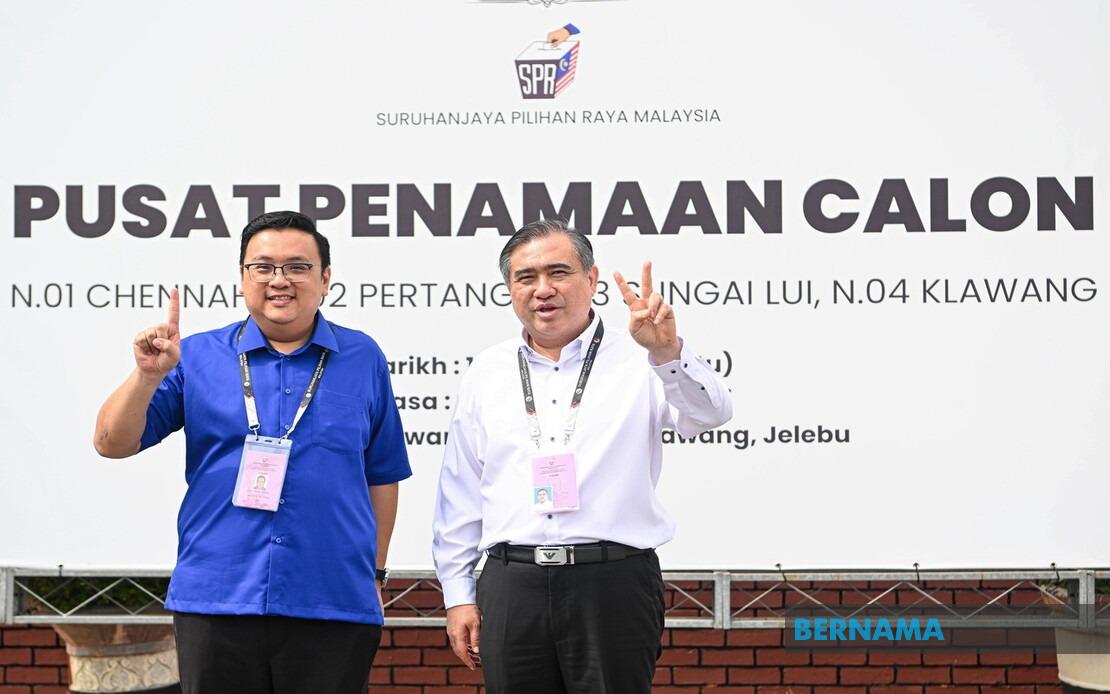
Several high-profile political figures will be tested in contests of varying complexity. Transport Minister and DAP secretary-general Anthony Loke faces a straight fight in Chennah against Barisan Nasional's Siow Kong Choon, allowing the national opposition leader to campaign without worrying about spoiler candidates. Meanwhile, Foreign Minister Datuk Seri Mohamad Hasan, UMNO's deputy president, will defend Rantau in a bilateral struggle, though this seat's political history suggests competitive intensity. These direct contests offer both figures opportunities to consolidate power bases within their respective coalitions.
Other senior figures navigate more treacherous multi-cornered terrain. Menteri Besar Datuk Seri Aminuddin Harun, a PKR vice-president from Pakatan Harapan, must defend Linggi against both Barisan Nasional's Datuk Mohd Faizal Ramli and Bersatu's Zamri Md Said. Similar three-way battles confront several other constituency heavyweights, including Negeri Sembilan UMNO chairman Datuk Seri Jalaluddin Alias in Pertang. These contests highlight how Bersatu's consistent intervention—the party fields candidates across multiple constituencies—has fundamentally altered Negeri Sembilan's competitive dynamics, particularly by siphoning votes from existing coalitions.
Independent candidates and smaller parties contribute substantially to the fragmentation pattern. In the five-way contest at Nilai, incumbent J. Arul Kumar from Pakatan Harapan faces not only Barisan Nasional and Bersatu challengers, but also candidates representing Barisan Jemaah Islamiah Se-Malaysia and an independent aspirant. Similarly, Datuk Dr G. Rajasekaran's Pakatan Harapan stronghold in Sri Tanjung will be contested by two independent candidates alongside representatives of larger coalitions. This proliferation suggests meaningful demand for representation unconstrained by major party structures, or alternatively, reflects strategic positioning by local figures seeking entry points into the assembly.
The Electoral Commission has set the polling date for August 1, with early voting scheduled for July 28. A total of 889,490 registered electors are eligible to participate, comprising 867,151 ordinary voters alongside 16,884 military personnel and their families, and 5,455 police members. This electorate size positions Negeri Sembilan as a medium-scale state election by Malaysian standards, allowing observers to assess broader political trends without the demographic and logistical complexities of larger peninsular states like Selangor or Perak.
The structural transformation evident in Negeri Sembilan carries implications extending beyond the state itself. The decline in straight fights and corresponding surge in multi-candidate contests suggests that binary coalitional politics—long the default in Malaysian electoral competition—faces genuine fragmentation. Whether driven by voter preference for alternatives, strategic positioning by ascending parties like Bersatu, or dissatisfaction with existing coalitional arrangements remains an open question that the August 1 results may partially illuminate. Regional observers and political analysts will closely monitor both turnout patterns and vote distribution to discern whether this fragmentation represents temporary volatility or a durable shift in Malaysian electoral behaviour.
For Pakatan Harapan and Barisan Nasional, Negeri Sembilan 2024 presents test cases for managing multi-candidate environments where coalition discipline and campaign messaging must account for non-traditional competitors. The results will inform both coalitions' strategies heading toward potential federal-level electoral contests. Similarly, Bersatu's performance across contested seats will clarify whether the party has achieved genuine electoral viability or remains a marginal force dependent on tactical positioning. Smaller parties and independent candidates will seek validation through seat gains, though the mathematics of vote splitting in five-way contests makes victories unlikely except where incumbent popularity or deep local networks provide commanding advantages.

