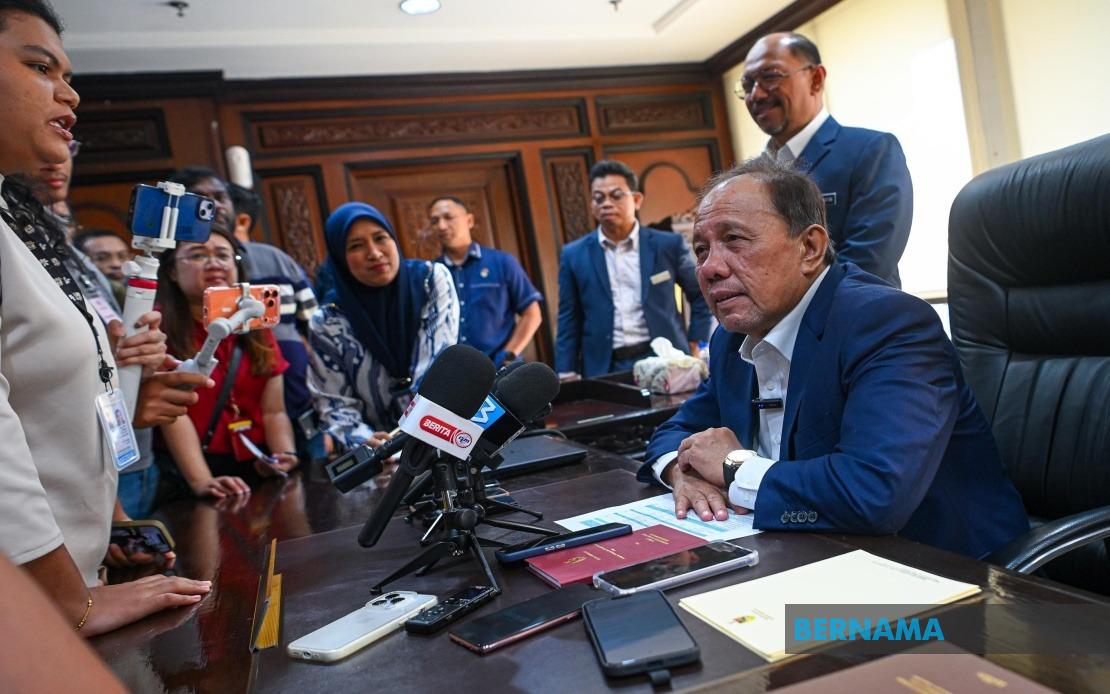
Negeri Sembilan's newly sworn-in Menteri Besar Datuk Ismail Lasim has indicated his administration is weighing the introduction of Deputy Executive Council positions for several key portfolios, signalling an unconventional approach to government structure in the state. The proposal emerges as Lasim takes the helm of a government formed by Barisan Nasional and Perikatan Nasional, which collectively secured 25 of the 36 state assembly seats in the recent election. Speaking at Wisma Negeri in Seremban, Lasim explained that the shortage of traditional Exco positions necessitates exploring alternative frameworks to accommodate capable assemblymen from BN's component parties as well as PAS and Parti Wawasan Negara, the Perikatan partners in the coalition.
The creation of Deputy Exco posts represents a departure from conventional state governance models in Malaysia, where executive councils typically operate with a fixed number of members determined by state constitutions or executive protocols. By introducing these secondary positions, Lasim aims to distribute responsibility across a broader base of elected representatives, potentially rewarding coalition members who did not secure main Exco appointments while expanding the reach of government initiatives. The Juasseh assemblyman acknowledged, however, that the exact number of Deputy Exco positions remains undecided, suggesting ongoing discussions within the coalition about optimal administrative configuration.
Lasim's approach reflects pragmatic coalition management in an environment where multiple parties share power. The Barisan Nasional coalition, which won 18 seats, maintains the largest bloc within the government partnership. Perikatan Nasional's seven seats, combined with BN's majority, provide governing stability and a two-thirds legislative advantage. Yet the distribution of executive positions between these partners, and within BN itself across component parties, presents a delicate political equation. By creating Deputy Exco roles, Lasim can potentially satisfy more coalition partners without dismantling existing institutional frameworks or engaging in divisive renegotiations of the main Exco structure.
The timing of this initiative carries significance for the broader Malaysian political landscape. Negeri Sembilan represents one of several states where BN and Perikatan Nasional have forged governing partnerships since the 2022 federal election restructured political alignments. How these state governments manage their internal coalitions offers templates—or cautionary tales—for other administrations. The introduction of Deputy Exco positions, if successful, could influence governance discussions in other states or even set precedent for how emerging coalition governments tackle the challenge of accommodating multiple parties within limited executive positions.
Lasim formally commenced duties at the Menteri Besar's Office this morning, receiving a formal welcome from State Secretary Datuk Mohd Zafir Ibrahim and departmental heads. His swearing-in occurred three days earlier at Istana Besar Seri Menanti before the Yang Dipertuan Besar of Negeri Sembilan, Tuanku Muhriz Tuanku Munawir. At 67 years old, Lasim brings extensive political experience to the position, having established himself in the state assembly. His first official actions have focused on establishing the executive framework rather than making policy announcements, underscoring the priority placed on smooth administrative transition during the early weeks of a new administration.
The Menteri Besar indicated that the full Exco lineup would be revealed by Friday or, at the latest, by the following Monday. This timeline suggests advanced negotiations are already underway among coalition partners regarding post allocation. Beyond Deputy Exco positions, Lasim noted that Senior Exco appointments remain under consideration, though constitutional or regulatory provisions appear to exist for such roles. The layering of positions—traditional Excos, Senior Excos, and potentially Deputy Excos—creates a hierarchical structure that extends opportunities for coalition members while preserving executive coherence.
For Malaysian observers, the Negeri Sembilan development illustrates ongoing adaptation within Malaysian political parties and coalitions to the realities of contemporary electoral outcomes. The 2022 general election fragmented the political landscape, making outright single-party dominance increasingly rare. In states, this fragmentation often translates into coalition governments requiring careful balance. Lasim's willingness to reshape administrative structures rather than simply accept traditional constraints demonstrates the flexibility necessary in modern Malaysian governance. Whether this model proves effective will depend on whether Deputy Exco holders receive meaningful portfolios and decision-making authority or merely ceremonial appointments.
The opposition landscape in Negeri Sembilan also warrants consideration. Pakatan Harapan secured 11 seats, establishing itself as the principal opposition force but without realistic prospects of forming government. This configuration provides the governing coalition with substantial legislative freedom, though it does not eliminate the need for internal coalition discipline. With two-thirds majority secure, the government can advance legislation without cross-party support, but maintaining coalition cohesion remains important for policy coordination and preventing defections.
From a Southeast Asian perspective, Negeri Sembilan's administrative innovations reflect broader regional trends toward coalition governance. Thailand, Indonesia, and the Philippines have all experimented with various approaches to accommodating multiple parties within executive structures. Lasim's proposal, while modest in scope, represents Malaysia's incremental adjustment to similar pressures. The success or failure of this model in Negeri Sembilan may influence how other Malaysian states and the federal government consider restructuring their own administrative frameworks in future coalition scenarios.
The substantive impact of Deputy Exco positions will ultimately depend on portfolio allocation and the scope of responsibilities delegated to these secondary appointments. If Deputy Excos oversee minor administrative matters or serve primarily symbolic functions, they may prove insufficient for satisfying coalition partners' ambitions. Conversely, if these positions command genuine authority over important state services—education, infrastructure, or economic development—they could become genuinely competitive assignments. Lasim's office will need to ensure that portfolio distribution across the expanded executive tier reflects both coalition balance and effective governance capacity.
Looking forward, the Negeri Sembilan government faces the challenge of translating structural innovation into functional administration. Creating additional tiers of executive positions requires clear delineation of responsibilities, coordination mechanisms, and accountability frameworks. Lasim has signalled his intention to establish an effective administration, and the coming weeks will reveal whether the Deputy Exco experiment represents a sustainable approach or a temporary accommodation measure. As the coalition implements policy and manages the complexity of multi-party governance, the viability of this administrative model will become apparent to observers across Malaysia and the region.

