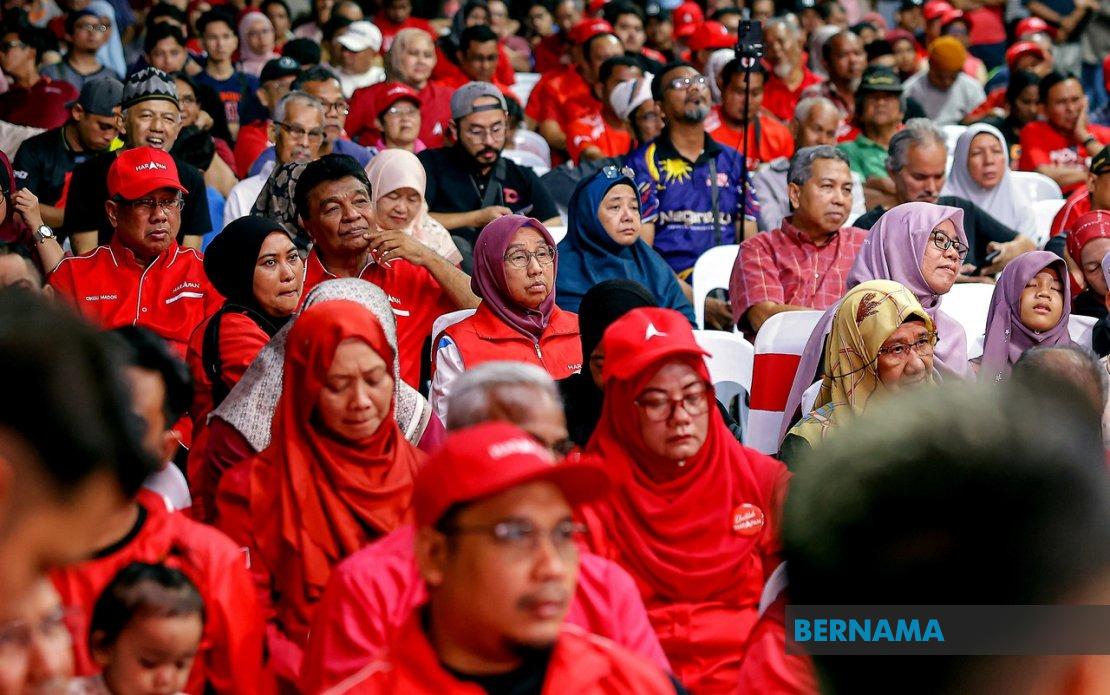
The campaign for Negeri Sembilan's 16th state election has revealed a striking consensus among the electorate: they are tired of distant, disconnected politicians and hunger instead for representatives capable of translating community concerns into concrete action. A survey of voters across the state shows that accessibility and competence now matter far more than traditional factors such as party affiliation or local heritage. This shift in voter sentiment reflects broader frustrations across Southeast Asia, where citizens increasingly expect their leaders to demonstrate both genuine engagement and proven ability to address everyday hardships.
The defining expectation emerging from conversations with Negeri Sembilan residents is straightforward yet demanding: candidates must be approachable, responsive, and equipped to solve problems. This is not merely about listening to constituents, but about translating their concerns into policy outcomes. Retired educator Kamarulzaman Ab Aziz articulated this clearly, noting that an outsider with authentic community connections and genuine warmth stands a better chance of winning support than a locally-rooted candidate who remains aloof and inaccessible. His observation challenges the conventional wisdom that local ties guarantee electoral success. In Malaysian politics, where geographic and ethnic considerations have traditionally dominated campaign strategies, this represents a notable evolution in how voters evaluate their representatives.
Economic anxiety looms largest among the electorate's immediate concerns. Nurulainee Hamidon, a 37-year-old food trader operating in Port Dickson, articulated the squeeze facing small business owners and ordinary consumers. Rising input costs have created an untenable position where retailers absorb margin-eroding price increases or risk alienating customers by passing costs along. This dilemma, familiar to traders across Malaysia's hawker stalls and independent shops, underscores why cost-of-living remains the dominant election issue in every state campaign. The disparity between rising expenses and consumer resistance to price increases leaves entrepreneurs trapped between profit margins and customer goodwill, making this a visceral rather than abstract concern for working Malaysians.
Rural development and inclusive growth featured prominently in voter feedback, particularly from residents of estate communities. Housewife M. Manisha highlighted the persistent gap in development planning, where urban and semi-urban constituencies capture disproportionate infrastructure investment while estate populations remain marginalised. This pattern reflects a broader Malaysian development challenge: the assumption that rural voters require less sophisticated facilities or services than their urban counterparts. Ensuring equitable access to development opportunities across diverse geographic areas requires deliberate policy attention and cross-constituency coordination, capabilities that voters are now explicitly demanding from their elected representatives.
Employment quality and wage adequacy emerged as critical concerns for younger voters entering the job market. College student Mohammad Najmi Aiman, casting his ballot for the first time in the Paroi constituency, articulated expectations that government will prioritise job creation aligned with qualification levels and skill sets. Malaysia's persistent challenge with graduate unemployment and underemployment suggests that aspiring workers want assurance that job growth will match their educational investments. This generational expectation signals that Malaysia's younger voters are unlikely to accept previous political narratives focused solely on employment quantity; they increasingly demand employment quality and meaningful wage progression.
Campaign conduct and democratic civility have become unexpected electoral priorities for sections of the Negeri Sembilan electorate. Private sector worker Lim Kian emphasised that voters wish to witness mature, constructive political competition unmarred by personal attacks or character assassination. His appeal for campaign decorum reflects a sophisticated understanding that campaign tone influences governance style. Political parties that resort to character destruction during elections often govern through similarly divisive methods, whereas campaigns built on policy substance and respectful disagreement tend to produce more collaborative and inclusive administrations. This voter sentiment represents an implicit demand that candidates demonstrate during campaigns the integrity and maturity they promise to exhibit in office.
The electoral mechanics for this state election involve 889,490 registered voters across multiple categories. The electorate comprises 867,151 standard voters alongside 16,884 military personnel and their family members and 5,455 police officers and their families. One hundred three candidates are competing for 36 state assembly seats, suggesting competitive races across multiple constituencies. The two-stage voting process—early voting on July 28 followed by general polling on August 1—reflects standard Malaysian electoral procedures and provides flexibility for working voters unable to cast ballots on election day.
These voter sentiments reveal an electorate increasingly sophisticated in its political expectations and less swayed by traditional appeals based on patronage, local ties, or party loyalty. The shift toward demanding accessibility combined with demonstrated competence represents a maturation of electoral politics in Negeri Sembilan and likely presages similar patterns elsewhere in Malaysia. Candidates who win voter confidence in this context will be those who can prove they understand local challenges, possess workable solutions, and maintain genuine engagement with constituents beyond campaign season. This evolution in voter expectations carries significant implications for how political parties campaign and govern across the region.

