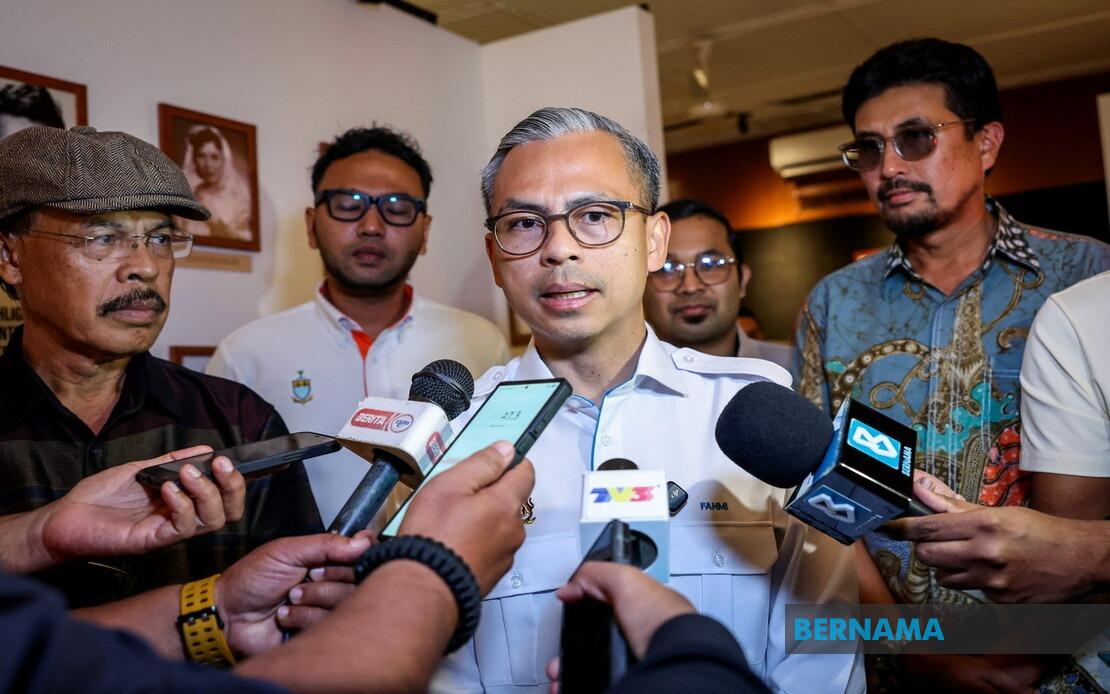
Negeri Sembilan voters face an information minefield as the state election campaign unfolds, with authorities now openly warning the electorate to treat social media claims with considerable skepticism. Communications Minister Datuk Seri Fahmi Fadzil has issued an urgent advisory urging residents to verify all politically-sensitive content through established news organizations before accepting or distributing such material, reflecting mounting concern about the ease with which false narratives can circulate during electoral periods.
The minister's warning stems from a troubling pattern emerging across digital platforms, where old content is regularly recycled and presented as breaking news, while deliberately misleading statements proliferate without obvious correction mechanisms. Such misinformation can subtly reshape public opinion during critical voting periods by creating false impressions about candidates, policy positions, or electoral developments. In the context of a state election, where margins of victory can sometimes be narrow, the cumulative effect of coordinated disinformation campaigns warrants serious attention from election administrators and media watchdogs alike.
Fahmi emphasized that mainstream media verification serves as a crucial filter for voters attempting to navigate an increasingly complex information landscape. His core recommendation was straightforward: if a story or claim has not been reported by established news outlets, citizens should treat it with extreme caution, as it may either be entirely fabricated or represent outdated material being deliberately miscontextualized. This standard represents a pragmatic approach in an era when social media algorithms often reward sensationalism over accuracy, and when bad-faith actors can exploit platform mechanics to amplify false narratives.
The Malaysian Communications and Multimedia Commission (MCMC) has documented 16 formal complaints involving fake news and internet connectivity problems since the Negeri Sembilan campaign commenced, suggesting the problem extends beyond mere individual slipups to potentially coordinated efforts to confuse the electorate. This data point underscores that misinformation during elections is not simply a matter of well-intentioned people sharing unverified information—there appears to be deliberate manipulation occurring at scale. For Malaysian voters accustomed to relatively stable institutional frameworks, such targeting can prove particularly effective because awareness of sophisticated digital manipulation tactics remains uneven across the population.
One particularly acute vulnerability involves messaging applications such as WhatsApp, where information travels through closed networks with minimal accountability. Users receive forwarded claims from contacts they trust, creating a false sense of credibility that bypasses normal skepticism. Unlike public social media platforms where false claims can be fact-checked and corrected through replies, WhatsApp messages spread through intimate personal networks where contradictory information rarely emerges. This structural feature of encrypted messaging makes it an ideal vector for misinformation campaigns targeting specific demographic groups or geographic constituencies.
Fahmi's call for media organizations to adopt more proactive stances in identifying and debunking viral falsehoods recognizes an important reality: mainstream outlets cannot rely entirely on passive approaches to combating misinformation. Rather, they must actively monitor what circulates through social channels and provide timely clarifications before false narratives become too entrenched in public consciousness. This represents a shift in thinking about journalistic responsibility—from simply reporting events accurately to actively defending the information ecosystem itself against coordinated manipulation.
The Negeri Sembilan election campaign thus serves as a testing ground for Malaysia's resilience against information warfare tactics that are becoming increasingly sophisticated globally. Democratic systems elsewhere have experienced severe damage when election-related misinformation goes unchecked, raising questions about whether Malaysian institutions have developed adequate defenses against such tactics. The MCMC's relatively modest complaint count might reflect genuine restraint among actors, or it might indicate that many Malaysians simply accept misinformation without reporting it, suggesting a deeper problem than official statistics reveal.
For voters navigating this environment, the minister's advice essentially boils down to traditional media literacy applied to modern platforms: verify through multiple independent sources, be skeptical of emotionally charged claims, and recognize that official news organizations, despite their imperfections, generally operate within frameworks requiring some degree of accuracy accountability. While mainstream media certainly has limitations and biases, it typically maintains editorial standards that social media platforms abandoned long ago in pursuit of engagement metrics.
The political implications of this campaign extend beyond Negeri Sembilan. If misinformation successfully shapes electoral outcomes in one state, the precedent encourages similar tactics in future elections across Malaysia. Conversely, if voters and institutions demonstrate collective ability to resist manipulation through informed skepticism and fact-checking discipline, it raises the barrier for future disinformation campaigns. The next weeks will reveal whether Malaysian voters treat the minister's warning as actionable guidance or merely performative rhetoric from officials already powerless to stem the digital tide.
Moving forward, the question becomes whether Malaysia's regulatory and media institutions can build more robust frameworks for maintaining information integrity during elections. This likely requires investment in digital literacy initiatives that reach beyond urban, educated demographics to rural and aging populations particularly vulnerable to sophisticated manipulation. It also demands that technology platforms themselves face consequences for facilitating the spread of election-related falsehoods, rather than simply claiming neutrality while their algorithms amplify inflammatory content. The Negeri Sembilan campaign offers a crucial opportunity to test such approaches before national-level elections materialize with potentially far greater consequences.

