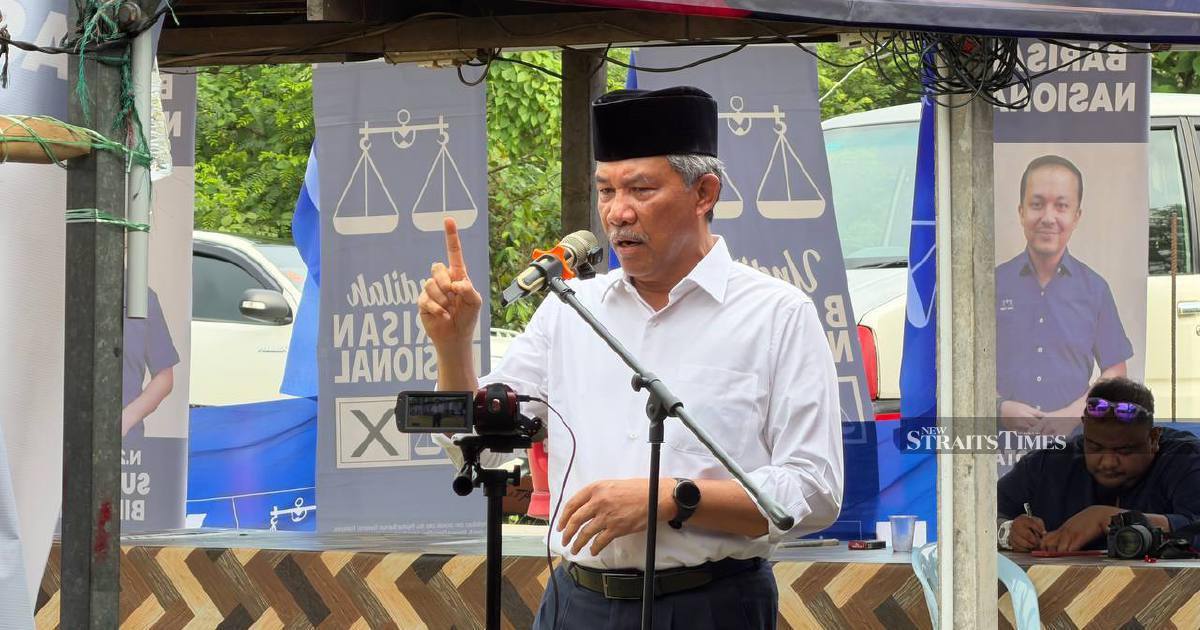
The Negri Sembilan campaign trail has become a flashpoint for rumour and counter-rumour, with the state's top political leadership now taking direct action to combat what officials characterise as deliberate fabrications spread through digital channels. Tok Mat, speaking at a rally in Rembau, categorically denied that Barisan Nasional and PAS are in any process of merging, addressing speculation that has gained traction on social media platforms throughout the electoral period.
The proliferation of unverified claims through messaging apps, Facebook groups, and other online forums represents an emerging challenge to Malaysian electoral integrity. During campaign periods, voters increasingly encounter claims that cannot be easily verified, creating an environment where political uncertainty can translate into electoral volatility. The spread of such narratives—whether deliberately orchestrated or organic—can distort public discourse and influence voting behaviour based on assumptions rather than substantive policy differences.
Tok Mat's intervention signals that state-level leadership recognises the stakes involved in confronting misinformation head-on. By directly addressing the merger claim rather than ignoring it, the Menteri Besar seeks to establish a factual baseline from which voters can form judgments. The strategy reflects an understanding that silence in the face of false claims can inadvertently legitimise them in voters' minds, particularly among less digitally literate segments of the population who may view social media posts as credible sources.
The specific focus on social media deception carries particular resonance in Malaysia, where internet penetration and mobile phone usage are extraordinarily high. Over 85 percent of Malaysians use the internet, and approximately 70 percent maintain active social media accounts. This digital saturation means false narratives can reach large audiences with remarkable speed, outpacing traditional media fact-checking and official corrections. The 2024 Negri Sembilan election unfolds in an information environment fundamentally different from previous campaigns, where rumour spread through personal networks rather than algorithmic amplification.
The BN-PAS merger speculation itself taps into anxieties among some voters about the composition of future government coalitions. Barisan Nasional's traditional dominance in Malaysian politics has been significantly eroded over recent years, prompting ongoing speculation about potential realignments. PAS, meanwhile, has strengthened its position particularly in certain states and electoral demographics. For voters concerned about either coalition's ideological direction or policy priorities, rumours of merger between these entities strike a nerve, making such claims difficult to dislodge even when definitively denied.
Negri Sembilan occupies a distinctive position within Malaysian electoral politics. The state has historically been regarded as a BN stronghold, though recent elections have demonstrated shifts in voter preferences. The 2023 general election produced a hung parliament situation nationally that prompted extensive coalition negotiations and temporary realignments. Against this background of political instability, voters in Negri Sembilan may be particularly susceptible to claims about further restructuring of political relationships, since such changes do occur periodically in Malaysian politics.
The campaign's focus on social media falsehoods also highlights debates about digital responsibility among political actors themselves. When parties and candidates circulate misleading claims or allow false narratives to flourish without correction, they contribute to an erosion of electoral discourse quality. Conversely, when political leaders explicitly counter misinformation—as Tok Mat has done—they establish norms around factual accuracy that benefit all stakeholders, including themselves. This public health approach to information integrity serves broader democratic objectives beyond any single campaign cycle.
Voters navigating the Negri Sembilan election campaign face an intensified information curation challenge. Distinguishing between official statements from party leadership, unverified claims from unknown accounts, and content intentionally designed to mislead requires both critical thinking skills and access to reliable fact-checking resources. The urging of voters to reject slander implicitly acknowledges that traditional media channels alone may not reach all segments of the electorate, necessitating a broader cultural shift toward skepticism regarding uncorroborated online claims.
Looking forward, the Negri Sembilan campaign may serve as a case study for how state-level elections address digital misinformation. The willingness of political leaders to directly confront false claims, while simultaneously urging voter discernment, suggests that Malaysian politics is incrementally developing response mechanisms to information threats. However, sustained institutional efforts—including media literacy initiatives, platform accountability, and rigorous fact-checking infrastructure—will likely be necessary to address the root causes rather than merely the symptoms of electoral misinformation.

