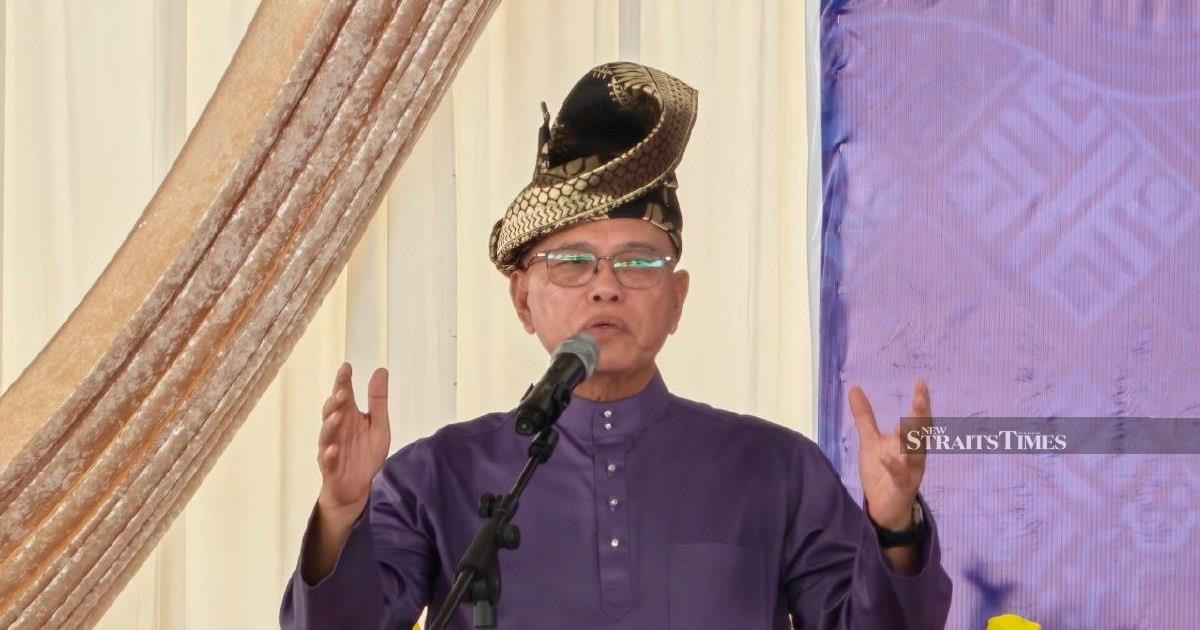
Umno vice-president Datuk Seri Wan Rosdy Wan Ismail has seized on the Negri Sembilan state election outcome to argue that Barisan Nasional's coalition politics operates on a fundamentally different foundation from opponents who he suggests exploit racial tensions. Speaking in Temerloh, he contended that the result demonstrated voters in the state had made a conscious choice to prioritise institutional effectiveness and continuity over appeals rooted in communal identity, marking a potential inflection point in how Malaysian voters evaluate their political choices.
The assertion carries significant weight within Umno's internal discourse, where leaders have long grappled with the party's evolving relationship to identity politics. For decades, Umno positioned itself as the principal political vehicle for Malay-Muslim interests, a role that proved electorally dominant during Malaysia's earlier postcolonial period. However, the coalition's recent electoral reversals have prompted reflection about whether narrower ethno-religious messaging alienates the broader Malaysian electorate, particularly urban voters and younger demographics increasingly focused on economic performance and institutional transparency.
Wan Rosdy's interpretation of Negri Sembilan voter behaviour deserves scrutiny within the context of East Malaysia and the peninsula's increasingly complex electoral geography. The state's demographic composition and political history differ from Umno's traditional strongholds in rural and northern regions. Negri Sembilan's economically diverse population, including substantial urban centres connected to the Klang Valley manufacturing belt, may indeed exhibit electoral preferences shaped more by assessments of administrative competence than by the communal mobilisation strategies that dominated earlier Malaysian politics.
The broader implication of his statement addresses a persistent strategic question within Barisan Nasional: whether the coalition can construct winning majorities through governance narratives that transcend the ethno-religious appeals that historically secured Umno dominance. This question has become increasingly urgent following the 2018 general election, which saw Barisan's parliamentary majority collapse despite decades of consecutive victories. In the years since, the coalition has attempted to reposition itself as a stabilising force promoting institutional continuity and economic stewardship, a framing fundamentally different from the communal-focused rhetoric of earlier campaigns.
The contrast Wan Rosdy draws between Barisan's approach and that of competitors implicitly references opposition parties, particularly those components associated with Perikatan Nasional and Pakatan Harapan, which he suggests rely more heavily on racial and religious messaging. This characterisation reflects ongoing debate within Malaysian political commentary about the degree to which various coalitions and parties employ identity-focused strategies. The actual electoral calculus in Negri Sembilan likely involved multiple overlapping considerations—local governance records, candidate quality, economic conditions, and yes, questions of identity and representation—rather than a binary choice between administrative competence and racial politics.
The Negri Sembilan result carries significance beyond the state itself, as it provides Barisan Nasional with political momentum heading into potential federal redistricting discussions and future general elections. State-level victories allow the coalition to project resurgent viability and claim renewed voter confidence following years of electoral uncertainty. For Umno specifically, victories in states where it campaigns primarily on competence and stability narratives rather than communal mobilisation could suggest a successful recalibration toward a broader electoral coalition.
However, scepticism is warranted regarding whether a single state election result definitively demonstrates Malaysian voters' wholesale rejection of racial politics. Electoral outcomes typically reflect complex local conditions, candidate dynamics, and multiple competing voter priorities. Negri Sembilan's particular circumstances—including its economic profile, specific local issues, and the strength of individual candidates—may not replicate in other states with different demographic compositions or political histories. Moreover, the degree to which any coalition genuinely abandons identity-focused appeals, even while emphasising administrative messages, remains an open question.
The statement also reflects generational and strategic divisions within Umno itself. Younger party leaders increasingly advocate recalibrating messaging toward economically focused, multi-ethnic appeals, while more traditional factions maintain that Umno's foundational strength derives from its role as custodian of Malay-Muslim political interests. Wan Rosdy's emphasis on administrative stability and voter pragmatism aligns with the modernisation camp, suggesting that institutional backing exists within Umno for this strategic direction.
Regional observers in Southeast Asia will note Malaysia's ongoing political experimentation as significant. The country has experienced unprecedented coalition shifts, leadership transitions, and electoral volatility since 2018, creating a real-time laboratory for understanding whether postcolonial identity-based political structures can evolve toward alternative cleavage patterns. If Malaysian voters demonstrably prioritise competence, economic management, and institutional stability over ethno-religious appeals, this would represent a fundamental reconfiguration of Southeast Asian politics beyond Malaysia's borders.
Moving forward, Barisan Nasional and Umno appear committed to testing whether governance-focused narratives can sustain winning coalitions across diverse voter demographics. The Negri Sembilan outcome provides encouraging signals within this framework, though longer-term patterns will emerge only through successive electoral cycles in different state and federal contexts. Wan Rosdy's assertion ultimately stakes a claim about Malaysian voter maturity and political priorities that upcoming elections will either validate or challenge.

