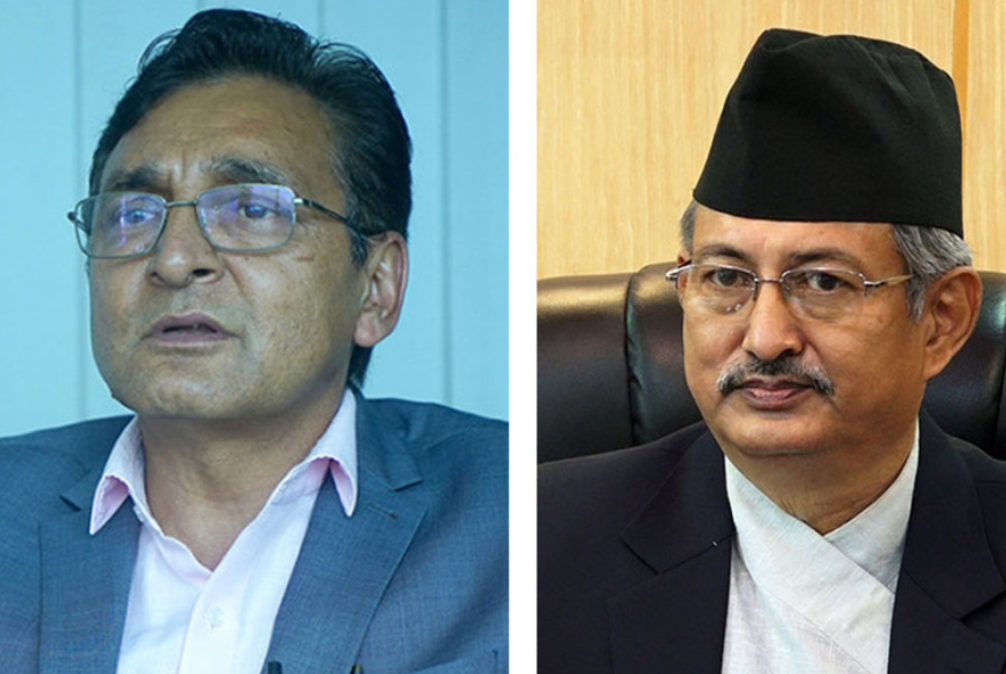
A Kathmandu district court has delivered convictions against two senior former government officials in what authorities describe as a large-scale document forgery racket involving the resettlement of Nepali nationals abroad under false refugee credentials. The verdicts, handed down late Tuesday, mark a significant moment in Nepal's intensifying anti-corruption drive that has gained momentum following youth-led protests last year that toppled the previous administration.
Former Deputy Prime Minister and Energy Minister Top Bahadur Rayamajhi received a four-year prison sentence for offences against the state, fraud, and involvement in organised crime. His successor in the Home Ministry, Bal Krishna Khand, was convicted on complicity charges and sentenced to two years in jail. Both men have previously denied culpability, with their legal representatives already signalling intentions to challenge the court's decision on appeal. Rayamajhi is currently in custody, while Khand remains at liberty pending the outcome of his legal challenge.
The scheme targeted the longstanding refugee resettlement programme that has become a crucial humanitarian pipeline for displaced Bhutanese nationals of Nepali ethnicity. Over the past three decades, approximately 120,000 people fled Bhutan to Nepal, citing restrictions on political freedoms in the Buddhist-majority kingdom. These individuals subsequently became eligible for third-country resettlement when Bhutan and Nepal failed to reach agreement on repatriation. Washington emerged as the primary destination, accepting roughly 100,000 of the approximately 113,000 individuals ultimately resettled across the United States, Canada, and Australia.
Investigators uncovered the fraudulent operation in 2023, after both accused ministers had already departed their government positions. The investigation revealed that officials had manufactured documentation to enable Nepali citizens lacking genuine Bhutanese refugee status to gain admission to Western countries through the established resettlement channels. The precise number of individuals who successfully exploited this administrative loophole to reach the United States remains unclear from available court records.
Beyond the two prominent former ministers, the court convicted fourteen additional defendants, encompassing a former high-ranking civil servant within the Home Ministry and a former community leader among Bhutanese refugees in Nepal's eastern camps. These co-conspirators received sentences of up to four years, indicating the operation involved substantial coordination across multiple institutional layers. The breadth of those prosecuted suggests the scheme required cooperation from both policy-level officials and ground-level facilitators capable of processing documentation and liaising with refugee populations.
The convictions arrive amid Nepal's broader institutional reckoning with governance failures. Last September, youth-led demonstrations demanding accountability for corruption and poor administrative performance spiralled into extensive anti-government protests that resulted in 76 deaths and ultimately precipitated the collapse of the ruling coalition. The upheaval reflected generational frustration with endemic corruption across government departments and growing despair about economic prospects in a nation grappling with limited employment opportunities and outmigration.
These circumstances propelled a new administration into power following March elections. The government, led by 36-year-old Balendra Shah, a former musician turned politician, explicitly campaigned on a corruption-elimination platform and positioned itself as generationally distinct from Nepal's traditional political establishment. Shah's cabinet has prioritised anti-corruption prosecutions and institutional reforms as central to its early policy agenda, signalling that the refugee resettlement convictions align with broader governmental intent to demonstrate accountability for historical malfeasance.
The refugee resettlement programme itself remains a sensitive subject in South Asian diplomatic relations. While the operation has successfully integrated over 113,000 displaced persons into Western societies, several thousand Bhutanese nationals continue residing in Nepal's eastern camps, where conditions remain austere and employment opportunities minimal. Many maintain aspirations to return to Bhutan, though political conditions in the kingdom have shown limited movement toward accommodation of returnees or expansion of political freedoms that originally catalysed displacement.
For Malaysia and other Southeast Asian nations observing these developments, the Nepal case illuminates broader vulnerabilities in resettlement frameworks that lack robust documentation verification mechanisms. As migration pressures intensify across the region due to climate displacement, conflict, and economic dislocation, administrators must strengthen institutional safeguards against fraudulent applications that could ultimately delegitimise refugee protection systems. The scandal also demonstrates how corruption within immigration bureaucracies can undermine international cooperation and create diplomatic complications when discovered post-resettlement.
The convictions additionally reflect how generational political transitions, particularly those driven by youth mobilisation demanding institutional renewal, tend to pursue high-profile corruption cases against previous regimes. This pattern carries implications for other South Asian nations where anti-corruption platforms have captured electoral momentum. While such accountability measures can enhance public confidence in governance, they also create risks of politicised selective prosecution unless accompanied by institutional reforms ensuring impartial investigation and equitable application of law across all administrative levels and political affiliations.

