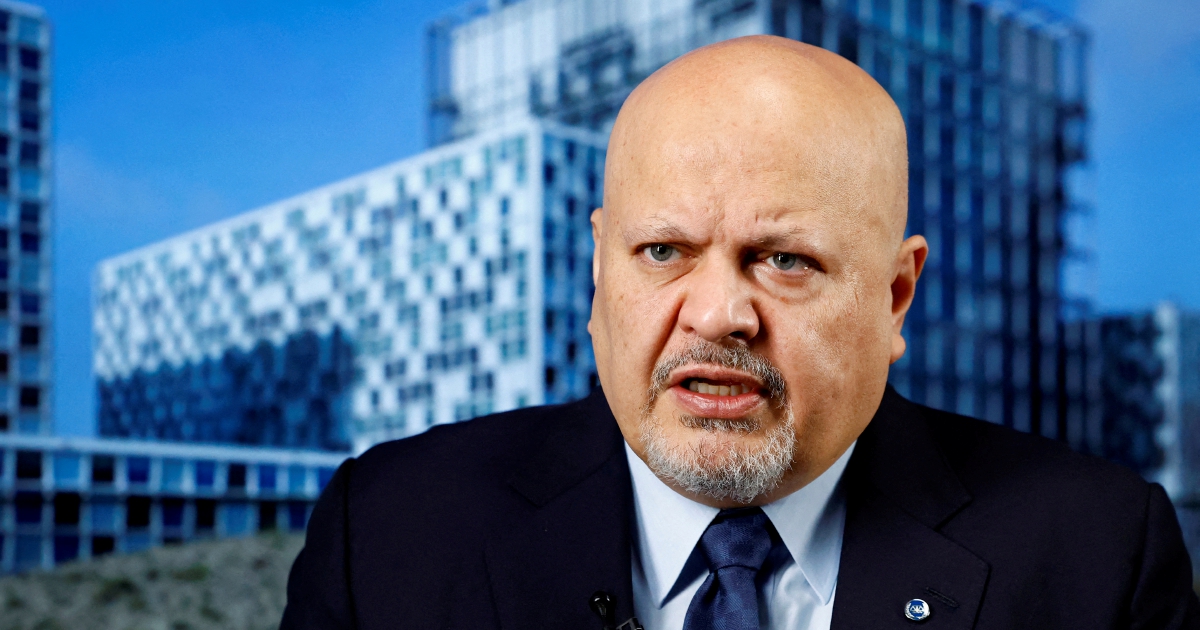
Israeli Prime Minister Benjamin Netanyahu has seized on the departure of International Criminal Court prosecutor Karim Khan to criticize the investigation into alleged Israeli war crimes, portraying the removal as vindication of his long-standing assault on the court's credibility. Speaking publicly on Sunday, Netanyahu dismissed Khan as a "con job," reflecting broader Israeli efforts to delegitimize the ICC's scrutiny of Israeli military operations in Gaza and beyond.
Khan's exit from the prosecutor's office marks a significant turning point in the geopolitical contest over international criminal justice. The prosecutor had initiated investigations into Israeli conduct during its operations in Gaza, drawing fierce denunciations from Netanyahu and Israeli officials who view the ICC as institutionally biased against Israel. For the Netanyahu government, Khan's removal on grounds of sexual misconduct allegations represents an opportunity to reframe the narrative around the court itself rather than confront the substance of potential violations.
The accusation against Khan involved allegations of improper behaviour investigated internally by the ICC's office of administration. The specifics of the misconduct allegations have fuelled broader debates about the integrity and operational standards within the international institution. For Netanyahu's government, the timing and nature of Khan's departure provides rhetorical ammunition to argue that the prosecution was fundamentally compromised from the outset.
Israel's confrontation with the ICC has deepened as military operations in Gaza have intensified. The court's investigation into potential war crimes represents an existential threat to how Netanyahu's government views its international standing and legal exposure. By attacking Khan personally rather than engaging substantively with allegations of excessive force or civilian casualties, Netanyahu shifts the conversation toward institutional dysfunction at The Hague rather than Israeli military conduct.
The departure of Khan also creates operational uncertainty within the ICC's prosecution division. A new prosecutor will inherit investigations that remain politically sensitive across multiple jurisdictions and conflict zones. The transition offers potential opportunities for diplomatic pressure to reshape the investigative trajectory, something Israeli diplomats are unlikely to ignore. The machinery of international justice, already glacially slow, faces fresh delays as leadership changes occur.
For Malaysia and other Southeast Asian nations within the ICC's membership, Khan's removal carries distinct implications. Many regional countries supported the establishment of international criminal accountability mechanisms precisely to constrain powerful nations and protect vulnerable populations. The departure of an assertive prosecutor—regardless of his personal failings—signals potential weakness in the institution's capacity to pursue investigations without political interference or leadership turnover derailing momentum.
Netanyahu's caustic public commentary reflects a calculated political strategy. By delegitimizing individual prosecutors rather than engaging the institutional framework, Israeli leadership attempts to undermine the credibility of investigations without formally withdrawing from international law structures. This approach allows Israel to maintain nominal participation in the global legal order while systematically attacking its enforcement mechanisms as compromised and unreliable.
The broader context matters for understanding this confrontation. The ICC operates without enforcement mechanisms of its own, depending on member states to arrest and surrender indicted individuals. Netanyahu's government has cultivated relationships with nations unlikely to enforce ICC warrants, effectively neutralizing the immediate threat. Yet the symbolic and diplomatic cost of being investigated—and potentially indicted—remains substantial, which explains the intensity of Netanyahu's rhetorical campaign against the institution.
Regional powers observing these developments should consider implications for their own legal exposure. The ability of powerful nations to undermine international investigations through character assassination of prosecutors, diplomatic pressure, and selective engagement suggests that international criminal justice remains vulnerable to manipulation by states with sufficient political and economic leverage. For smaller or more vulnerable states, this creates asymmetry in how international law operates in practice.
The question now becomes whether the ICC's investigative capacities will recover momentum under new leadership, or whether the transition allows diplomatic pressure to dilute the investigation's scope. Khan's removal, whatever its justification on misconduct grounds, creates a convenient inflection point where investigations can be downgraded, deprioritized, or refocused. Netanyahu's public celebration of this development suggests Israeli officials believe they have an opportunity to shape the court's trajectory.
The international community's response to both Khan's dismissal and Netanyahu's reaction will signal how seriously ICC investigations are treated when powerful nations are implicated. Silence or limited pushback from Western nations that nominally support international justice strengthens the argument that the court functions selectively, reinforcing Netanyahu's characterization of its fundamental illegitimacy. The stakes extend far beyond the Israeli-Palestinian context to the future viability of international accountability mechanisms more broadly.

