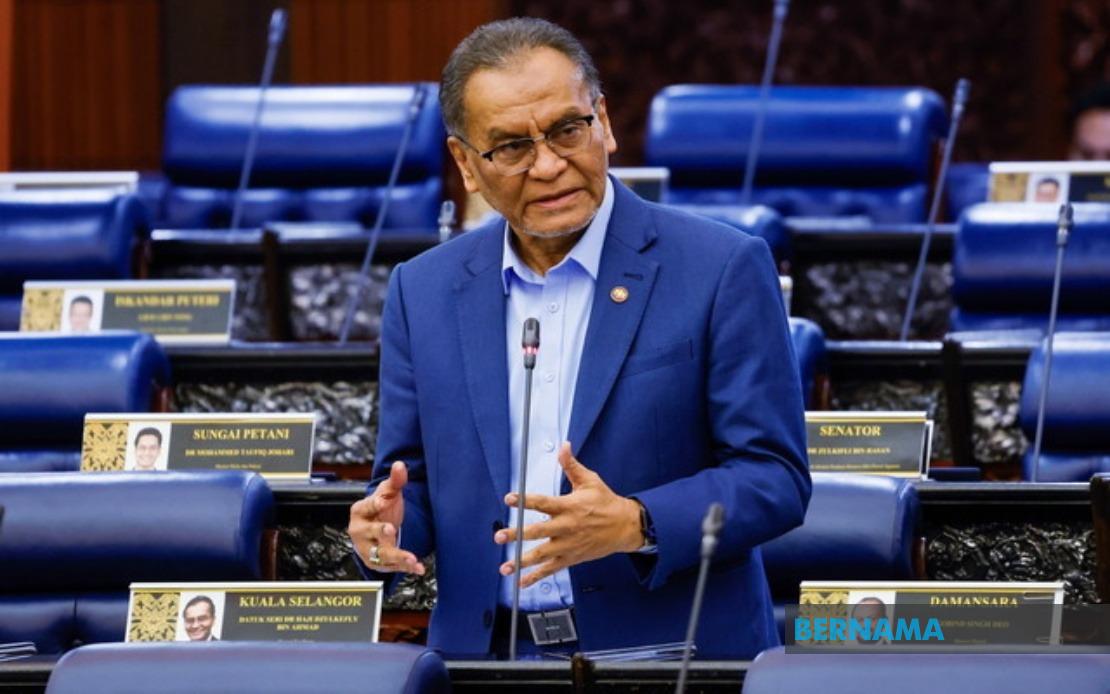
Malaysia's Health Ministry has committed to building a new hospital in Bandar Enstek, within the Nilai area of Negeri Sembilan, as part of a strategic effort to manage healthcare demand across the Seremban district and reduce congestion at the region's primary medical facility, the Tuanku Ja'afar Hospital (HTJ). The announcement, made by Health Minister Datuk Seri Dr Dzulkefly Ahmad through a written parliamentary response, reflects the government's recognition that rapid development and population growth in the northern Seremban corridor have created urgent healthcare infrastructure needs that the existing hospital system cannot fully accommodate.
The decision to establish this new medical facility emerged following a comprehensive review by the Health Ministry of the previously proposed Tuanku Ja'afar Hospital 2 (HTJ2) project, which had been planned for Rasah. This reassessment process involved collaboration between the Health Ministry and Negeri Sembilan's state leadership, including discussions held on June 16 with Menteri Besar Datuk Seri Aminuddin Harun. The shift in planning represents a recalibration of how the ministry intends to address healthcare capacity in the state, moving away from an expanded facility at the existing HTJ location toward a standalone hospital positioned to serve the growing population in the northern sector.
Critically, the state government has identified two separate plots of land, each comprising 50 acres (approximately 20 hectares), owned by the Federal Lands Commissioner and situated in the proposed development zone. The Health Ministry will undertake site inspections of both parcels in the coming months to evaluate which location offers the most advantageous conditions for hospital construction, considering factors such as accessibility, utility infrastructure, and proximity to population centers. Once the optimal site is determined, the ministry will pursue formal land-use conversion approval from the Department of the Director General of Lands and Mines, a procedural step that must be completed before construction activities can commence.
Following successful land conversion approval, preliminary development activities will proceed immediately, encompassing essential planning and assessment work. These initial phases will include detailed land surveying and soil investigation to understand ground conditions and construction feasibility, preparation of conceptual architectural designs reflecting healthcare standards and patient flow requirements, comprehensive cost estimation for budget planning, and a Value Assessment exercise to evaluate the project's economic viability and optimal design approach. This structured sequence ensures that construction, when it begins, will be based on thorough technical and financial groundwork.
Beyond the Bandar Enstek hospital initiative, the Health Ministry has secured additional land resources for complementary healthcare development in Bandar Seremban itself. The state government has agreed to alienate approximately 36.748 acres (roughly 14 hectares) of Federal Reserve land in Bandar Seremban for future healthcare purposes. This land will accommodate an additional specialist block to expand services at the existing Tuanku Ja'afar Hospital, enabling the original facility to concentrate on enhanced tertiary and specialized care services, as well as a planned Centre of Excellence (COE) for advanced medical training and research. This multi-site approach allows the ministry to distribute healthcare infrastructure investment across the district while maintaining the flagship HTJ as a leading medical institution.
The infrastructure expansion occurs against a backdrop of broader healthcare workforce challenges facing Malaysia. The Health Ministry, in partnership with TalentCorp, has established the Returning Expert Programme (REP) to incentivize Malaysian medical professionals working abroad to relocate home and contribute their expertise to the domestic healthcare system. This initiative recognizes that significant numbers of Malaysian doctors, specialists, and healthcare professionals have pursued careers internationally, particularly in high-income countries. The programme offers tangible financial incentives, including comprehensive income tax exemptions and excise duty waivers on the purchase of locally manufactured vehicles, making repatriation financially attractive. Data indicates that applications through REP in the healthcare sector predominantly originate from Malaysians based in the United Kingdom, Singapore, and Australia, with medical specialists and physicians forming the largest applicant cohort.
Regarding international healthcare workforce recruitment, the Health Ministry maintains established policies permitting foreign medical professionals to practice in Malaysia under stringent regulatory oversight. The Malaysian Medical Council and Malaysian Nursing Board enforce rigorous standards ensuring that international medical practitioners meet local clinical competencies and professional requirements. The ministry currently appoints non-citizen medical specialists in critical disciplines and underserved geographic areas where local specialists are unavailable, addressing immediate clinical service gaps. Additionally, foreign medical graduates who are Malaysian permanent residents or spouses of Malaysian citizens may undertake housemanship training within ministry facilities, a pathway that integrates qualified international-trained physicians into the Malaysian healthcare system while ensuring comprehensive local training.
Regarding nursing recruitment from abroad, the Health Ministry is currently evaluating the feasibility of employing foreign nurses within government healthcare institutions. This assessment involves consultation with relevant ministerial partners and regulatory agencies to determine the practical, legal, and financial implications of importing foreign nursing personnel. The deliberative approach reflects recognition that nursing recruitment has different workforce dynamics than physician recruitment, with considerations around training standards compatibility, regulatory recognition, and the impact on local nursing employment. A final decision on foreign nurse recruitment will emerge once this inter-agency evaluation concludes.
For Malaysian readers and regional observers, these developments signal the government's commitment to expanding healthcare infrastructure in response to demographic pressures, particularly in areas experiencing rapid urbanization. Negeri Sembilan's emergence as a significant residential and commercial hub within the Klang Valley region means that healthcare infrastructure investment there has relevance beyond state boundaries, as many residents commute from other states. The Bandar Enstek hospital project demonstrates how strategic land-use planning and intergovernmental coordination can translate policy intent into concrete healthcare capacity. The parallel efforts to recruit returning medical expertise and selectively integrate foreign professionals underscore recognition that healthcare workforce shortages represent a structural constraint on system expansion, requiring multifaceted solutions beyond infrastructure development alone.

