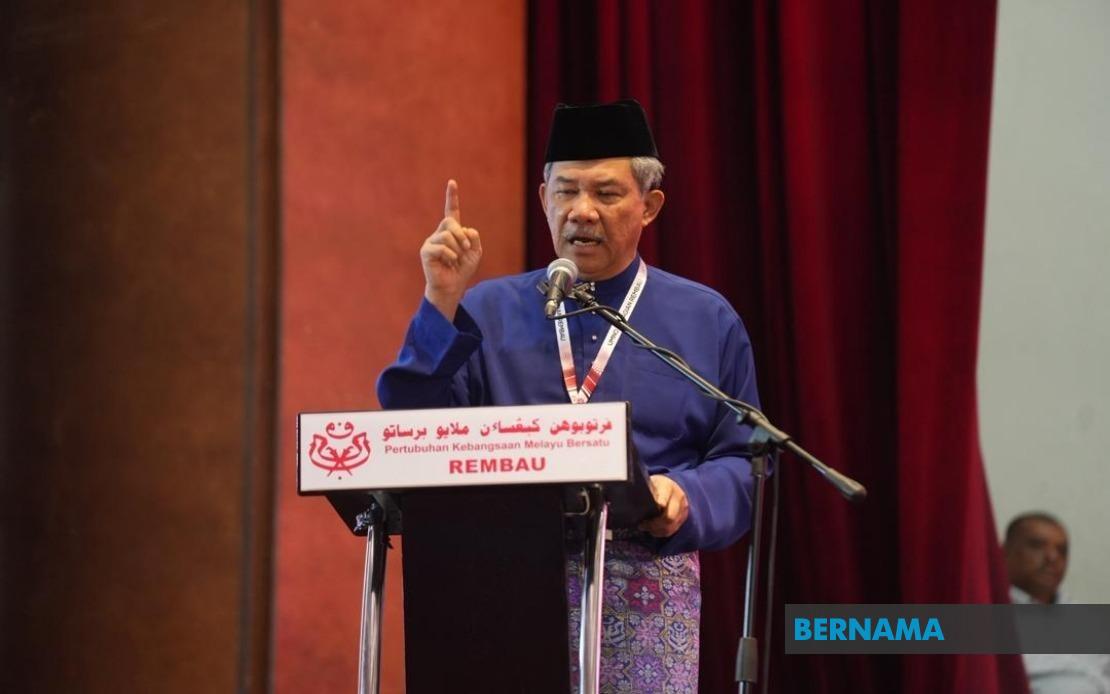
Ten freshly sworn State Executive Council members in Negeri Sembilan have been endorsed as sufficiently equipped to discharge their duties, according to Barisan Nasional Deputy Chairman Datuk Seri Mohamad Hasan. Speaking in Seremban on August 7, the Rantau State Assemblyman voiced his conviction that the appointees will furnish robust support to the Menteri Besar whilst executing their assigned portfolio responsibilities in the service of the rakyat.
Mohamad articulated a framework for understanding the exco's institutional purpose, positioning the council as an intermediary mechanism within the state's governance architecture. Rather than operating in isolation, exco members function as connective tissue between the administration's decision-making apparatus and the broader populace. This dual orientation requires practitioners to channel government initiatives downward to communities whilst simultaneously channeling grassroots concerns, feedback, and community intelligence upward through official channels.
The responsibility extends beyond mere communication of existing policies. Exco members must ensure that government directives are presented with clarity and contextual relevance, enabling citizens to comprehend the reasoning behind administrative measures. This explanatory function becomes particularly significant in a multi-ethnic, multi-religious state like Negeri Sembilan, where public acceptance of policies often hinges upon transparent articulation of their intent and potential community benefits.
Equally important, exco members shoulder the obligation to systematically gather concerns emanating from their respective constituencies and sectoral domains. This intelligence-gathering responsibility encompasses identifying emerging problems, documenting public suggestions, and synthesizing community perspectives into actionable recommendations. By consolidating these inputs, the exco functions as a feedback loop enabling the state government to refine administrative practice and enhance service delivery outcomes across diverse portfolio areas.
Mohamad stressed the necessity for incoming exco members to participate in structured orientation briefings conducted by their supervising government departments. Such induction processes facilitate comprehensive understanding of operational mandates, administrative procedures, and substantive policy frameworks falling within each portfolio's purview. Without this foundational knowledge, even well-intentioned appointees risk implementing policies sub-optimally or miscommunicating government objectives to stakeholders.
The maintenance of constructive working relationships between exco representatives and government departments emerged as another critical prerequisite for effective governance in Mohamad's assessment. These interagency dynamics extend beyond courtesy or protocol; rather, they form the operational sinews enabling coordinated policy implementation. When exco members cultivate rapport with departmental leadership, information flows more readily, obstacles to implementation can be rapidly identified and addressed, and policy outcomes tend to improve measurably.
The ceremony inaugurating the new exco cohort unfolded at Istana Besar Seri Menanti, where appointees took their oaths of office before Tuanku Muhriz Tuanku Munawir, the Yang Dipertuan Besar of Negeri Sembilan. This constitutional solemnity underscored the gravity of the positions assumed and the accountability framework governing exco member conduct. For Malaysian states, such formal swearing-in ceremonies reinforce the subordination of political appointments to constitutional monarchy principles.
Mohamad also addressed speculation regarding Melaka's political trajectory, particularly the possibility of a state election. He indicated that the timing and feasibility of such elections rest with the Melaka Chief Minister's judgment and appetite for seeking the Yang Dipertua Negeri's consent to dissolve the State Legislative Assembly. This observation reflects the constitutionally circumscribed nature of state-level electoral contests in Malaysia, where timing decisions ultimately derive from political calculation rather than fixed schedules.
For Negeri Sembilan specifically, the appointment of ten exco members signals the stabilization of the state's administrative machinery following previous leadership transitions. The composition and competence of this cohort will substantially influence whether the state government can effectively address contemporary challenges spanning economic development, infrastructure modernization, and social service delivery across its nine districts.
The exco appointment process itself merits analytical attention as reflecting broader patterns within Malaysian federalism. State-level executive councils function as crucial intermediaries translating federal policy into localized implementation whilst simultaneously pressuring federal authorities to account for state-specific circumstances. In Negeri Sembilan's case, the new exco's capacity to advocate effectively for state interests within Barisan Nasional structures may determine the state's competitive success in securing federal developmental resources and infrastructural investment.
Looking forward, the genuine litmus test of this exco's capability will not reside in rhetorical commitment to bridging government and citizenry, but rather in concrete outcomes: measurable improvements in departmental responsiveness, demonstrable progress on priority development projects, and palpable enhancement in governance standards across portfolio areas. Mohamad's confidence assertions, while politically appropriate, ultimately invite subsequent empirical verification through observable administrative performance.

