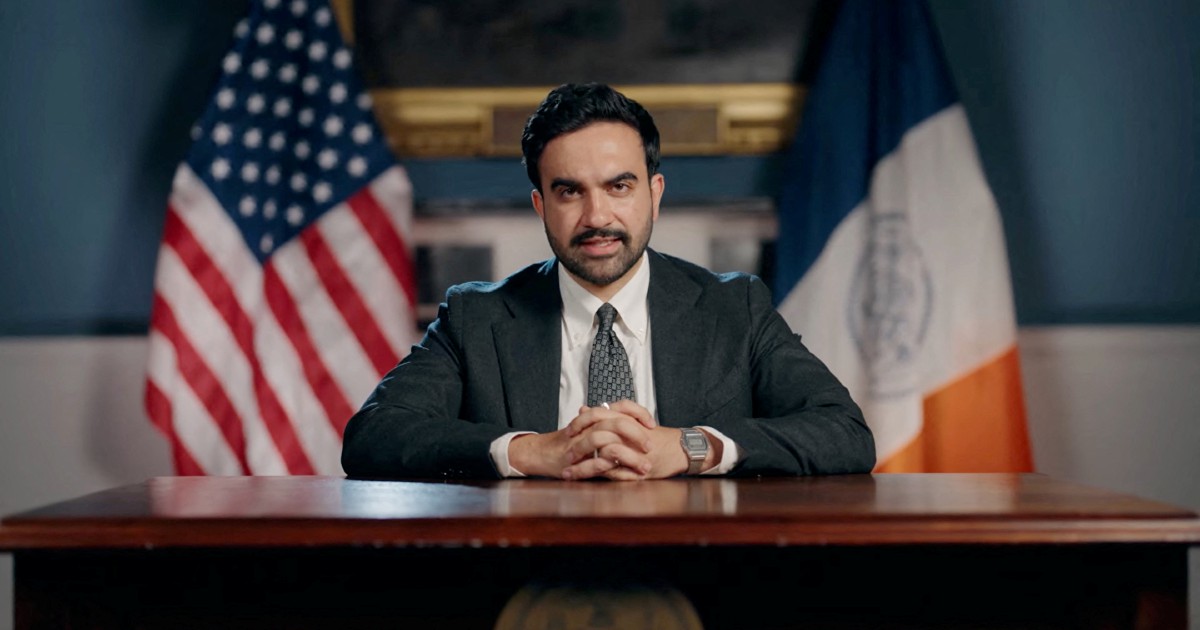
New York Mayor Zohran Mamdani has declared that his city administration cannot enforce the International Criminal Court's arrest warrant for Israeli Prime Minister Benjamin Netanyahu, shifting the responsibility squarely to the United States federal government. The mayor's statement, delivered on Tuesday, addresses the complex jurisdictional question that arose following the ICC's issuance of an arrest warrant for Netanyahu on allegations of war crimes and crimes against humanity.
Mamdani's clarification underscores the fundamental tension between international law and domestic American sovereignty. While the ICC, based in The Hague, issued the warrant as part of its investigation into alleged Israeli conduct during the Gaza conflict, the United States is not a signatory to the Rome Statute that established the court. This legal distinction means that arrest warrants issued by the ICC lack automatic enforcement power within American territory, leaving questions about how such an order would be executed if Netanyahu were to visit the country.
The mayor's statement carries particular significance because New York City frequently hosts international dignitaries, including Israeli officials and Netanyahu himself. The city's position is that enforcing an ICC warrant would require a federal decision and legal framework rather than local municipal action. This reflects the established hierarchy of law enforcement authority in the United States, where immigration and international law matters typically fall under federal jurisdiction rather than local control.
By explicitly calling upon US federal officials to address the matter, Mamdani has highlighted what many legal experts view as a genuine constitutional and diplomatic dilemma for Washington. The Biden administration faces competing pressures: maintaining its stated commitment to international justice mechanisms while simultaneously managing relations with Israel, a close regional ally. Any federal action on the ICC warrant would carry significant diplomatic consequences and would likely trigger intense political debate within the United States.
The timing of this issue is particularly relevant for Malaysian and Southeast Asian observers, as it demonstrates how international justice mechanisms function in practice when powerful nations are involved. Many developing countries have long criticized the uneven application of international law, particularly the ICC's focus on investigations primarily in African nations. Netanyahu's case presents a test of whether the court can genuinely pursue accountability without political interference, and whether major Western nations will respect ICC decisions even when they implicate their allies.
The warrant itself emerged from the ICC prosecutor's investigation into the 2023 war in Gaza and surrounding circumstances. Prosecutors have alleged that Netanyahu and Israeli Defence Minister Yoav Gallant bear responsibility for war crimes including starvation as a method of warfare, among other charges. Israel has vehemently rejected these accusations and has consistently criticized the ICC investigation as politically motivated. The Israeli government maintains that its military operations comply with international humanitarian law and that any civilian casualties resulted from efforts to target legitimate military objectives.
For the United States, Netanyahu's potential visit to American soil creates a test case for how Washington reconciles its support for international justice institutions with its strategic interests. Previous visits by Netanyahu to New York and other American cities have proceeded without incident, as the ICC warrant did not exist. However, the new warrant could technically obligate any state party to the Rome Statute to arrest Netanyahu if he entered their territory. The United States, not being a signatory, has no such legal obligation, but the diplomatic implications of either arresting or failing to arrest Netanyahu would be substantial.
The broader implications extend beyond bilateral Israeli-American relations. Regional powers, including countries across Southeast Asia and the Middle East, are watching how this situation develops. For nations that have invested in strengthening international legal institutions and the concept of universal jurisdiction, the outcome will signal whether these mechanisms have genuine power or remain largely symbolic when powerful nations are implicated. Conversely, for nations sceptical of international courts, the unfolding situation may reinforce their view that such institutions lack enforceability and reflect power imbalances in the international system.
Mamdani's statement also reflects the practical reality that local police forces are not equipped or authorized to enforce international arrest warrants. Such matters require coordination between federal agencies, the State Department, and potentially the Justice Department. The coordination challenge is compounded by the absence of a bilateral extradition treaty requirement, since the ICC warrant does not stem from a treaty obligation that binds the United States.
As this situation develops, it may influence how other international institutions approach enforcement against leaders of powerful nations. The precedent set—whether through eventual US federal action, inaction, or a diplomatic resolution—could shape how international law evolves in coming years. For Malaysia and the broader Southeast Asian region, where several nations have ratified the Rome Statute and supported ICC operations, the outcome will have implications for regional confidence in international justice mechanisms and their ability to constrain powerful actors without fear or favour.

