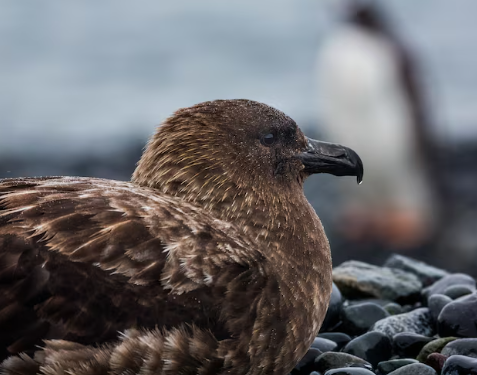
New Zealand has joined the growing list of nations grappling with the H5N1 bird flu outbreak, confirming the virus's arrival on its shores through a brown skua seabird discovered along a Wellington beach. Biosecurity Minister Andrew Hoggard announced the detection on Wednesday, marking a significant milestone as the deadly pathogen continues its relentless global spread. The discovery comes just weeks after H5N1 was first identified in Australia, the final inhabited continent to report the virus, signalling the disease's unprecedented reach across the Pacific region and its capacity to traverse vast oceanic distances through migratory birds.
The H5 strain has demonstrated remarkable transmissibility since emerging in 2021, decimating wild bird populations and wild mammal colonies while simultaneously breaching the boundaries of agricultural systems with alarming frequency. The virus has infected numerous poultry operations and dairy farms across multiple continents, and in rare but documented cases, has sickened farmworkers involved in culling operations. This combination of widespread wildlife mortality and agricultural vulnerability has prompted governments worldwide to develop comprehensive containment strategies. For New Zealand, however, the particular vulnerability lies not in commercial farming systems but in the country's extraordinarily unique and fragile native bird populations.
Official assessments at present suggest New Zealand has not yet experienced the catastrophic wildlife die-offs observed elsewhere. Hoggard stated that there remains no evidence of mass mortality events among wild birds or transmission patterns between bird populations. Poultry operations remain unaffected, at least in the immediate aftermath of the initial detection. However, authorities are drawing comparisons to Australia's emerging situation, where fourteen confirmed or presumed positive cases have been documented as of mid-July. That trajectory, should it repeat in New Zealand, would suggest the virus is actively circulating among seabird populations and could potentially expand into other ecological niches.
New Zealand's preparation for this contingency has been underway for months, reflecting the government's recognition that H5N1's arrival was not a matter of if but when. Biosecurity agencies have worked closely with the poultry industry to develop layered defences, including biosecurity protocols and operational resilience frameworks designed to limit transmission pathways. These preventive measures, developed well before the virus arrived, now serve as the first line of defence for New Zealand's food security and agricultural exports. However, the greater concern among conservation specialists extends beyond commercial considerations to the existential threat posed to the nation's irreplaceable endemic fauna.
The evolutionary trajectory that produced New Zealand's bird fauna created a biological landscape unlike anywhere else on Earth. For millions of years, the archipelago's isolation from continental landmasses meant that native birds evolved without terrestrial mammalian predators. This absence of selective pressure resulted in the development of numerous flightless species, ground-nesting populations, and defensive behaviours optimised for an environment without large predators. Species such as the takahe, a massive flightless rail that was thought extinct until its rediscovery in 1948, and the kakapo, a nocturnal flightless parrot, represent living evolutionary museums. Their adaptation to an predator-free environment, however, left them virtually defenceless when introduced mammalian predators—stoats, rats, and feral cats—arrived with European colonisation.
These introduced predators have already pushed numerous New Zealand bird species to the brink of extinction, reducing populations to mere hundreds of individuals maintained through intensive conservation breeding programmes. The arrival of H5N1 threatens to deliver what predation and habitat loss have begun. A viral outbreak spreading through wild bird populations could overwhelm the small captive breeding populations that conservationists have painstakingly established as insurance against extinction. Brett Gartrell, a leading wildlife health researcher at Massey University, articulated the scale of concern gripping New Zealand's conservation community, emphasising that native birds have never previously encountered a pathogen of this virulence and transmissibility.
In response to this cascading threat, health officials have initiated an unprecedented vaccination programme targeting three hundred core breeding individuals from five of the country's most critically endangered species. This preemptive strategy represents a departure from conventional disease management, shifting from reactive culling operations—common in commercial poultry settings—to proactive immunisation of genetically important individuals. The selected species represent the foundation populations from which captive breeding programmes attempt to rebuild species numbers. By vaccinating these crucial cohorts, officials hope to preserve reproductive capacity even if wild populations are devastated.
The vaccination approach carries its own inherent complications and uncertainties. Vaccine efficacy in wild-type H5N1 infections varies depending on viral strain evolution, and administration challenges in managing wild or semi-wild populations introduce logistical constraints. Gartrell's assessment reveals the fundamental tension in this conservation strategy: vaccination requires time to confer immunity, yet a rapid viral spread could overwhelm birds before adequate protection is established. The geographic specificity of New Zealand's threatened birds means that simultaneous outbreaks across multiple island locations could still prove catastrophic, as isolated populations lack the interconnectedness that might allow genetic rescue or population supplementation from unaffected cohorts.
The detection in New Zealand also carries broader implications for the Pacific region and its island ecosystems. Australia and New Zealand are not isolated cases but represent the leading edge of a virus that has thoroughly colonised the Northern Hemisphere and is now systematically moving southward. Pacific island nations, many of which harbour their own endangered endemic species found nowhere else on Earth, face comparable vulnerabilities. The pathogen's successful transmission across oceanic distances via migratory seabirds means that even remote island sanctuaries cannot be guaranteed safe havens. New Zealand's experience will likely inform responses across the Pacific and Southern Hemisphere for years to come.
For Malaysian and Southeast Asian observers, New Zealand's situation offers instructive parallels despite the different avifaunal composition. The region's own endangered bird species, including various endemic eagles, pheasants, and hornbills, could face similar mortality risks should H5N1 become established in Asian wild bird populations. The virus's demonstrated capacity to adapt, persist, and transmit across diverse habitats suggests that both temperate island nations and tropical continental regions require equivalent vigilance. New Zealand's decision to prioritise vaccination of endangered species rather than attempting eradication represents an acknowledgment that the virus is now permanently established in the global ecosystem.
The broader message from New Zealand's detection and response is that pandemic preparedness must extend beyond human or commercial animal health into conservation biology itself. Endangered species programmes that have invested decades in species recovery now face the prospect of seeing those gains reversed by a pathogen against which traditional biosecurity barriers have proven insufficient. This reality has prompted a strategic recalibration toward technological interventions like vaccination, even as uncertainties about their efficacy persist. The coming months will reveal whether New Zealand's combination of preparedness, vaccination, and vigilant monitoring can shield its irreplaceable avifauna from a threat that has already reshaped the ecological landscape of multiple continents.

