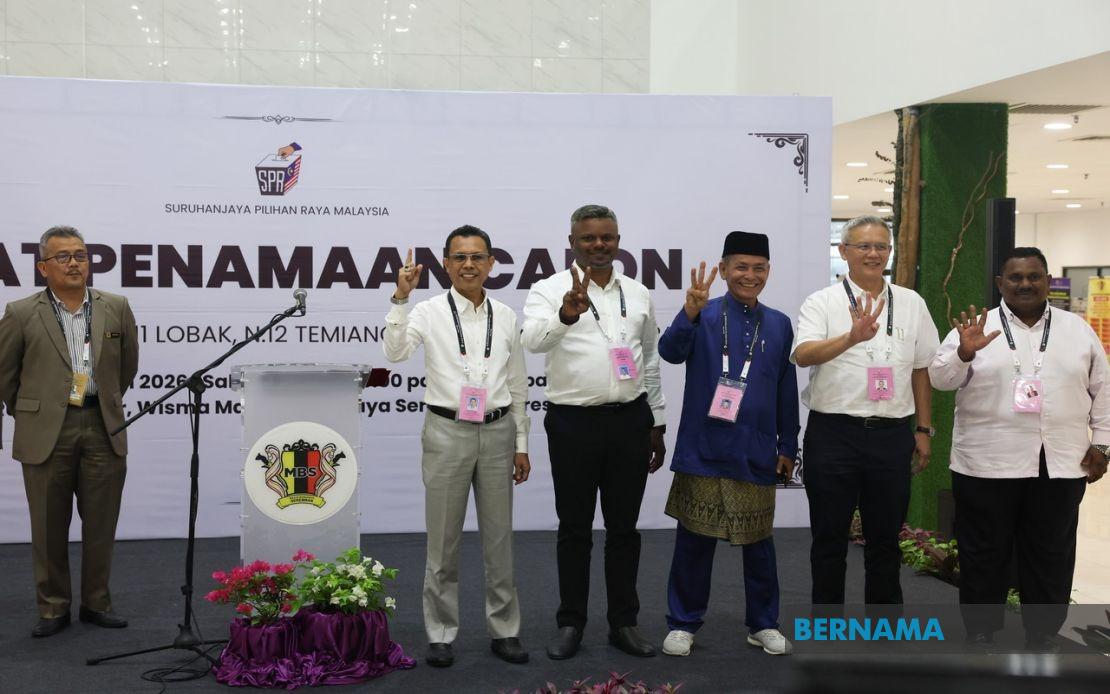
The Nilai state seat is shaping up as one of Negeri Sembilan's most competitive battlegrounds in the August 1 election, with incumbent DAP assemblyman and National vice chairman J. Arul Kumar facing an unusually crowded field that threatens to fragment his support base. The nomination process on July 18 confirmed five candidates will contest the seat, a configuration that significantly raises the stakes for both the ruling Pakatan Harapan coalition and the opposition parties seeking to wrest control of this closely watched constituency.
Arul Kumar's challenge comes from Zamani Ibrahim representing Berjasa, Datuk Lai Chien Kong as the Barisan Nasional standard-bearer, Datuk V. Saravana Kumar contesting for Bersatu, and independent candidate Omar Mohd Isa. This unusually diverse slate reflects the fractured political landscape now characterising Malaysian state politics, where traditional two-way contests have given way to multi-cornered affairs that can dramatically alter electoral outcomes. The multiplication of candidates, particularly the emergence of Berjasa and the independent as serious contenders, signals that the conventional PH-versus-BN binary has fundamentally shifted in Nilai.
The electoral mathematics favour neither incumbent nor challenger cleanly in such crowded contests. Arul Kumar's 2018 victory benefited from a more straightforward political environment, but the arrival of Bersatu candidates across Negeri Sembilan, combined with Berjasa's emerging presence in the state, has fragmented the opposition vote. The independent candidate's entry introduces further unpredictability, potentially drawing support from voters dissatisfied with established parties or seeking to punish specific candidates. For Arul Kumar, holding the line requires not merely retaining his existing voter coalition but expanding it sufficiently to overcome a divided opposition—a tall order given the current anti-incumbency sentiment visible across multiple Malaysian states.
The broader Negeri Sembilan contest reveals similar patterns across other competitive seats. In Sikamat, the Menteri Besar's political secretary Nor Azman Mohamad carries PH's hopes against Datuk Razali Abu Samah of Perikatan Nasional and Datuk Tun Faisal Ismail Aziz representing Bersatu, after last-minute independent withdrawal. This three-way configuration typifies how Bersatu's continued presence as a splinter force has complicated coalitional mathematics for both government and opposition, forcing campaigns to address voters across a wider ideological spectrum than straightforward left-right divides would suggest.
The Lenggeng, Lobak, Temiang, and Ampangan seats demonstrate varying degrees of competitiveness reflecting Negeri Sembilan's complex political dynamics. Lenggeng presents a three-way clash between PH's Zarinna Abu Zarin, BN's incumbent Datuk Mohd Asna Amin, and Bersatu's Zool Amali Hussin. Lobak, by contrast, has crystallised into a binary contest between PH's Chew Seh Yong and Perikatan Nasional's Dr P. Kumar, suggesting that some constituencies have already sorted themselves into clearer winner-take-all configurations. The Temiang three-way between PH's Ho Weng Wah (a political secretary to the Transport Minister), BN's Datuk Leaw Kok Chan, and Bersatu's Fazly Hamid underscores how ministerial appointments and federal government roles now feature prominently in state-level campaigns.
Ampangan's contest between Yayasan Negeri Sembilan director Muhammad Nazri Kassim of PH, Perikatan Nasional's Datuk Dr Mohamad Rafie Malek, and Bersatu's Noor'azah Harun follows the three-way pattern evident across much of the state. The presence of institutional figures—board directors, ministerial secretaries, former incumbents—across multiple constituencies suggests that Negeri Sembilan's 2024 election will largely be contested by established political operatives rather than grassroots challengers, a pattern reflecting Malaysia's increasingly professionalised electoral competition.
The 36-seat state assembly dissolution on June 5 set in motion an electoral cycle that will determine whether Pakatan Harapan's control of Negeri Sembilan survives or succumbs to opposition resurgence. With early voting scheduled for July 28 and polling day on August 1, the condensed campaign timeline compressed candidate announcements and strategic positioning into an accelerated schedule. For voters unfamiliar with candidates beyond their immediate constituencies, this compressed timeframe reduced opportunities for deeper engagement with policy platforms in favour of rapid-fire identity and personality-based appeals.
The crowded Nilai race carries implications beyond the immediate constituency. As one of Selangor's neighbouring states and a bellwether for broader regional sentiment, Negeri Sembilan's electoral trends frequently presage shifts in neighbouring territories. A loss of Nilai to opposition forces would signal troubling momentum for PH in the wider Klang Valley region and suggest that the fractious multicandidate contests now emerging throughout Malaysia increasingly disadvantage larger coalitions operating across multiple parties. Conversely, if Arul Kumar retains the seat despite the crowded field, it would vindicate Pakatan Harapan's organisational capacity to consolidate support even when facing divided opposition.
The competitive dynamics visible in Nilai and across Negeri Sembilan reflect deeper transformations in Malaysian electoral politics beyond the immediate state contest. The persistent viability of Bersatu as a third-force competitor, combined with Berjasa's emergence and continuing independent candidacies, indicates that Malaysia's post-2018 political settlement remains unstable and prone to fragmentation. Voters no longer automatically sort themselves into clean coalitional camps, instead approaching each election with fresh consideration of available options. This volatility creates both opportunity and peril for established parties: opportunity to attract dissatisfied voters from rival camps, peril in defending existing support bases against multiple competing claims.

