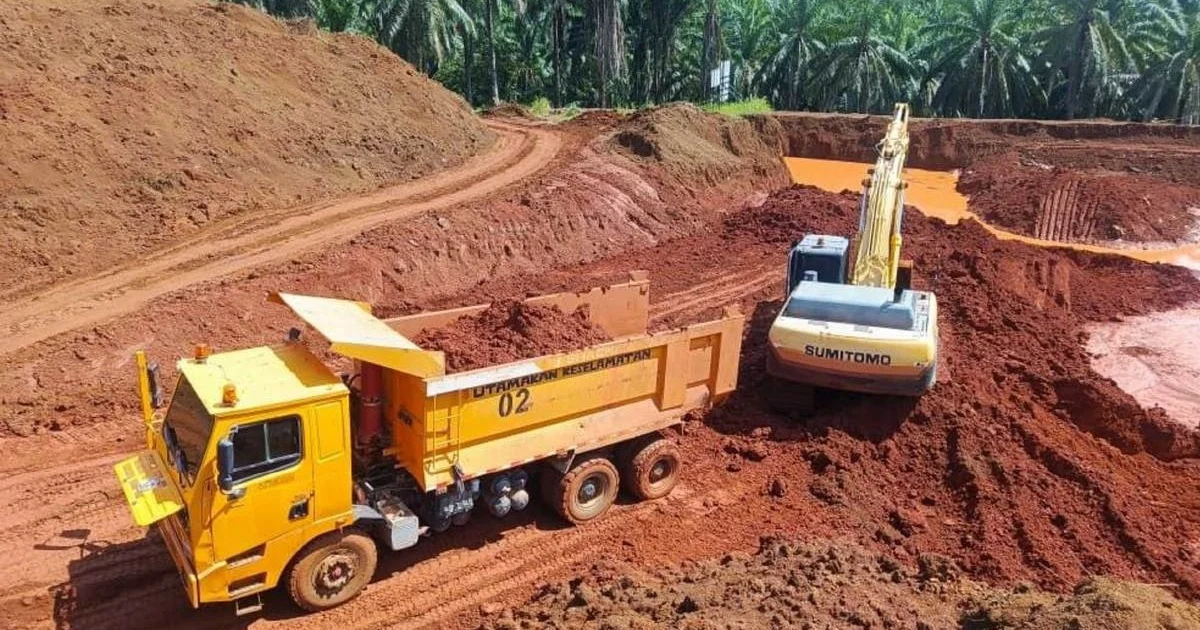
Authorities in Pahang have dismantled a significant illegal bauxite mining operation, culminating in the arrest of nine suspects and the confiscation of materials and machinery worth RM3.75 million. The coordinated raid took place at a Felda plantation in the Bukit Goh area of Kuantan, bringing to light yet another instance of unauthorised extractive activity in a region increasingly plagued by such operations.
The enforcement action recovered an estimated 10,000 tonnes of bauxite-bearing soil, along with an array of heavy excavation equipment and transport lorries. These assets, seized at the site, represent a substantial financial loss for the illegal operators and underscore the scale at which unauthorised mining was occurring. The recovery of such large quantities of ore-laden material indicates that the operation had been functioning for some time and had likely reached considerable productivity before authorities intervened.
The targeting of a Felda agricultural settlement for illegal mining points to a broader pattern of resource theft affecting rural development schemes across Malaysia. Federal Land Development Authority plantations, established to provide sustainable livelihoods for settler families, have increasingly become vulnerable to encroachment by criminal syndicates seeking to extract high-value minerals. The intrusion not only damages infrastructure and arable land but also disrupts the socio-economic stability of these communities that depend on agricultural output.
Bauxite mining has emerged as a contentious issue across Southeast Asia, with Malaysia facing persistent challenges in curbing illegal extraction operations. The ore, essential for aluminium production, commands significant market value, making it an attractive target for criminal networks willing to circumvent environmental regulations and operate without proper licensing. The Kuantan bust highlights the ongoing cat-and-mouse dynamic between enforcement agencies and sophisticated illegal operators who continuously relocate activities to evade detection.
The environmental ramifications of unregulated bauxite extraction are severe and long-lasting. Illegal mining operations typically leave behind large tracts of degraded land, contaminated water sources, and disrupted ecosystems. Unlike licensed operations bound by rehabilitation requirements and environmental impact assessments, unauthorised mining causes immediate and often irreversible damage to soil composition and biodiversity. The unsanctioned extraction at the Felda site would have compromised the plantation's productivity and posed risks to local water supplies.
The arrest of nine individuals signals that law enforcement is intensifying efforts to dismantle networks involved in illegal mining. These operations typically require coordination among multiple parties, including equipment operators, transport logistics handlers, and those responsible for marketing the extracted ore. Breaking up such networks requires intelligence gathering and sustained monitoring, suggesting that this raid may have been preceded by careful investigation into supply chains and distribution networks.
For Malaysian authorities, the challenge extends beyond individual enforcement actions. Illegal bauxite mining in Peninsular Malaysia had previously drawn international scrutiny, particularly regarding environmental governance and export controls. While regulations prohibiting bauxite extraction have been in place, compliance remains inconsistent, and enforcement capacity continues to strain under the volume of illicit activity. The Kuantan operation serves as a reminder that despite heightened awareness, determined criminal syndicates persist in exploiting gaps in surveillance and regulatory oversight.
The financial value of the seized assets—RM3.75 million—reflects both the profitability of illegal mining and the potential penalties operators face upon capture. However, the calculation faced by criminal enterprises often weighs substantial short-term profits against the relatively modest risk of detection and incarceration, especially when equipment and materials can be reclaimed or replaced. Authorities must therefore consider whether current penalties and enforcement mechanisms sufficiently deter participation in such operations.
The location of this raid in Kuantan, Pahang, a state with significant mineral deposits, is particularly significant for regional mining enforcement. Pahang has historically been a focal point for both legal and illegal extraction activities, making it a priority area for regulatory oversight. The successful operation demonstrates that when enforcement agencies mobilise resources effectively, they can identify and neutralise large-scale illegal operations. Sustained coordination between federal and state authorities, coupled with intelligence from community reports and environmental monitoring, proved effective in this instance.
Moving forward, the implications of this raid extend to broader policy discussions about land use governance, especially regarding agricultural settlements and protected areas. The vulnerability of Felda plantations to mining incursion suggests that security protocols and boundary monitoring may require enhancement. Additionally, the recovery of substantial equipment points to the need for tracking illegal mining equipment sales and imposing stricter penalties on suppliers who knowingly equip unauthorised operations.
For regional observers, particularly in Indonesia and other Southeast Asian nations grappling with similar illegal mining challenges, Malaysia's enforcement action offers insights into operational response strategies. However, the persistence of such operations across multiple enforcement cycles indicates that enforcement alone cannot resolve the issue without complementary measures addressing demand for ore, corruption within supply chains, and economic incentives driving participation in illegal extraction networks.
The nine arrests and RM3.75 million asset seizure represent a significant tactical victory for Malaysian law enforcement. Whether this translates into a strategic breakthrough against organised illegal mining networks—or merely a temporary disruption in their operations—will depend on sustained investigative follow-up and the prosecution outcomes for those arrested.

