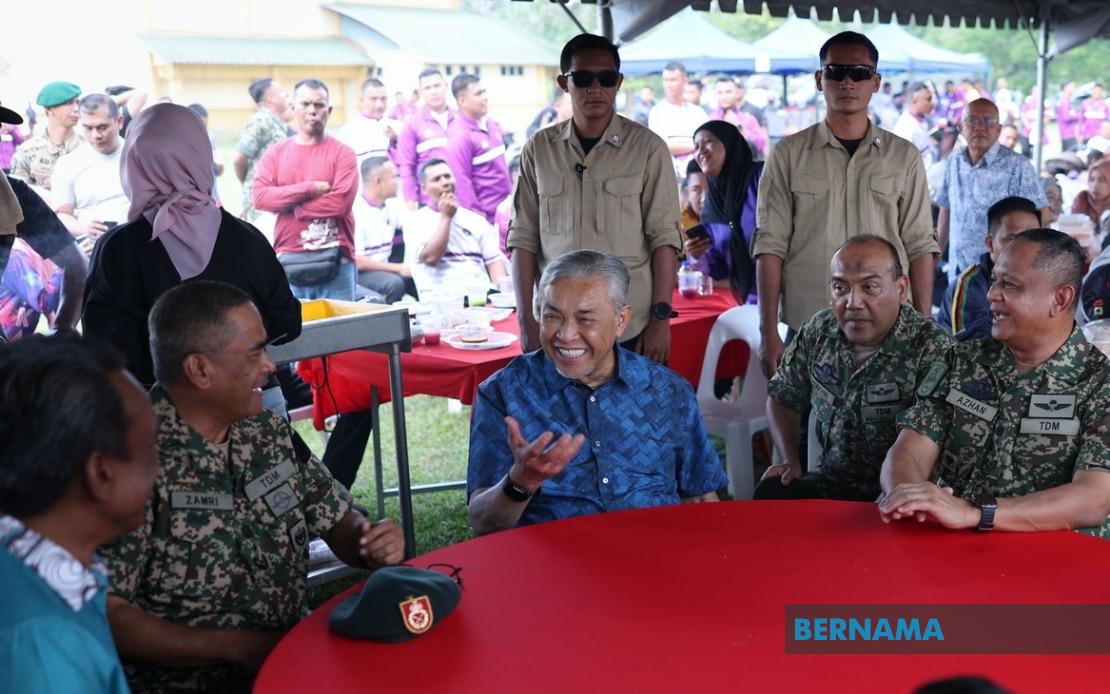
Deputy Prime Minister Datuk Seri Dr Ahmad Zahid Hamidi has made clear that accountability extends to all individuals if the Royal Commission of Inquiry into Lembaga Tabung Haji uncovers evidence of misconduct, establishing that no position or rank provides immunity from legal scrutiny. Speaking at a Malaysian Armed Forces event in Gemas on July 26, the Barisan Nasional chairman and UMNO president underscored the government's commitment to transparency regarding the RCI's findings and subsequent enforcement action.
Ahmad Zahid's statement reflects mounting pressure on the government to release the long-awaited inquiry report, which has become a focal point for public discourse surrounding governance and institutional integrity. The emphasis on transparent disclosure signals a shift in approach following years of delays, indicating that the administration believes it now has sufficient confidence in Tabung Haji's operational stability and international standing to weather public scrutiny of past administrative practices. The messaging appears carefully calibrated to address concerns about selective accountability while positioning the government as serious about combating corruption across all levels.
The Deputy Prime Minister detailed the procedural framework that would apply should the RCI identify instances of abuse of power, irregularities, criminal breach of trust, or other malpractices. His reference to formal processes—including police reports, commercial crimes investigations, and standard legal proceedings—establishes the institutional pathways through which any findings would be processed. This methodical approach aims to reassure the public that potential wrongdoing would not be ignored or shelved, but rather subjected to rigorous investigation through existing enforcement mechanisms.
Prime Minister Datuk Seri Anwar Ibrahim had previously expressed confidence that the Cabinet would approve public release of the RCI report, a position that represents significant movement on an issue that has lingered unresolved. Anwar, who serves as Finance Minister, acknowledged that the government had previously withheld the report due to concerns that its publication might undermine public confidence in Tabung Haji. The pilgrimage fund, which manages savings for Malaysian Muslims undertaking the Haj, is a sensitive institution with profound cultural and religious significance, making questions about its governance particularly consequential for millions of Malaysians.
The timing of Ahmad Zahid's remarks is notable given that they come amid the Negeri Sembilan state election campaign, with early voting scheduled for late July and polling day set for August 1. When asked whether the report's release might influence voter behaviour in the state, Ahmad Zahid expressed confidence that the electorate possesses sufficient maturity to base their electoral choices on broader considerations rather than recent controversy. His assertion reflects a political calculation that Negeri Sembilan voters will prioritize development, service delivery, and governance performance over reactive responses to historical institutional challenges.
The reference to Tabung Haji's international recognition and strengthened position represents a key rationale for the government's readiness to disclose previously withheld information. Malaysian Islamic institutions increasingly operate within international frameworks and compete for legitimacy among diaspora communities and foreign observers. By emphasizing that Tabung Haji has achieved enhanced standing globally, the administration suggests that the institution can now absorb scrutiny of its past without suffering reputational damage that might deter pilgrims or investors. This confidence reflects structural improvements made to governance and oversight mechanisms over recent years.
For Malaysian readers, the implications extend beyond institutional accountability to fundamental questions about the rule of law and equal treatment. The explicit statement that no one is above the law carries particular resonance in a political context where Malaysians have historically witnessed concerns about selective prosecution and differential treatment based on political affiliation. Ahmad Zahid's articulation of this principle—made all the more significant given his own previous legal entanglements—suggests a commitment to impartial application of legal findings regardless of the status or prominence of implicated individuals.
The Tabung Haji inquiry represents one of several high-profile investigations into institutional governance initiated or accelerated during the current administration's tenure. The handling of the RCI report and the government's willingness to pursue legal action based on its findings will substantially influence public perception of the government's anti-corruption credentials. For institutional investors and donors concerned about Malaysia's commitment to governance standards, the transparent disclosure and rigorous follow-up of the report's recommendations could signal positive movement toward international best practices.
Within Southeast Asia, Malaysia's approach to investigating and addressing governance failures at major financial institutions carries broader significance. The region's development trajectories increasingly depend on institutional credibility and investor confidence, making the Malaysian government's handling of potentially damaging historical information consequential for regional perceptions of administrative capacity. Countries across Southeast Asia face similar institutional challenges, and Malaysia's response to the Tabung Haji inquiry may establish precedents regarding how governments balance transparency with institutional resilience.
The government's messaging also reflects awareness that prolonged non-disclosure of the RCI report itself becomes a political liability, breeding speculation, undermining institutional legitimacy, and creating space for opponents to characterize the administration as protecting powerful individuals. By committing to publication and to consequences for wrongdoing, the government attempts to reclaim control of the narrative and demonstrate proactive governance. Whether the contents of the report will vindicate this confidence in transparent accountability or reveal patterns of conduct that generate further controversy remains unknown, but the government's readiness to release the findings represents a meaningful departure from years of strategic withholding.

