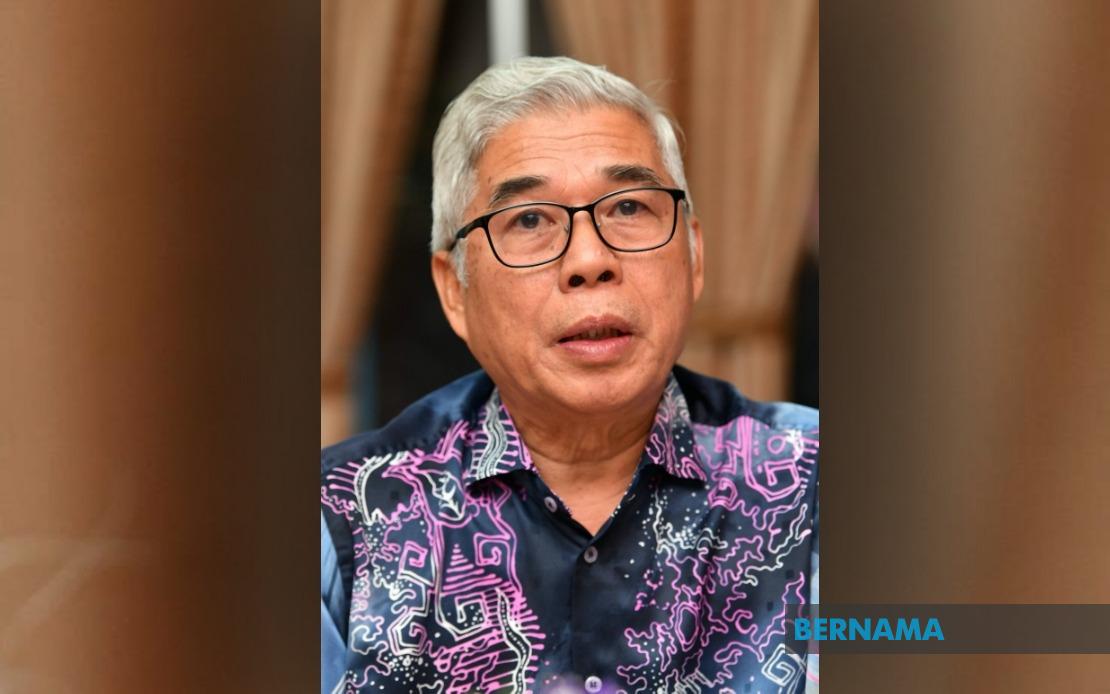
The pressure mounting on Prime Minister Datuk Seri Anwar Ibrahim to call a snap election should be resisted, according to Pasir Gudang Member of Parliament Hassan Abdul Karim, who argues that the government must be given space to deliver on its promises before voters return to the polls. In a forthright statement that reflects growing concern within ruling coalition ranks about the timing of the 16th General Election, Hassan has counselled patience, suggesting that rushing to GE16 would undermine the administration's ability to demonstrate tangible economic progress to the Malaysian people. His comments underscore an internal conversation taking place within Pakatan Harapan about balancing political momentum with practical governance needs, particularly as the coalition navigates the aftermath of recent electoral disappointments.
The timing of Hassan's intervention is significant, coming in the wake of PKR's underwhelming performances in several state-level contests. The party faced setbacks in Sabah, Johor, and Negeri Sembilan, results that have inevitably sparked speculation about whether these reverses might prompt the government to seek a fresh electoral mandate from the public. Such speculation can create its own political momentum, with both supporters and detractors positioning themselves for an early poll. Hassan's message appears designed to interrupt this narrative, urging his party leadership and supporters to take a strategic pause rather than react emotionally to short-term electoral fluctuations.
The crux of Hassan's argument rests on a straightforward economic proposition. By allowing the government to govern without the constant pressure of an impending election, Malaysia's policymakers can focus on delivering measurable improvements in living standards and economic performance. Foreign direct investment, employment growth, and wage increases are processes that require time to mature; they cannot be rushed to coincide with electoral calendars. Hassan contends that if GE16 is held prematurely, the public will lack sufficient evidence of whether the MADANI Government's economic strategies are actually working. Conversely, by maintaining the full electoral mandate until late 2027 or early 2028, voters will have accumulated enough data about the government's economic stewardship to make a properly informed choice.
This perspective carries particular weight in the Malaysian context, where economic anxiety has become a dominant political issue. High living costs, youth unemployment, and stagnant real wages have all featured prominently in recent electoral campaigns. The MADANI Government has staked its legitimacy substantially on its ability to address these concerns through targeted economic policies and improved governance. Yet economic transformations are inherently lengthy undertakings. Showing tangible results in inflation, employment, or wage growth requires at least 18 to 24 months of consistent policy implementation and favourable external conditions. By Hassan's logic, truncating this timeline would be self-defeating, denying the government the chance to prove its economic competence.
The psychological and morale dimensions of Hassan's plea also merit consideration. PKR members and party machinery, he suggests, need time to recover from recent disappointments and to reorganise their campaign strategies with clearer thinking and renewed energy. Election campaigns consume immense organisational resources and emotional commitment from activists and volunteers. Launching immediately into GE16 preparation following a string of losses could demoralise the grassroots and produce a half-hearted campaign. By contrast, a period of strategic reflection and rebuilding, coupled with tangible evidence that government policies are improving people's lives, could reinvigorate the party's base and present voters with a more compelling case for continued Pakatan Harapan governance.
Hassan's framing of the issue as one requiring temperance rather than haste reflects a broader tension within Malaysian politics. Political parties face constant pressure to prove their relevance and maintain momentum, yet premature elections risk squandering opportunities for meaningful policy implementation. The opposition, naturally, will argue for elections to be held at the earliest opportunity, particularly if ruling coalition popularity appears temporarily depressed. However, Hassan's intervention suggests that cooler heads within government circles recognise the risks of allowing short-term electoral movements to dictate long-term governance decisions. A government that dissolves Parliament in response to a few disappointing state elections signals weakness and suggests it lacks confidence in its own agenda, a message that could further undermine public confidence.
The 12 to 18-month window that Hassan proposes is notably precise, reflecting apparent calculations about how long key economic policies require to demonstrate visible results. During this period, the government can pursue foreign direct investment drives, infrastructure projects, and labour market reforms with single-minded focus. The aim would be to reach early 2028 with a tangible record of achievement: new factories built, job creation figures released, inflation moderated, or wage growth achieved. This track record would then form the centrepiece of the government's GE16 campaign messaging, allowing Pakatan Harapan to present voters with evidence rather than promises.
Hassan's appeal also carries a subtle message for Prime Minister Anwar Ibrahim personally. As the architect of the current government and the face of the MADANI administration, Anwar has the most to gain from allowing his policies time to work. A precipitous election call could be interpreted as panicking, whereas demonstrating the political discipline to stick to a longer-term plan conveys strength and strategic thinking. For a prime minister working to consolidate authority and establish a coherent policy agenda, the ability to govern without constantly looking over his shoulder at electoral timelines represents a valuable asset. Hassan's intervention can thus be read as encouragement to the PM to trust his own mandate and vision.
The context of Malaysia's recent electoral history also reinforces Hassan's argument. The 2022 general election delivered a fragmented parliament and necessitated months of coalition-building before a government could be formed. The subsequent instability and defections that plagued the early months of the MADANI Government demonstrated that electoral victory alone does not guarantee effective governance. What matters is whether the winning coalition can maintain cohesion and actually implement policies. Calling another election soon risks repeating the parlous instability of 2022, whereas completing the current term offers continuity and the opportunity for sustained policy execution.
Yet Hassan's position will undoubtedly face pushback from those who believe the government's window for electoral viability may be closing. If public sentiment continues to deteriorate, or if coalition partners lose faith in the government's direction, the calculation may shift toward favouring an earlier poll while the ruling coalition still commands significant parliamentary backing. This tension between Hassan's gradualist approach and the political imperative to act decisively when conditions are still favourable will likely characterise debate within Pakatan Harapan over the coming months. What remains clear is that the timing of GE16 represents one of the most consequential decisions facing the Malaysian government, with profound implications for the country's economic trajectory and political stability.

