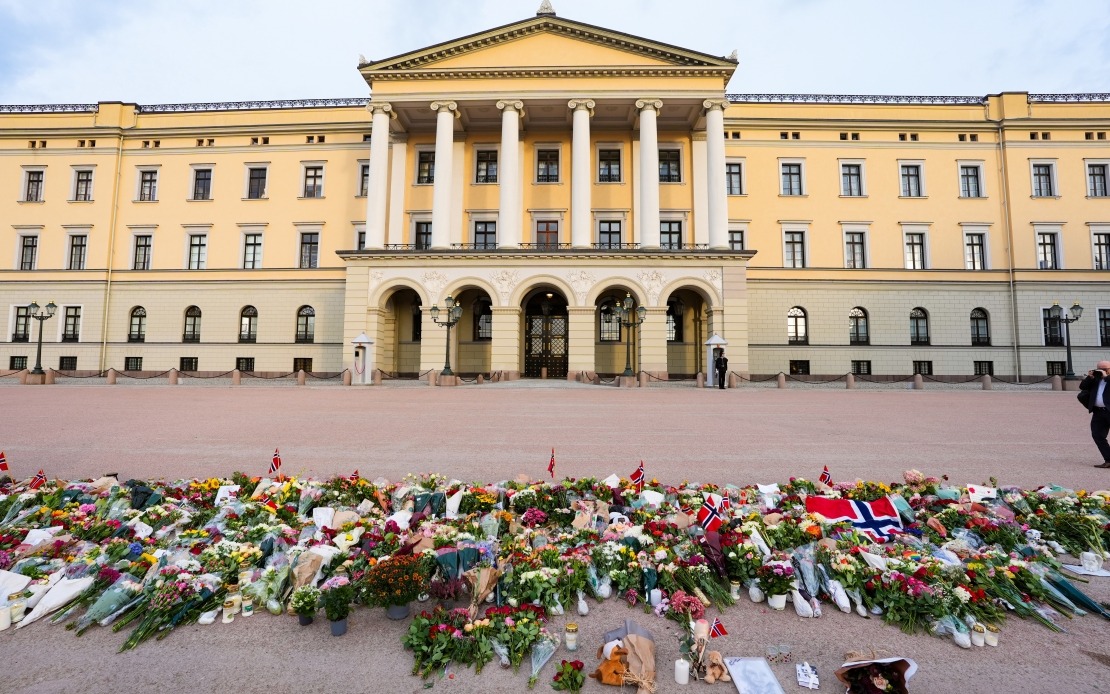
King Harald V of Norway died peacefully on Friday morning at the age of 89, bringing an end to a reign spanning more than three and a half decades. The Norwegian Royal Palace confirmed that the long-serving European monarch passed away at 6:35 am local time at the National Hospital in Oslo, where he had been undergoing treatment for a serious medical condition. The nation's flag was immediately lowered to half-mast at the royal residence to mark the passing of a figure who had witnessed extraordinary changes in Nordic politics and society since his accession to the throne in 1991.
The sequence of events leading to the king's death began on August 17, when Harald was admitted to the Oslo hospital following a routine medical examination. Initial assessments revealed that he was suffering from hemolytic anemia, a blood disorder affecting the red blood cells' ability to function normally. The condition had caused fluid retention throughout his body, prompting doctors to initiate cortisone treatment to manage the symptoms. For several days, his condition appeared stable enough for the palace to maintain regular public communications about his health status. However, the situation deteriorated sharply when the 89-year-old developed a bacterial infection in his bloodstream, a complication that Norwegian public broadcaster NRK reported as the critical factor in his decline.
Harald's death marks a significant moment in European royal history, as he was recognised as the continent's oldest reigning monarch at the time of his passing. His lengthy tenure on the Norwegian throne represented an era of stability and continuity in Scandinavia. During his 33 years as head of state, the Nordic region underwent profound transformations, including Norway's deepening integration into the global economy through its vast oil and gas resources, evolving attitudes towards monarchy and governance, and shifting geopolitical relationships within Europe.
The succession has proceeded according to Norway's constitutional framework without interruption or ceremony. Crown Prince Haakon immediately assumed the position of monarch following his father's death, transitioning from his role as heir apparent to become Norway's reigning king. Unlike many European nations that maintain elaborate coronation traditions, Norway's constitutional monarchy does not require formal coronation ceremonies. Instead, the new king must undertake specific constitutional obligations to formally establish his authority.
The Norwegian government has scheduled an extraordinary Council of State meeting at the Royal Palace, where ministers will formally acknowledge Crown Prince Haakon in his new capacity as reigning monarch. During this crucial meeting, the king's official regnal name will be announced, following conventions established in Norwegian royal practice. This administrative gathering represents the formal point at which the transfer of executive and symbolic authority becomes constitutionally complete.
Further constitutional procedures remain ahead for the new monarch. The Norwegian Constitution requires him to take a formal oath before the Norwegian Parliament, a solemnity that underscores the contractual nature of Nordic monarchy and the sovereignty of the people's representatives. This parliamentary oath ceremony will be a defining moment in the transition of power, emphasizing that even monarchs in constitutional systems must formally commit to upholding the nation's laws and serving within defined limits.
For Southeast Asian observers, Harald's passing and the smooth succession offer instructive lessons about institutional stability and the durability of constitutional arrangements. The Norwegian system demonstrates how carefully designed frameworks can ensure orderly transitions even in long reigns, contrasting with disruptions that can occur in other political systems when leadership changes. The absence of coronation ceremonies and the direct parliamentary oath reflect a distinctly Nordic approach to legitimacy grounded in law rather than pageantry.
King Harald's reign began on January 17, 1991, following the death of his father, King Olav V. Throughout his 33 years on the throne, Harald maintained the Norwegian monarchy's reputation for stability and service during periods of rapid social change. The period encompassed Norway's oil boom, its complex relationships with European Union membership questions, technological revolution, and evolving social values. His longevity as reigning monarch meant that multiple generations of Norwegians had known no other king during their lifetimes.
The new king's assumption of the throne occurs within a broader context of European royal transitions and evolving concepts of constitutional monarchy in the 21st century. With Harald's passing, the composition of Europe's reigning monarchs shifts, affecting diplomatic protocols and the symbolic dimensions of European relations. For Norway specifically, continuity is assured through the established succession and constitutional procedures, yet questions about the role of monarchy in contemporary Scandinavian society may surface during the new reign.
Harald's death also concludes a distinctive chapter in Nordic history. As Europe's oldest reigning monarch at his passing, he represented a living connection to post-World War II European recovery and development. His reign had witnessed Norway's transformation into one of the world's wealthiest nations per capita, driven substantially by North Sea petroleum reserves. The stability provided by the constitutional monarchy during this period of economic and social transformation is viewed by many Norwegian historians as complementary to the nation's democratic institutions.

