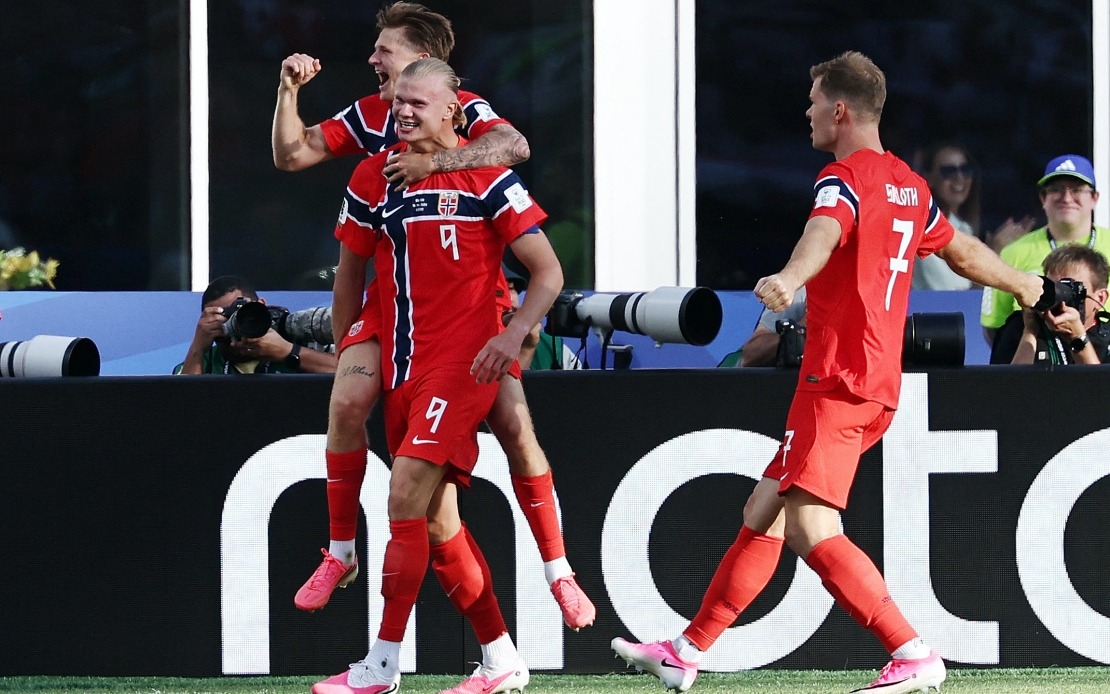
Norway's World Cup campaign has taken on a poignant dimension with three players carrying the unfulfilled ambitions of their fathers into the tournament. Erling Haaland, Alexander Sørloth and Kristian Thorstvedt represent a generational bridge to the Norwegian team that competed in the 1994 World Cup held in the United States, where their fathers—Alf-Inge "Alfie" Haaland, Gøran Sørloth and Erik Thorstvedt—departed in the group stage without advancing to the knockout rounds. This inherited sense of unfinished business adds emotional weight to Norway's current campaign, which began spectacularly with a 4-1 demolition of Iraq.
For the younger generation, the opportunity to progress beyond their fathers' achievement represents more than statistical accomplishment. Haaland, who now plays for Manchester City and is widely regarded as one of world football's most exciting talents, has acknowledged the historical context with characteristic humour. When presented with photographs of his father during the 1994 tournament, Haaland was struck by the image of a younger man with noticeably longer hair—a pointed observation that underscores how dramatically the landscape of professional football has transformed across three decades. The comparison between eras also highlights how differently father and son have navigated their respective careers, with the younger Haaland already achieving greater club success at a younger age.
Sørloth's connection to World Cup football runs deeper than mere family pride. Currently playing for Atlético Madrid, he has been vocal about the significance of following his father's footsteps into the tournament. In recent statements, Sørloth described the experience as "simply great" and credited his father with providing fundamental coaching throughout his development. His first vivid memory of a World Cup came during the 2002 tournament in Japan and South Korea, when the Sørloth family was holidaying in Denmark. Young Alexander recalls the electric atmosphere as his father explained the nuances of the game, an experience that helped shape his understanding of football's highest stage and his determination to ultimately succeed where his father could not.
Norway's immediate challenge lies in their Monday fixture against Senegal, where a positive result could secure qualification for the knockout rounds with one group match remaining. This represents a crucial opportunity to establish themselves as contenders beyond the group stage, a threshold the 1994 team never crossed. The final group assignment against France, one of the tournament's traditional powerhouses, then awaits on Friday. Should Norway navigate these tests successfully, they would definitively surpass the achievements of the fathers' generation and create their own historical mark on international football.
The narrative of hereditary sporting excellence resonates throughout Norwegian society in ways that extend beyond the football pitch. Royal engagement with the team underscores the national significance of this campaign. Crown Prince Haakon and Crown Princess Mette-Marit's children, hereditary Princess Ingrid Alexandra and Prince Sverre Magnus, are expected to attend Norway's Monday match in New Jersey. This demonstrates how deeply the team's performance matters to Norway's national consciousness and institutional structures. The presence of royalty at the stadium serves as a powerful symbol of national unity and support during a competition where football becomes inseparable from broader questions of national pride and identity.
The enthusiasm for Norway's World Cup campaign has permeated even the country's legislative branch, suggesting that public support for the team transcends typical sporting rivalries. Members of parliament from all political parties participated in displays of support during Thursday's parliamentary session, a demonstration of how thoroughly the World Cup has captured Norwegian collective imagination. This cross-party endorsement reflects the team's status as a source of national identity and pride that supersedes partisan divisions. When parliament itself becomes a platform for football support, it signals the profound cultural significance attached to international competition in Scandinavian society.
Norwegian supporters have drawn inspiration from their Viking heritage, with traditional fan behaviour reflecting ancestral traditions. These displays of enthusiasm have become so characteristic and internationally recognisable that they have spread awareness of Norwegian culture beyond conventional diplomatic channels. The rowing routines and Viking-inspired chants create a distinctive atmosphere that distinguishes Norwegian fans from other national contingents. For Southeast Asian readers, this phenomenon illustrates how national sporting campaigns can revitalise and globalise aspects of a country's cultural heritage, transforming historical traditions into contemporary expressions of sporting identity that resonate across international audiences.
The psychological dimension of playing a World Cup while conscious of a parent's prior experience introduces complexities that modern sports psychology must address. These three players are simultaneously pursuing individual excellence and collective success while carrying explicit awareness of familial precedent. Success would mean not only advancing Norway's national team further than previously achieved but also providing closure to questions that have lingered since 1994. For Haaland particularly, whose Manchester City status makes him Norway's most prominent global sports figure, any personal performance is amplified by both his current club commitments and his family's historical context within Norwegian football.
Looking forward, Norway's progress through this tournament will be measured against multiple benchmarks simultaneously. The immediate yardstick is whether they can progress beyond the group stage—something their fathers' generation could not accomplish. A secondary consideration is how far they advance and whether any of this trio achieves individual performances on the tournament's global stage that cement their legacies as players of the highest calibre. The narrative arc established by their fathers' 1994 experience provides compelling storyline material, but ultimately the result matters most. Should Norway advance to later tournament stages, the redemptive narrative of the sons surpassing the fathers becomes instantiated not merely as sporting folklore but as documented historical achievement.

