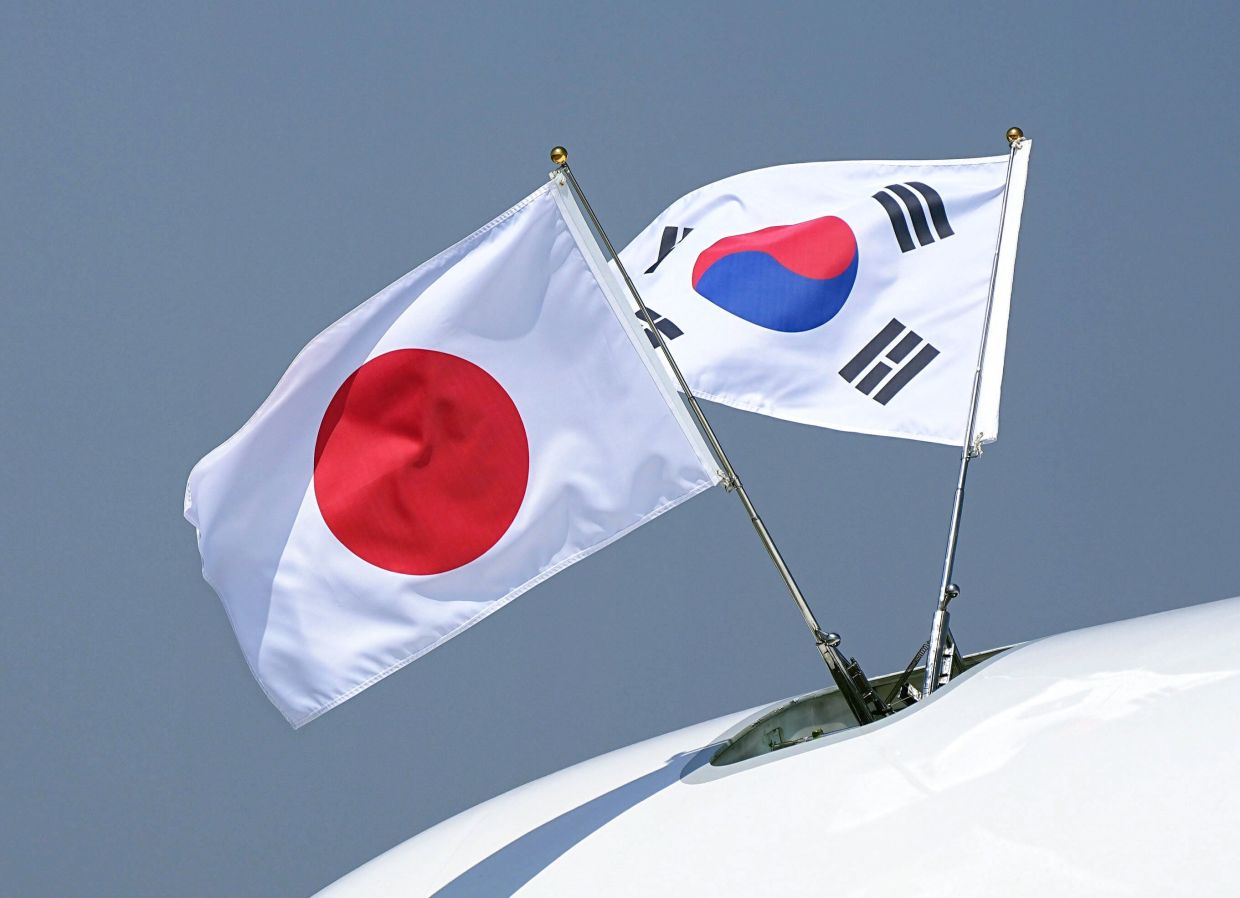
Leadership circles in both Japan and South Korea remain firmly opposed to nuclear weapons development, according to a comprehensive new survey, yet experts warn that this consensus is far more fragile than it appears. The findings, released this week by the Center for Strategic and International Studies in Washington, paint a nuanced picture of elite opinion that diverges sharply from public sentiment in South Korea while revealing the precarious balance maintaining nuclear restraint across the region.
The research, conducted by Victor Cha and Kristi Govella at CSIS, surveyed current and former government officials, parliamentarians, academics, think tank experts and corporate executives across both nations through October. Three-quarters of South Korean strategic elites and nearly 80 percent of Japanese counterparts expressed opposition to or doubt about their countries developing nuclear arsenals. These figures suggest a coordinated commitment among decision-makers to maintain the existing non-nuclear posture that has defined East Asian security architecture for decades.
However, the data reveals a striking disconnect between elite opinion and public attitudes, particularly in South Korea. While leadership resists nuclear weapons, a 2024 Gallup poll commissioned by the Chey Institute for Advanced Studies found that over 72 percent of the South Korean public supports nuclear armament. This gap between elite restraint and popular appetite for weapons creates a dangerous political pressure point. Japanese public opinion, by contrast, aligns more closely with its strategic establishment, with around 80 percent of the public opposing acquisition—a consistency that experts attribute partly to balanced media coverage, though some reporting has exaggerated the momentum among Japanese policymakers toward nuclear weapons development.
The survey's most alarming finding concerns the instability underlying these preferences. The research indicates that should either nation reverse course and pursue nuclear weapons, support for similar measures in the neighbouring country could escalate with remarkable speed. Experts from CSIS warned that such a cascade effect could potentially exceed the destabilizing impact of reducing United States troop deployments in the region, fundamentally altering the security calculus of northeast Asia. The implications extend far beyond bilateral concerns, potentially triggering broader proliferation across a region that has maintained relative nuclear discipline.
Motivations for weaponisation differ significantly between the two nations, revealing distinct security anxieties. South Korean advocates for nuclear weapons focus primarily on the North Korean threat, viewing independent deterrence as necessary insurance against an unpredictable adversary. Japanese proponents, by contrast, express deeper anxiety about American commitment, fearing that long-term Washington security guarantees may erode. These differing rationales suggest that addressing proliferation risks requires tailored diplomatic approaches rather than one-size-fits-all assurances.
The timing of the survey's release coincides with intensified diplomatic activity by Washington to manage nuclear security in the region. The United States recently convened bilateral nuclear cooperation discussions in Seoul with South Korea, followed by extended deterrence dialogue in Tokyo with Japan. These consultations represent Washington's attempt to shore up existing security relationships and provide reassurance that would reduce the perceived need for independent nuclear capabilities. The strategy hinges on demonstrating that American extended deterrence remains credible and reliable despite shifts in global power dynamics.
Beijing has complicated this landscape by repeatedly accusing Tokyo of pursuing remilitarisation and nuclear weapons development—charges that Japan firmly denies. These allegations, whether accurate or merely tactical, feed into Japanese security anxieties and undermine confidence in the regional security environment. The accusatory rhetoric itself becomes a destabilising factor, creating mutual suspicion that could accelerate the very weapons development Beijing claims to oppose.
Simultaneously, the United States has significantly raised its own nuclear posture. Brandon Williams, the Department of Energy's under secretary for nuclear security, announced that Washington plans to accelerate its nuclear weapons production capacity and invest $600 million in artificial intelligence to streamline weapons design and deployment. The agency aims to compress the current 10- to 15-year development cycle for deploying new weapons, signalling that the nuclear arms competition will intensify rather than diminish. This American acceleration sends contradictory messages to allies seeking reassurance that might reduce proliferation pressures.
American strategic thinking has also shifted toward maintaining flexible nuclear options. CSIS experts have urged the United States to reconsider its policy of equipping hypersonic weapons exclusively with conventional warheads, arguing instead that nuclear-armed hypersonic systems should be part of the American arsenal. Proponents contend that a more diversified and unpredictable nuclear force would strengthen deterrence and reassure allies, since assured partners prove less likely to pursue independent nuclear capabilities. This logic suggests that expanded American nuclear options could paradoxically reduce regional proliferation, though critics worry it simply fuels an upward spiral.
The broader strategic challenge confronting policymakers involves managing a delicate equilibrium. Current elite opinion in Japan and South Korea supports non-proliferation, yet the foundations of that consensus remain shallow. Public frustration with security threats, questions about American reliability, and fears of abandonment create pressure points where rapid policy reversals become conceivable. The survey demonstrates that nuclear weapons remain a latent option in strategic calculations, constrained only by current policy preferences rather than fundamental impossibility or genuine security irrelevance.
For Southeast Asian nations observing these dynamics, the implications extend beyond northeast Asia. Any nuclear weapons acquisition in Japan or South Korea would fundamentally reshape regional security perceptions and potentially trigger reconsideration of non-proliferation commitments elsewhere. The region's stability increasingly depends on maintaining the fragile consensus among northeast Asian elites, requiring Washington to sustain credible extended deterrence, Beijing to moderate its accusatory rhetoric, and Seoul and Tokyo to manage public expectations about nuclear security.
The critical insight from the CSIS research is that current non-proliferation outcomes in Japan and South Korea represent policy choices rather than inevitable conclusions. The survey suggests that strategic elites understand nuclear weapons as unnecessary and destabilising, yet circumstances could shift this calculation rapidly. Preventing that shift requires sustained diplomatic attention, credible security guarantees, and perhaps most importantly, recognition that addressing the underlying anxieties—North Korean threats and American reliability—remains essential to maintaining nuclear restraint across the region.

