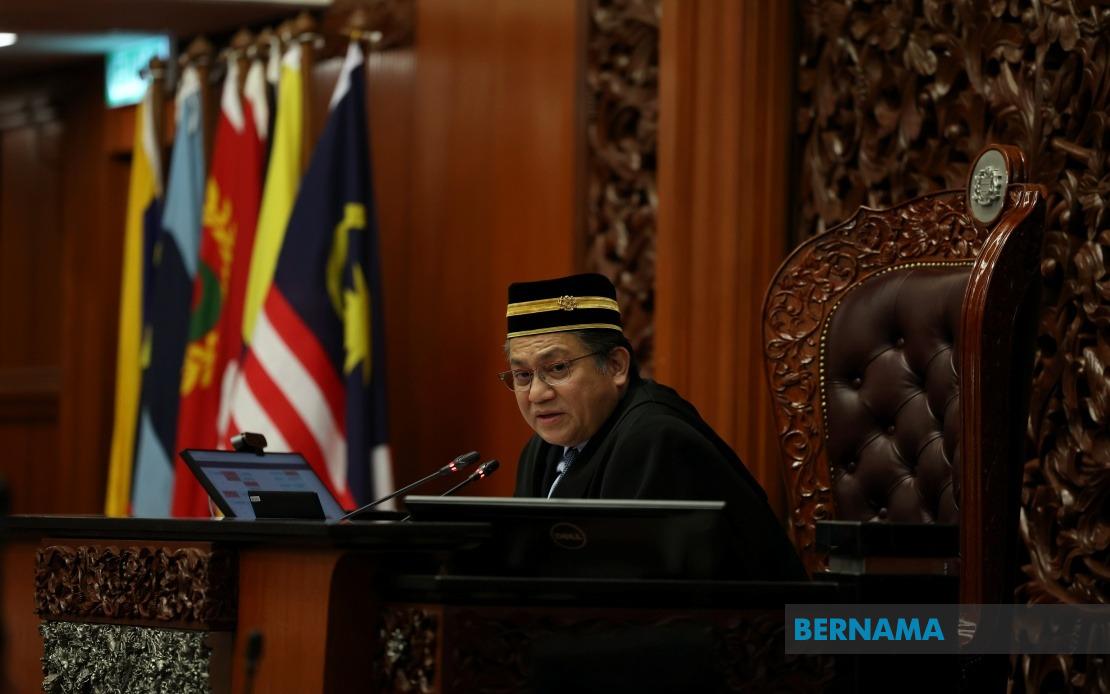
Senator Datuk Nur Jazlan Mohamed has been reappointed to serve as Deputy Speaker of the Dewan Negara for a second consecutive term, extending his role in one of Malaysia's key parliamentary positions. The appointment, formally submitted by Higher Education Minister Datuk Seri Zambry Abd Kadir acting on behalf of Prime Minister Datuk Seri Anwar Ibrahim, was presented during today's question and answer session in the upper chamber.
Nur Jazlan's new term follows his reappointment as a Senator through His Majesty the Yang di-Pertuan Agong, with his mandate running from June 15 2026 to June 14 2029. The 60-year-old politician has maintained a continuous presence in the Senate since first assuming the Deputy Speaker role in June 2023, demonstrating sustained confidence from the government in his parliamentary stewardship. His reappointment underscores the stability sought in senior legislative positions during a period of political consolidation under Prime Minister Anwar Ibrahim's administration.
Beyond his parliamentary duties, Nur Jazlan holds considerable influence within UMNO's internal structures, serving as a member of the party's Supreme Council and leading the Pulai Division as its chief. These multiple roles position him as a significant figure within the coalition government, where UMNO remains the largest component party. His continued presence in both chambers of parliament and party hierarchy reflects his standing among senior leadership circles in Malaysia's political establishment.
The Senator's political career spans nearly two decades of formal representation, having served as Member of Parliament for Pulai from 2004 through 2018. During this lengthy tenure in the Dewan Rakyat, he accumulated ministerial experience as Deputy Home Minister between 2015 and 2018, a portfolio that involves substantial responsibility for domestic security and governance matters. This background in executive government provides practical experience that complements his legislative duties in the upper house.
Alongside Nur Jazlan's reappointment, fellow Senator Mussodak Ahmad was also reappointed for a second term, with his mandate running from March 20 2026 to March 19 2029. Mussodak's reappointment comes through the Kedah State Legislative Assembly, reflecting the federal structure through which the Senate derives part of its membership. A senior figure in the Kedah PAS division, Mussodak previously contested state seats at Bayu and Guar Chempedak, demonstrating his engagement in local politics beyond his senatorial responsibilities. Both were formally sworn in before Dewan Negara Speaker Datuk Awang Bemee Awang Ali Basah during proceedings today.
The reappointments occur as the Senate enters its Second Meeting of the Fifth Term under the 15th Parliament, a sitting scheduled to run for ten consecutive days from July 20 through August 4. The extended calendar reflects the volume of legislative business requiring upper house attention, where the Senate serves as a revising chamber with specific constitutional responsibilities for scrutinising government legislation and examining bills that originate from the lower house.
Nur Jazlan's elevation to a second term as Deputy Speaker carries significance beyond ceremonial protocols. The Deputy Speaker role requires managing parliamentary procedure, maintaining order during debates, and representing the chamber during official functions. Continuity in this position provides institutional consistency during what represents a critical period for the government's legislative agenda. The decision to renominate him suggests the Prime Minister's administration views his performance in the first term as satisfactory and beneficial to parliamentary operations.
The broader context of these reappointments reflects Malaysia's ongoing efforts to stabilize its political institutions following years of governmental volatility. The transition to Anwar Ibrahim's leadership marked a significant shift, and maintaining experienced hands in senior parliamentary positions serves to ensure institutional competence and smooth legislative functioning. Nur Jazlan's track record in both executive and legislative branches positions him as a bridge between different governmental dimensions.
For the Dewan Negara specifically, Nur Jazlan's continuation provides experience that aids in managing the complex dynamics between government and opposition within the upper house. Though less visible than the Dewan Rakyat, the Senate plays a crucial constitutional role in reviewing legislation, examining constitutional amendments, and providing a chamber where state interests receive dedicated attention. An experienced Deputy Speaker contributes to ensuring these functions operate effectively.
The reappointments also underscore the interplay between parliamentary institutions and the broader Malaysian political system, where alignments between parties, states, and federal authority require careful orchestration. Mussodak's representation through the Kedah assembly exemplifies how state governments maintain representation in federal structures, while Nur Jazlan's nomination by the Prime Minister reflects the federal government's direct influence in upper house composition. Together, they illustrate how Malaysia's federal bicameral system balances multiple layers of political authority.
Looking ahead, the parliamentary calendar for the coming months will test the legislative effectiveness of the Senate leadership under these renewed appointments. With the July-August sitting spanning ten days, substantial work awaits in reviewing pending legislation and conducting parliamentary scrutiny. The combination of Nur Jazlan's experience and fresh mandate positions the upper house to manage these responsibilities with established institutional knowledge.

