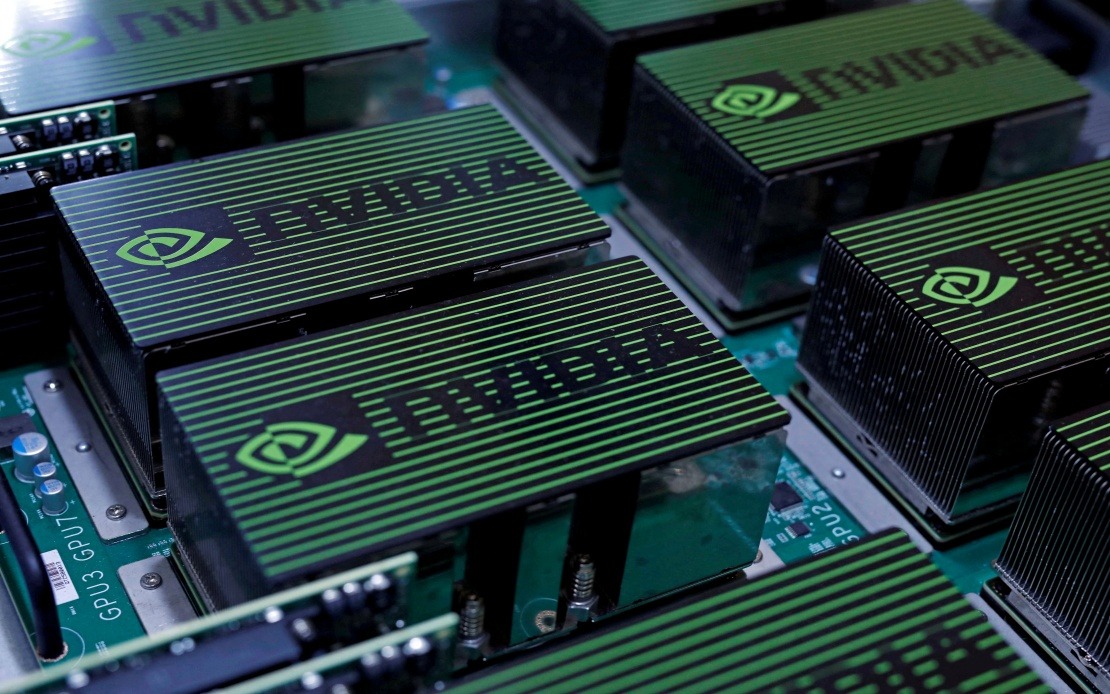
The technology landscape in Asia faces fresh turbulence as Nvidia, the world's dominant supplier of artificial intelligence processors, has drastically pruned its customer base across the region in response to escalating American trade barriers. The semiconductor giant has more than halved the number of Asian firms cleared to procure its most advanced AI chips, marking a significant contraction in market access that carries profound implications for the region's burgeoning artificial intelligence sector.
The restructuring reflects intensified scrutiny from Washington, which has grown increasingly concerned about the indirect pathways through which cutting-edge computing hardware reaches China despite existing prohibitions. By dramatically restricting the approval lists in critical markets including Singapore, Malaysia, and Japan, Nvidia is attempting to align its commercial operations with an evolving regulatory framework designed to maintain American technological superiority. The company implemented tightened vetting procedures across these three jurisdictions in recent months, subjecting prospective buyers to more rigorous due diligence processes before granting purchase authorisation.
For Malaysian businesses operating in the artificial intelligence and cloud computing sectors, the implications are immediately tangible. Many companies that previously enjoyed unrestricted access to Nvidia's latest generation chips now find themselves outside the approved purchasing circle, creating significant operational challenges for organisations whose business models depend on deploying advanced computational capacity. While the vendor indicated that affected customers retain the opportunity to remediate any compliance concerns and resubmit applications, the timeline for reapproval remains uncertain, potentially disrupting expansion plans and competitive positioning.
The customer base contraction disproportionately impacted what industry observers term neocloud providers—a category of specialised service operators that focus specifically on developing artificial intelligence infrastructure and delivering machine learning capabilities to downstream clients. These platforms occupy a crucial intermediary position within Asia's AI economy, translating raw computational power into practical applications across sectors from finance to healthcare. Their marginalisation from Nvidia's approved vendor lists threatens to constrain the overall expansion velocity of AI adoption across Southeast Asia.
Underlying this enforcement action lies Washington's strategic objective to prevent sophisticated American semiconductor technology from reaching Chinese competitors through indirect channels. Despite explicit export restrictions nominally prohibiting direct sales to sanctioned Chinese entities, policymakers have grown frustrated by evidence suggesting that intermediaries in third countries facilitate circumvention schemes. By substantially raising the threshold for approval in neighbouring jurisdictions, the US aims to eliminate these transshipment vectors and preserve its technological edge in the intensifying great power competition with Beijing.
For Malaysia specifically, the consequences warrant careful consideration. As the country positions itself as a potential regional hub for artificial intelligence development and cloud infrastructure, restricted access to cutting-edge computational hardware creates competitive disadvantages relative to other Southeast Asian economies. The screening procedure effectively delegates enforcement authority to private commercial actors—Nvidia becomes, in effect, an instrument of American trade policy, making vendor approval decisions based on geopolitical considerations rather than purely commercial criteria.
The broader regional context suggests this represents merely the opening chapter in a prolonged period of fragmentation. Singapore, traditionally positioned as Asia's financial and technology nexus, retains privileged access to American advanced semiconductors due to its alliance relationships and perceived governance alignment with Western interests. Japan similarly benefits from its treaty obligations to the United States. Malaysia and other non-aligned regional actors, however, occupy a more precarious position, vulnerable to supply chain disruptions that reflect geopolitical pressures beyond their direct control.
The announcement also highlights the asymmetric nature of technological competition in the contemporary era. While China vigorously pursues domestic semiconductor manufacturing capabilities to achieve self-sufficiency, its regional neighbours remain dependent on foreign suppliers operating under American regulatory constraints. This dependency creates structural vulnerabilities that could intensify as Washington continues ratcheting up restrictions. Companies within Malaysia's technology sector must begin contemplating contingency strategies, including potential pivots toward alternative supplier ecosystems or accelerated investment in indigenous computational capacity.
Industry analysts observe that Nvidia's customer list compression reflects calculated corporate compliance designed to preempt more aggressive American enforcement actions. By voluntarily restricting distribution channels, the company demonstrates alignment with Washington's strategic objectives and insulates itself from potential sanctions or regulatory penalties. However, this calculus shifts the enforcement burden onto downstream commercial operators throughout Asia who face sudden, disruptive changes to their supply relationships and market access.
The situation underscores a fundamental tension within the contemporary global technology economy. The semiconductor supply chains that power artificial intelligence development are inherently complex, multinational systems that ignore political boundaries. When sovereigns attempt to weaponise these supply chains for geopolitical advantage, they inevitably create inefficiencies, uncertainty, and competitive distortions that extend far beyond their intended targets. For Malaysian enterprises and policymakers, navigating this fragmented landscape demands both sophisticated understanding of American regulatory intentions and creative development of alternative pathways to technological capability.
Looking forward, businesses within Malaysia's technology sector should prepare for continued volatility in access to American semiconductor technologies. This may accelerate interest in exploring partnerships with non-American semiconductor manufacturers or investing in computational approaches that rely less intensively on the most advanced chips. Additionally, stronger engagement with government policymakers regarding technology infrastructure development and potential regulatory alignment may offer partial mitigation for the competitive pressures created by Washington's expanding export control regime.

