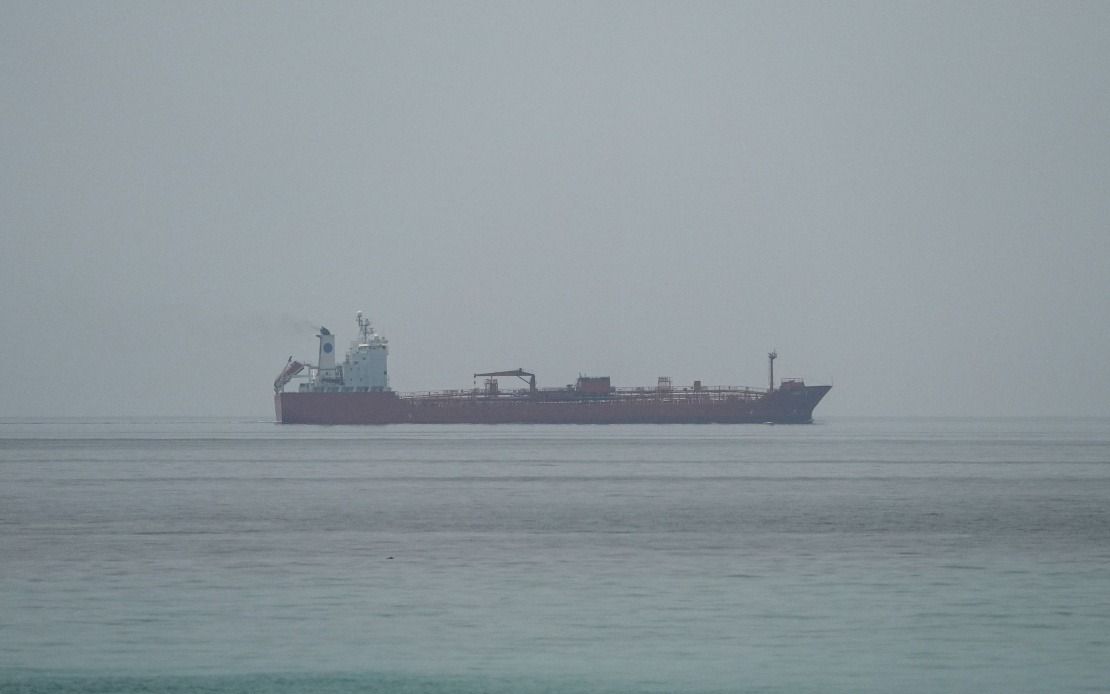
Oman has thrown its diplomatic weight behind the recently concluded memorandum of understanding between the United States and Iran, with Foreign Minister Badr Albusaidi using a Gulf Cooperation Council gathering in Bahrain to underscore Muscat's commitment to ensuring unobstructed passage through the Strait of Hormuz. The declaration carries particular significance given Oman's geographical position as a littoral state bordering this chokepoint through which roughly one-third of globally traded seaborne oil transits annually.
Speaking at a joint ministerial forum between the GCC and Washington, Albusaidi framed Oman's backing as rooted in both strategic responsibility and adherence to international maritime law. He explicitly stated that arrangements governing future transit through the waterway would not introduce any levy or toll structure, a clarification that addresses potential concerns among regional and international stakeholders about whether the normalisation process might enable either party to restrict or monetise access to this economically indispensable passage.
The timing of Oman's statement reflects the country's traditional role as a diplomatic intermediary in Gulf affairs. While most GCC members maintain tense relations with Tehran, Oman has historically maintained more pragmatic engagement with Iran, positioning itself as a neutral interlocutor capable of facilitating dialogue between adversaries. This latest endorsement reinforces that pattern, signalling Muscat's preference for de-escalation and commercial normalcy over prolonged confrontation.
The 14-point memorandum between Washington and Tehran, which came into force on June 18 following electronic signature by Iranian President Masoud Pezeshkian and US President Donald Trump, emerged from mediation efforts spearheaded by Pakistan. For Malaysia and other Southeast Asian economies heavily dependent on Gulf oil and energy supplies, the agreement's success in reducing regional volatility carries direct implications for energy price stability and maritime insurance costs, both of which ripple through regional supply chains.
The accord's scope extends well beyond maritime navigation. Its provisions encompass cessation of hostilities across multiple fronts, including Lebanon, whilst simultaneously mandating the reopening of the Strait of Hormuz and lifting of the US naval blockade imposed on Iran. This multifaceted approach suggests an attempt to address the underlying drivers of recent escalation rather than merely imposing superficial truces.
Context for understanding this development requires recalling the acute tensions that preceded it. In late February, the United States and Israel conducted strikes against Iranian targets, prompting Tehran to launch retaliatory attacks against Israel and facilities hosting American military personnel in the region. These tit-for-tat strikes created an atmosphere of brinkmanship that threatened to spiral into wider conflict, endangering shipping lanes vital to Asian economies.
Albusaidi's emphasis on Oman's "special responsibility" as a coastal state reflects the nation's interpretation of the UN Convention on the Law of the Sea, which enshrines principles of freedom of navigation and prohibits obstruction of international straits. By securing explicit commitment to fee-free transit from a GCC member state, the memorandum gains reinforcement from a respected regional voice, potentially discouraging any signatory from later attempting to exploit the strait for revenue generation or political leverage.
The GCC-US consultation framework, which regularly convenes to address regional security, political alignment, and economic partnership, has become increasingly important as geopolitical alignments in the Middle East have shifted. For Malaysian policymakers monitoring these developments, the mechanics of how US-Gulf relations evolve directly affect the strategic architecture within which Southeast Asian trade and energy security operate. Enhanced cooperation between Washington and traditional Gulf allies, provided it channels toward conflict prevention rather than escalation, offers modest grounds for optimism regarding maritime security.
Oman's guarantee of unimpeded transit carries economic weight for nations like Malaysia, which imported approximately 29 per cent of its crude oil from the Gulf region in recent years. Any disruption to the Strait of Hormuz—whether through intentional blockade, military action, or even insurance-driven rerouting of vessels—increases energy costs throughout Asia. By publicly anchoring the memorandum to free passage, Oman provides stakeholders with diplomatic reassurance that at least one influential regional actor sees commercial normalcy as consistent with the agreement's objectives.
The broader strategic implication concerns whether the Iran-US understanding can hold over time, particularly given the volatile domestic politics within each nation and the competing interests of regional powers. Saudi Arabia and the United Arab Emirates, both GCC members with their own contentious histories with Tehran, have shown measured responses to the accord. Oman's stronger endorsement may reflect its smaller size and consequently reduced vulnerability to Iranian retaliation, contrasted with larger Gulf producers whose strategic calculations remain more complex.
Looking forward, the sustainability of the memorandum depends significantly on whether it generates sufficient tangible benefits—reduced tensions, increased trade, energy investment—to overcome domestic opposition in both capitals. Oman's role as guarantor of maritime freedom, backed by international law, provides one mechanism through which the agreement can deliver concrete benefits to the global economy. For Asian importers dependent on Gulf energy, this commitment to maintaining open sea lanes represents perhaps the most immediate and measurable dividend from the broader US-Iran rapprochement.
The ministerial meeting in Bahrain where Albusaidi made these remarks underscores the interconnection between bilateral US-Iran relations and the architecture of Gulf interstate cooperation. As regional actors recalibrate their strategies in response to shifting US-Iran dynamics, Oman's explicit positioning as a defender of maritime freedom establishes a principle that transcends temporary political alignments, potentially providing a durable foundation for predictable shipping conditions regardless of how other bilateral relationships evolve.

