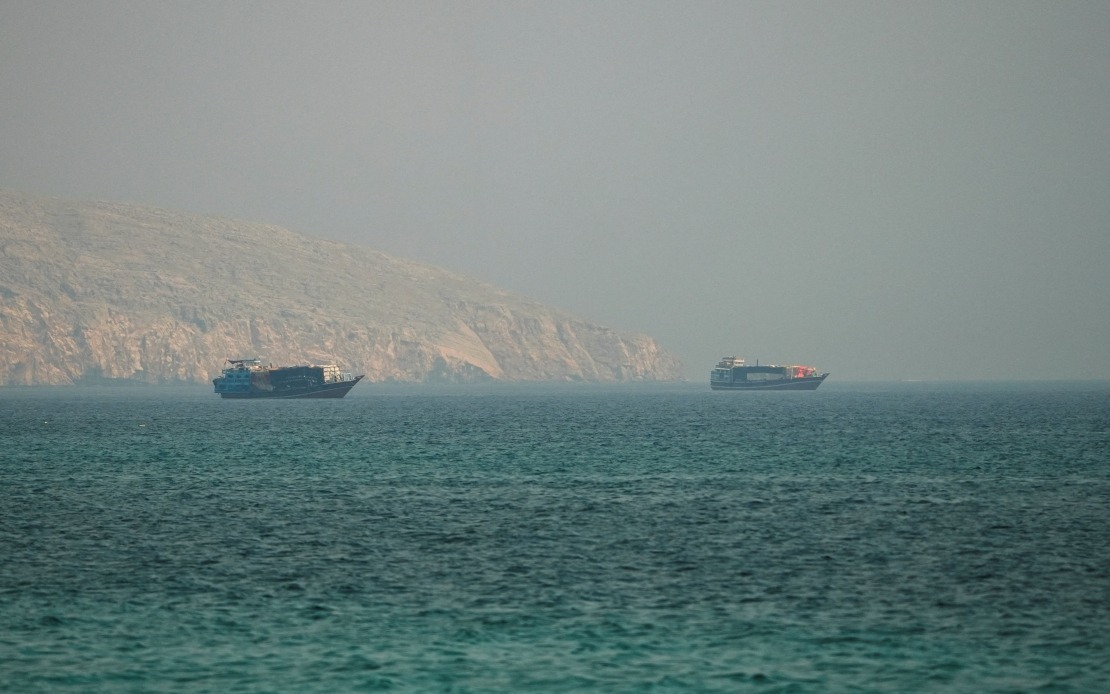
Oman has publicly distanced itself from plans to impose compulsory transit fees on vessels navigating the Strait of Hormuz, signalling instead a preference for voluntary contribution arrangements that would align with established precedents in regional waterways. The position was articulated by an Omani representative during proceedings at the 137th International Maritime Organisation Council session held in London from July 6 to 10, marking a significant diplomatic intervention in an increasingly contentious maritime governance dispute.
The Omani government's stance carries particular weight given its geographical position as the guardian of one shore of the strategically vital waterway through which roughly one-third of global maritime petroleum trade flows. By explicitly endorsing the principle of transit passage under international law, Oman has signalled its commitment to preserving the channel's status as an international artery rather than allowing it to become a revenue-generating tollway controlled by any single nation. This position distinguishes Oman from neighbouring Iran, which has reportedly implemented transit tolls on transiting vessels.
According to reports citing diplomatic sources, Oman had circulated a proposal to the United States and other Western nations that would enable shipping companies to make voluntary financial contributions in exchange for enhanced navigational support and safety services in the strait. This approach draws inspiration from operational models successfully implemented in the Strait of Malacca and Singapore, where vessel operators may opt into premium service arrangements without facing mandatory levies. The voluntary framework essentially transforms what could be extractive toll collection into a commercial service provision model where payment reflects perceived value rather than coercive authority.
The distinction between mandatory and voluntary mechanisms carries profound implications for international maritime commerce and the balance of power in critical chokepoints. Mandatory tolls inherently concentrate economic leverage in the hands of the controlling state, potentially distorting global shipping patterns and imposing differential burdens on trading nations depending on their strategic interests. Voluntary arrangements, by contrast, operate on market principles where shipowners rationally assess whether enhanced services justify additional expenditure, creating accountability between service providers and users that mandatory systems lack.
For Malaysia and Southeast Asia, the Omani proposal holds particular resonance given the region's experience managing the Strait of Malacca, one of the world's most trafficked maritime corridors. Malaysia, Singapore and Indonesia have long struggled to balance legitimate revenue needs and safety improvement investments against concerns that excessive fees might divert traffic to alternative routes or provoke international pushback. The voluntary model that has evolved in Malacca essentially acknowledges these tensions by allowing market mechanisms rather than political fiat to determine payment levels and participation rates.
The broader context involves escalating tensions between Iran and Western-aligned states over maritime security in the Persian Gulf. Iran's reported imposition of transit tolls has drawn sharp condemnation from the United Arab Emirates and multiple other nations, who submitted a formal proposal during the IMO Council session condemning such practices. Iran countered by emphasising its ongoing consultations with Oman regarding management and coordination frameworks for administering the waterway in accordance with international law and applicable national regulations, suggesting a degree of diplomatic engagement that may yet yield negotiated outcomes.
Oman's proposal effectively positions the sultanate as a mediating force attempting to bridge fundamentally opposed positions without endorsing either side's most contentious claims. By proposing a voluntary mechanism distinct from both mandatory tolls and the status quo ante, Oman creates diplomatic space for compromise while maintaining its commitment to open transit passage principles. This approach aligns with Oman's historical role as a relatively pragmatic regional actor willing to maintain relationships across sectarian and geopolitical divides.
The IMO Council remains the appropriate forum for adjudicating disputes over maritime practices affecting international commerce and navigation. By bringing these issues before the organisation, all parties have signalled acceptance of rule-based dispute resolution rather than unilateral action, even as individual states continue pursuing their preferred outcomes. The voluntary service arrangement model championed by Oman offers a pathway forward that avoids the zero-sum framing of mandatory tolls versus open access.
For broader Southeast Asian interests, particularly shipping-dependent economies like Malaysia and Singapore, the precedent established in the Hormuz dispute will influence how future maritime governance challenges are resolved. If voluntary contribution frameworks can successfully manage access to critical chokepoints while generating resources for improved services and safety, the model may provide a blueprint applicable to other contested waterways. Conversely, if mandatory toll schemes proliferate despite international opposition, global shipping costs and route efficiency will face structural headwinds affecting intra-Asian trade patterns.
Oman's reiterated commitment to working with the IMO, member states and international partners to maintain safe shipping lanes and strengthen maritime supply chain resilience suggests a constructive posture going forward. The sultanate recognises that the Strait of Hormuz functions as critical infrastructure for global energy security, not merely a revenue source for coastal states. By advocating for arrangements that balance legitimate governance needs with international commerce interests, Oman attempts to establish governance frameworks that might achieve sustainability beyond the current crisis moment.

